Choose a vase for the flowers you bring home
Match the vessel's opening and stability to the shape of the stems rather than collecting every possible vase.
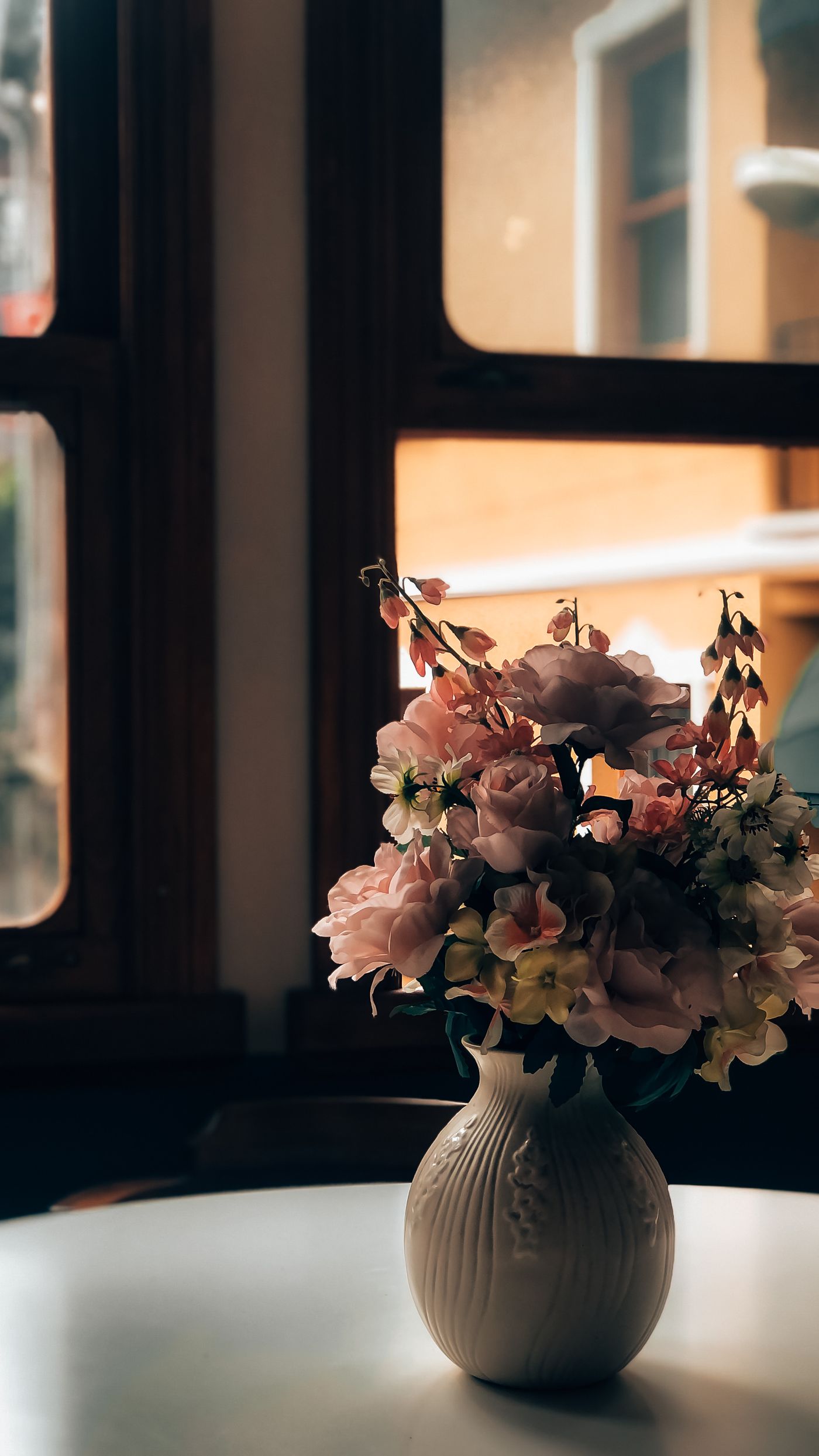
The most useful vase is not always the most decorative one. A bouquet can spread awkwardly in a wide opening, disappear into an oversized vessel or make a narrow vase feel top-heavy. Look at the flowers as a group before choosing the container: how many stems are there, how flexible are they and how much support do they need?
Let the opening do some of the work
A narrower neck can hold a modest bunch together without requiring a large quantity of flowers. A wider opening allows stems to spread, which can be attractive but may expose empty areas if the bunch is small. Try the flowers in the vase before cutting all the stems. It is easier to shorten them gradually than to correct a bouquet cut too low for its container.
The base matters as much as the neck. Choose a vessel stable enough for the weight and height of the arrangement. A tall display on a frequently used table may be more vulnerable to knocks than the same arrangement on a wide sideboard. Keep the finished flowers out of walking routes and away from places where sleeves or bags can catch them.
Build a small, useful collection
For ordinary bunches, a medium vase, a narrower vessel and one or two small bud vases may cover many situations. These are examples rather than a required set. Base your collection on the flowers you actually bring home. If you mostly buy short-stemmed bunches, a tall dramatic vase may remain unused despite its appeal.
Clear glass makes the stems part of the display and reveals when the water or vessel needs attention. An opaque vase hides the stems but does not remove the need to check inside. Choose containers that can be cleaned thoroughly; a sculptural narrow neck may be awkward if a brush cannot reach its interior.
Follow the supplier's care advice for the particular flowers and any included flower food. Different stems may need different handling, so avoid assuming one household mixture is appropriate for every bunch. Remove material that would sit below the waterline where the florist's instructions advise it, and maintain the arrangement rather than leaving the first setup untouched until the flowers fade.
Find the right place
Judge the arrangement from the position where it will be seen. A sideboard display can be taller than flowers between people at dinner. Check nearby electronics and protect furniture from water in accordance with its finish. If pets or young children share the home, confirm that the particular plant material is appropriate for the household before bringing it within reach.
Small vessels can give a few remaining stems a second arrangement when the original bunch changes. Do not feel obliged to preserve its first shape. Moving three still-attractive stems into a smaller vase can look more deliberate than keeping them in a large container designed for a full bouquet.
Wash and dry the vase before returning it to storage. Keep the frequently used pieces accessible and let rarely used decorative vessels live elsewhere. A vase earns its place when it supports the flowers you enjoy, is stable in their intended location and is straightforward to care for between bunches.
When a mixed bunch contains very different stem lengths, consider dividing it instead of forcing every flower into one vase. A few shorter stems can form a small arrangement for a desk while taller ones remain together. This also lets you keep a dining-table arrangement low without sacrificing the proportions of the whole bunch. Use stable vessels with suitable water capacity, and maintain each arrangement separately.
If choosing a vase as a gift, think about storage as well as display. An unusual shape may be memorable but awkward to keep between uses. A vessel that fits an ordinary shelf, cleans easily and works with the recipient's usual flowers may become a more frequently used object. Its usefulness need not make it visually plain.