Arrange a fruit platter that is easy to eat
Think about ripeness, juice and serving size before arranging colours.
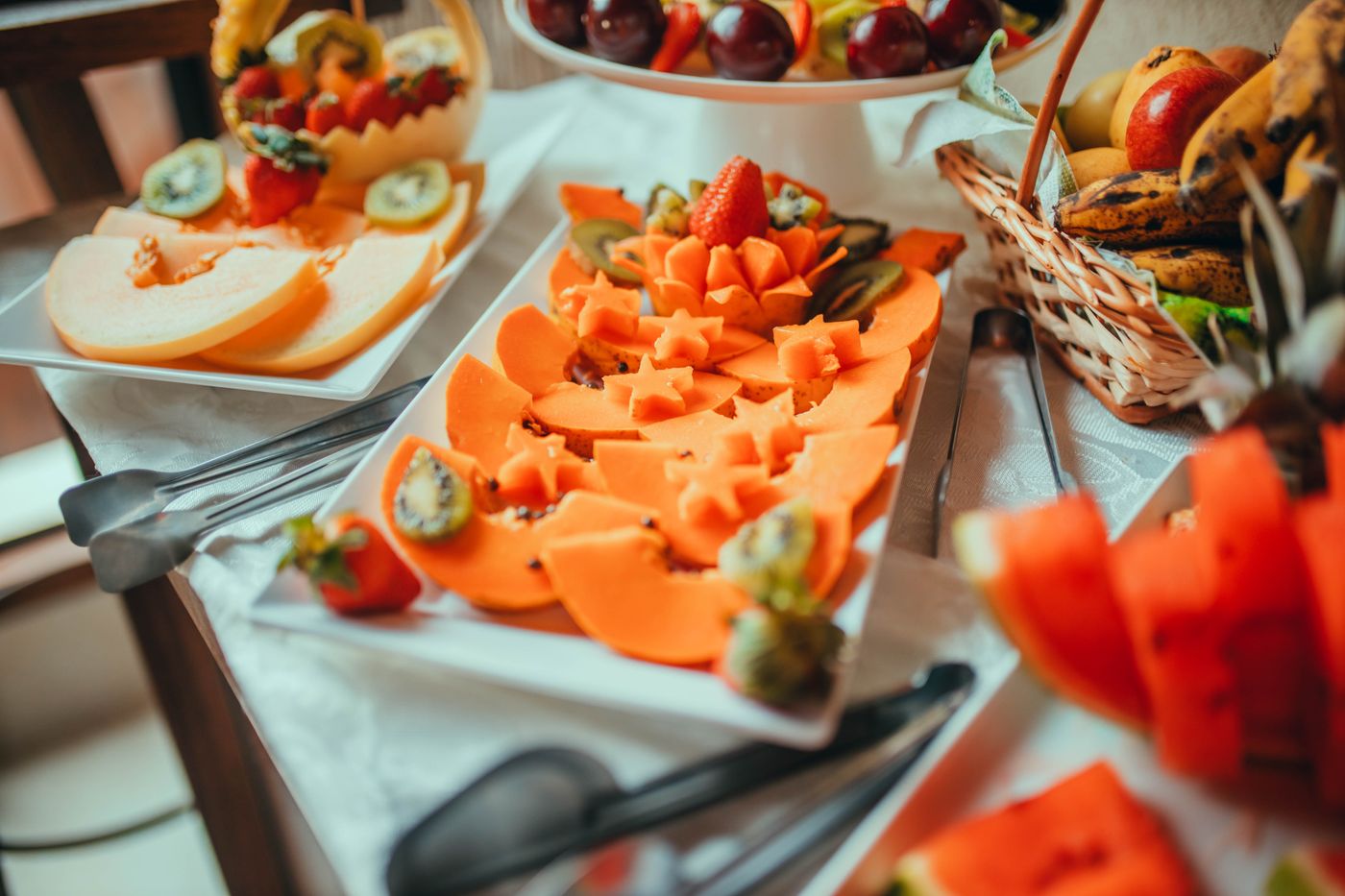
Fruit is often treated as the effortless part of a gathering, but a platter still needs a little thought. Very large pieces, loose stones and a pool of juice can make it awkward to serve. Choose fruit you can prepare close to the meal and offer in portions that suit the plates and utensils available.
Choose fruit for its condition
Buy by ripeness and quality rather than colour alone. A beautiful but hard peach will not become a better choice because it completes a palette. Pick a few fruits with contrasting textures and prepare only as much as you expect to serve promptly. Keep suitable whole fruit in reserve rather than cutting everything at once.
Wash produce as appropriate before cutting, use clean equipment and keep prepared fruit chilled until serving. A whole melon should be washed before the knife passes through its surface. Follow official produce-handling guidance and the storage information for any pre-cut fruit you buy.
Keep the wet pieces under control
Drain washed berries gently and avoid piling them under heavier slices. Put especially juicy fruit in a shallow section or separate bowl if it is likely to soak everything around it. A rimmed platter is more forgiving than a flat board when juice accumulates.
Remove stones, tough peel and inedible cores where practical. Consider whether people will be eating with a fork or their fingers. Long wedges can look generous but may be difficult to fit on a small plate. For children or anyone with specific eating needs, prepare pieces appropriately for the person rather than assuming one presentation works for everyone.
Arrange fruit in small groups rather than mixing it into one deep heap. This makes choices clearer and allows you to replace an empty section. Leave space for a serving utensil. A garnish should be recognisable and edible if it is going to touch the food; decorative flowers are not automatically suitable for eating.
Finish near serving time
Prepare the platter as close to the meal as your schedule allows. Some cut fruit changes colour or softens quickly, so a platter assembled the previous evening may not look or feel the same by lunch. If you need to prepare ahead, keep components covered and chilled separately, then assemble them shortly before guests eat.
Serve a smaller platter first and replenish from refrigerated fruit. Do not leave cut fruit out through a long gathering without appropriate temperature control. If there are leftovers that have been handled and stored safely, put them away promptly and plan to use them soon. Fruit that has become unsafe through poor holding cannot be made safe by blending it into a smoothie.
The final check is simple: can a guest take the piece they want without touching several others or tipping the platter? If not, reduce the height of the arrangement, add a utensil or move one fruit into its own bowl.