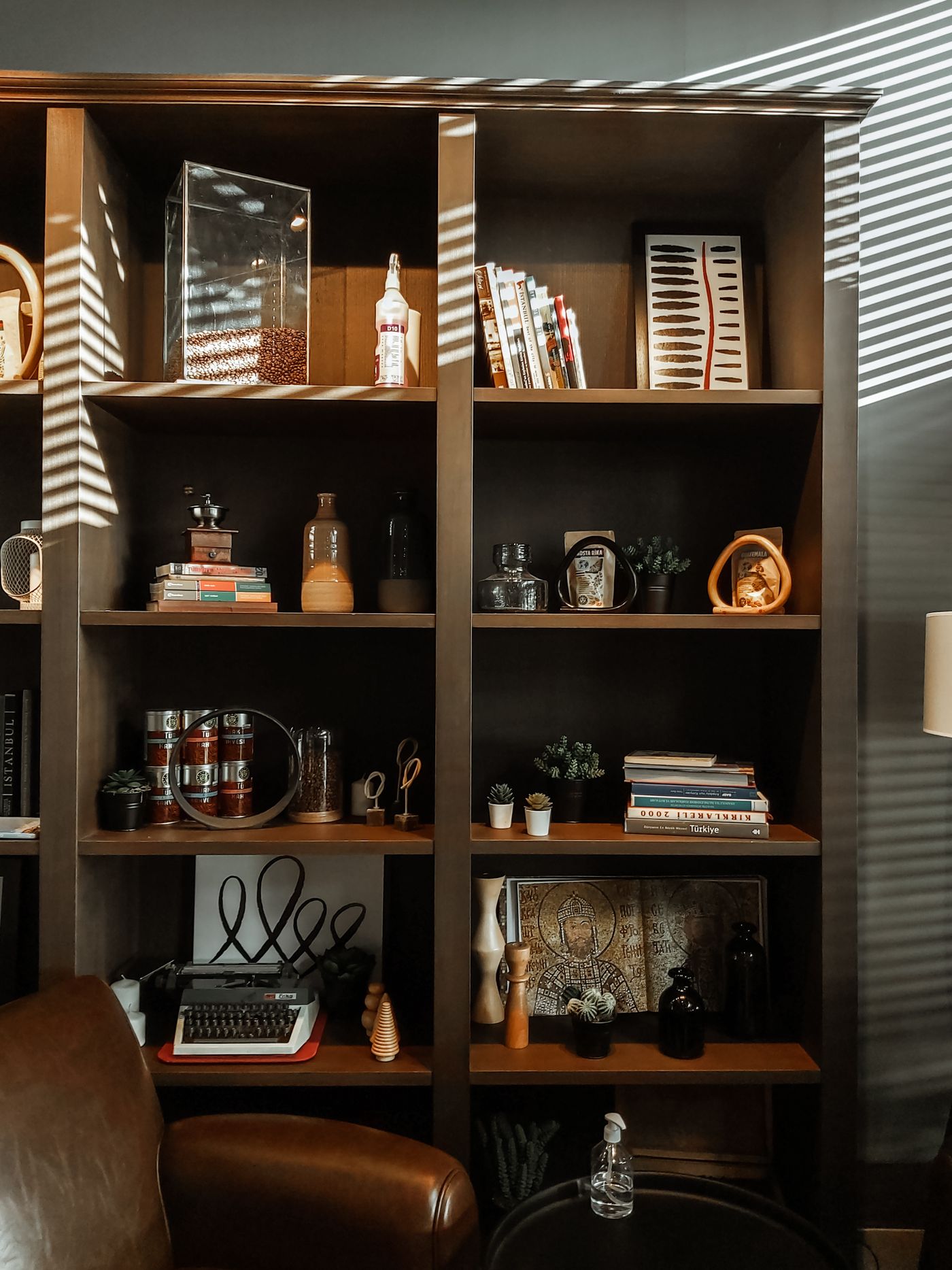
Style open shelves without hiding everything useful
Let frequently handled objects shape the display rather than designing around untouched ornaments.
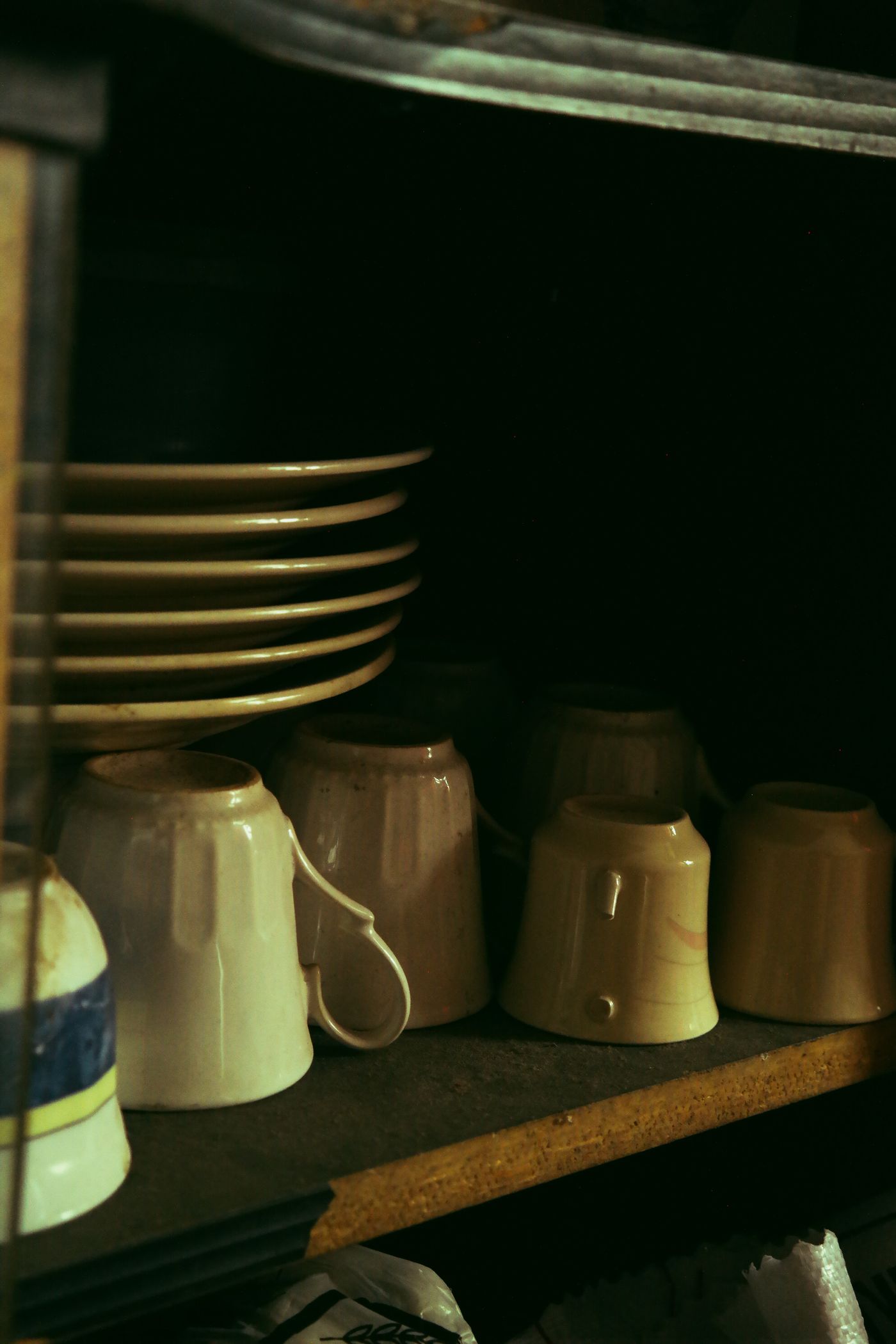
Open shelves sit between storage and display. Their appearance matters because their contents are visible, but a shelf that must be dismantled whenever you need a bowl is not functioning well. Begin with the objects that belong in this room and are genuinely useful here.
Choose the working layer
Put frequently handled items within comfortable reach. Keep them in groups that can be used independently: a few bowls together, books with readable spines, or a small box containing one type of supply. Avoid placing a decorative object on top of everything useful. That makes ordinary access feel like disturbing an installation.
Let heavier or visually larger objects establish a few anchors across the shelving. This does not require exact symmetry. A broad ceramic bowl on one side may balance a short group of books elsewhere without matching it. Leave some gaps so the eye can distinguish the groups and your hands can remove them.
Check the shelf's load limits and installation requirements before treating it as storage for heavy collections. The attractive arrangement is secondary to the support being suitable. Do not assume a long shelf can carry unlimited books simply because the brackets are hidden.
Make small things deliberate
Tiny objects scattered individually tend to become visual noise and are awkward to dust around. Gather a meaningful few on a shallow tray or inside a suitable open container. The container should clarify the group rather than act as a place for miscellaneous leftovers.
Colour can connect different objects, but resist removing useful items solely because they disrupt a narrow palette. Repeating one material, such as a couple of wooden pieces, may create enough continuity. A shelf of actual possessions often looks more convincing than a set of newly purchased objects chosen only to coordinate.
Consider cleaning as part of the layout. Kitchen shelves near cooking areas and bathroom shelves may need more frequent attention than a bookcase in a sitting room. Keep the number of small exposed objects compatible with the maintenance you are willing to do.
After arranging, remove and replace the most frequently used item. If that action is awkward, change the display. The shelf should tolerate daily life, including a book temporarily missing or a bowl in use. A composition that only looks right when nothing is touched is better suited to a display cabinet than working storage.
Give a shelf a dominant use
A shelf that combines cookbooks, plates and a plant can work, but decide which function leads. If plates are used daily, they should be the easiest objects to remove. If the shelf is mainly a book collection, do not interrupt every short row with an ornament. This hierarchy gives the arrangement clarity without requiring every shelf in the room to follow an identical pattern.
For example, a kitchen shelf can hold a short stack of everyday bowls at one end, a clearly readable row of cookbooks at the other and a small gap between. Test whether the largest bowl can be lifted without touching the books. If the shelf is too shallow, do not disguise the problem by angling the bowls precariously; move them to suitable storage and give the shelf another job. The same principle applies to decorative objects: a vessel should sit fully and steadily on its support, not balance on an edge for visual effect.
Try a single shelf before rearranging the whole unit. Use it for several days and notice what is left out rather than returned. That object may need a more accessible home. Once one shelf works, apply the same reasoning elsewhere, not the same decorative formula. Different contents can require different spacing, supports and group sizes.