Sort receipts without keeping every scrap forever
Keep receipts for a reason, with the purchase detail you will need later.
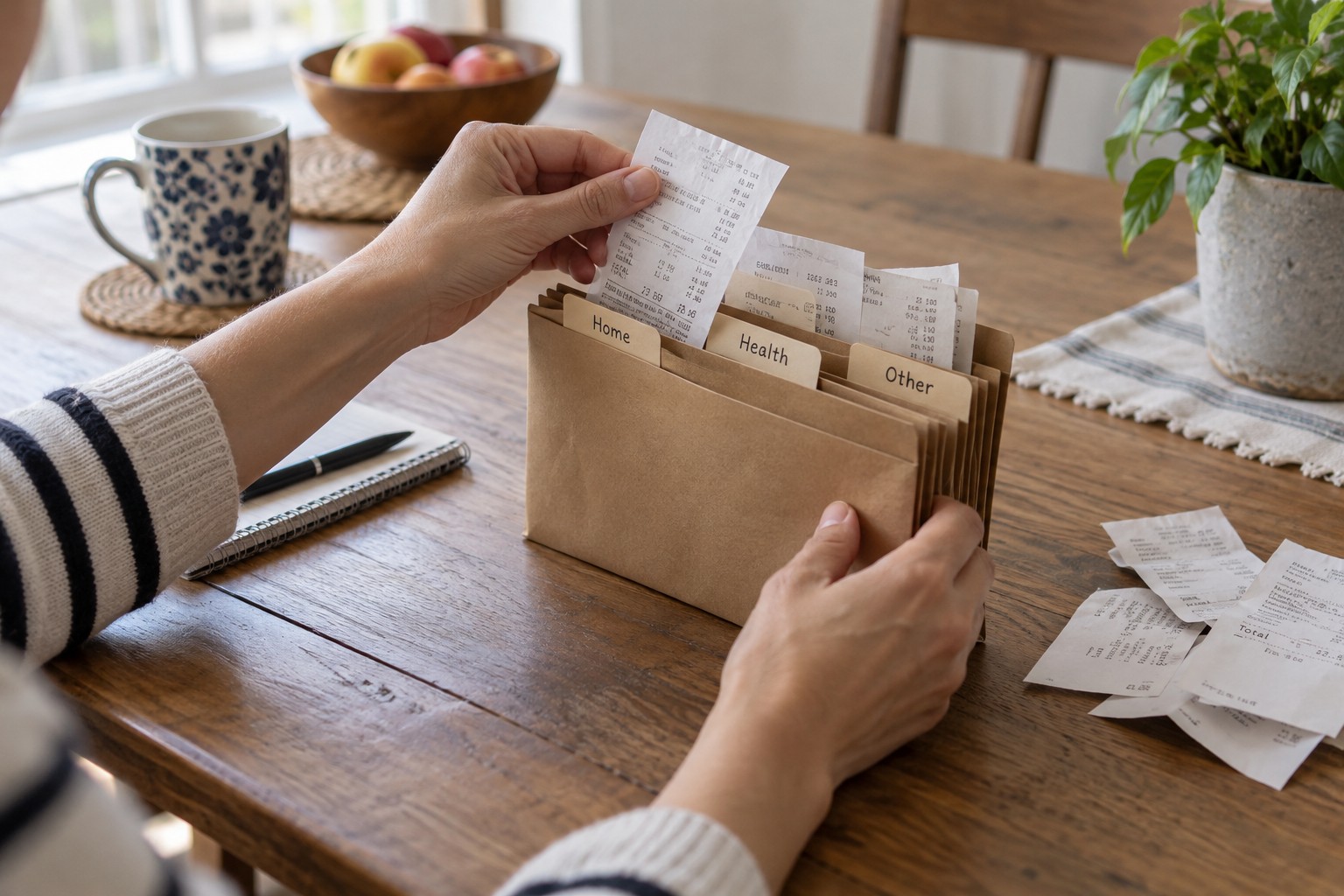
A receipt is useful because it supports a particular future action: returning a purchase, checking an expense, making a warranty enquiry or keeping a required record. Before creating a filing system, decide which of those purposes applies. Keeping every scrap in one envelope makes the important receipts harder to find without necessarily protecting anything.
Start with recent purchases that are still being considered. Keep those receipts together with a note of the item if the printed description is unclear. Check the retailer's current return terms directly; do not assume every purchase has the same deadline or that a receipt alone guarantees a return.
Match storage to the purpose
A receipt for a household appliance can sit with the model details and relevant warranty information. An expense receipt belongs with the record used for that expense. Separate these from everyday purchases with no remaining use, rather than sorting every receipt only by the shop's name.
Some thermal receipts fade. If you make a digital copy, capture the complete readable document and use a filename that includes the date and purchase. Check whether the organisation concerned accepts that form of evidence before discarding an original you may need. A photograph is not automatically a substitute in every situation.
For tax, business or other formal record keeping, follow the applicable authority's requirements or professional advice. Retention periods depend on the record and jurisdiction. A general household organising article cannot set one safe deadline for all readers and all paperwork.
Give temporary receipts an exit
Review the return-related group after purchases have been accepted or returned. Remove papers whose purpose has ended, taking care with personal information. If the item now has a longer-term warranty purpose, transfer the receipt once rather than leaving duplicates in several piles.
Keep gift receipts separate until the gift is handed over. Put one in the package or card where the recipient can find it without needing to ask about the price. Do not retain their only copy simply because it was originally part of your own shopping.
Follow one purchase through its stages
Suppose you buy a lamp but have not yet decided whether its light suits the room. Keep the proof of purchase with the relevant return information while you try it within the retailer's conditions. Once the decision to keep it is made, check whether the receipt has a longer-term purpose, then file it with the model or order details. The same paper has moved from a decision aid to a reference record.
If the purchase is returned, keep any return confirmation until the transaction has been resolved and any applicable record needs are understood. Do not leave the original receipt among “things to return” after the item has gone. A short note of the status prevents a second person in the household from trying to act on an obsolete reminder.
For an emailed receipt, searchability matters more than printing by default. Check that the message or saved file identifies the purchase clearly and remains accessible in the account you actually use. Record where it is stored if another household member may need it; avoid creating paper and digital copies that both appear to be the only complete record.
The system should make a common search straightforward: “Where is the proof of purchase for this item?” If you would need to empty three handbags and a kitchen drawer, consolidate the entry point. A small labelled folder and a regular review can be enough; elaborate scanning equipment is not a prerequisite.