Choose a plain tee by fit and fabric
Inspect the neckline, sleeves and movement before treating a tee as an interchangeable basic.
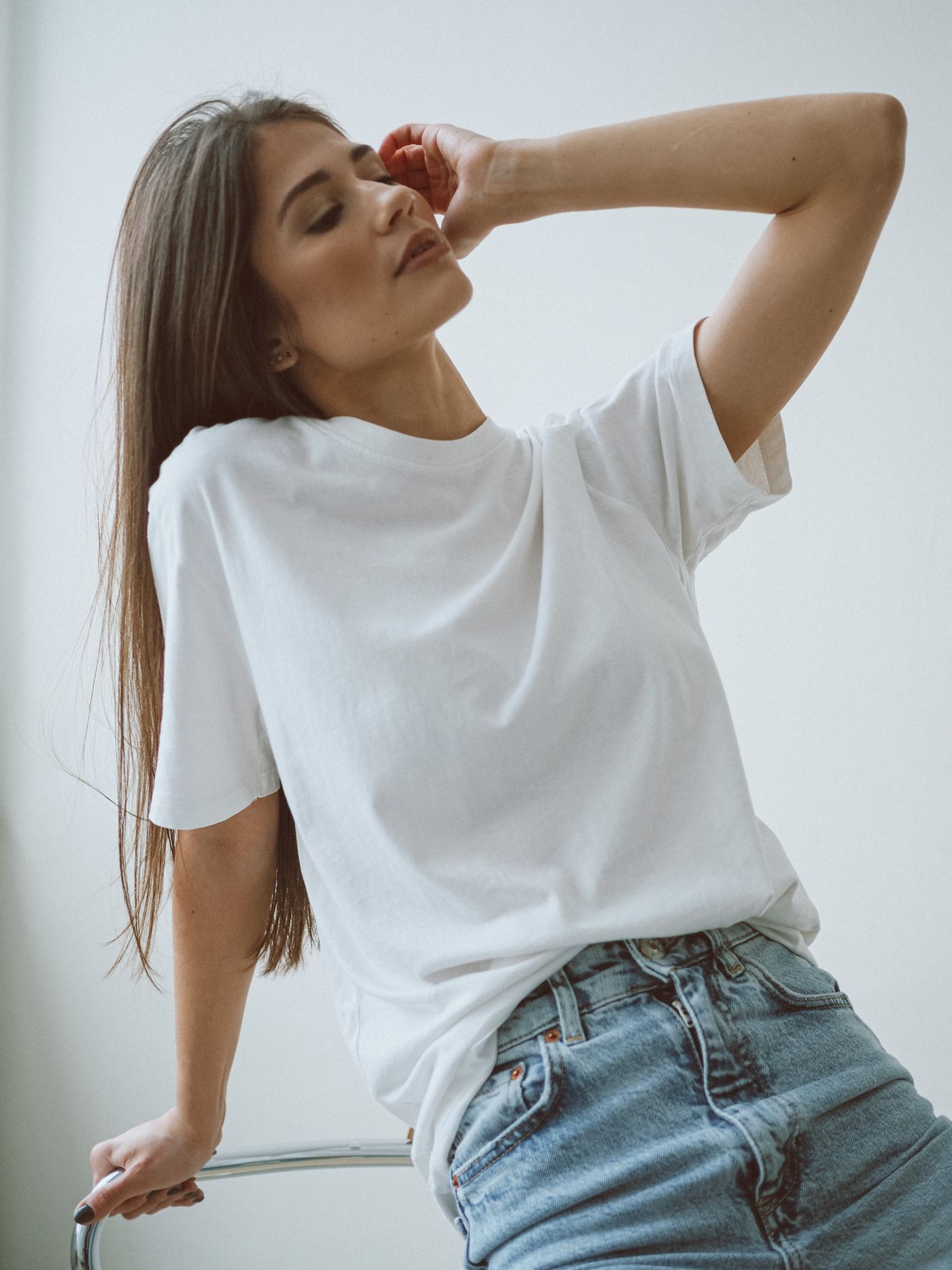
Two plain tees can look nearly identical on a hanger and behave very differently in an outfit. The shoulder position, sleeve length, fabric weight and hem all affect how the tee sits. Choosing one by colour alone can leave you with a drawer of similar tops that do not solve the same problem.
Decide its main role
A tee worn beneath a cardigan may need a neckline that remains visible neatly and sleeves that do not bunch. A tee worn alone may need more opacity and a shape you enjoy without another layer. A loose tee for casual days is not necessarily the same garment you want tucked beneath a tailored jacket.
Try it with a familiar bottom half so you can judge the proportions. Look at the shoulders and armholes while reaching forward. A dropped shoulder can be an intentional feature, but it should not be mistaken for a conventional seam sitting incorrectly. What matters is whether the shape works and movement remains comfortable.
Inspect the fabric in ordinary light
Hold the tee up and try it in daylight where possible. Pale colours can reveal underlayers more than expected. Consider how the material drapes rather than assuming thicker always means better. A heavy tee may hold a boxier shape; a lighter one may fall closer to the body. Fibre content is useful information, but it does not tell the whole story of the finished fabric.
Read the care label before buying. A simple-looking garment can still need care that does not fit your routine. Check construction details such as neckline finish and seams, while avoiding the assumption that a single stitch type proves quality on its own.
Test the hem and sleeves
Try the tee untucked, then tucked if that is how you expect to wear it. A long hem can create extra fabric inside a waistband, while a very short one may rise more than you want when reaching. Check the sleeve opening against your comfort and the outer layers it needs to fit beneath.
Move around for a moment rather than judging only a still mirror view. If you keep pulling the hem down or adjusting the neck, notice that before purchasing several colours.
When replacing a favourite, record what actually works: a certain neckline depth, a particular length or enough room through the arms. That description is more useful than asking for another perfect basic. A plain tee becomes dependable when its details match your clothes and habits, not simply because it has no decoration.
Compare two candidates directly
When possible, try two tees with the same trousers and shoes. Change only the tee so differences in length and shoulder shape are easier to see. Take a seated view as well as a standing one. A neckline that seems right initially may shift when you lean forward, while a hem that looks generous may rise during ordinary movement.
If you already own a favourite, measure it after laundering according to its label and compare those dimensions with a candidate. Measurements do not guarantee an identical fit because fabrics and construction differ, but they can explain why a replacement feels unexpectedly short or narrow. Use them as supporting information, not a substitute for trying the garment.
Consider the way you prefer a tee to age. Some people enjoy a softened casual surface; others want a consistently crisp appearance. No single fibre label guarantees either result. Check the finished garment, care information and your willingness to maintain it. Buying several copies immediately can be less useful than wearing and washing one first to see whether it continues to meet the intended role.