Plan the first meal of a self-catering break
Choose an arrival meal that fits the kitchen you have confirmed, not the one you imagine.
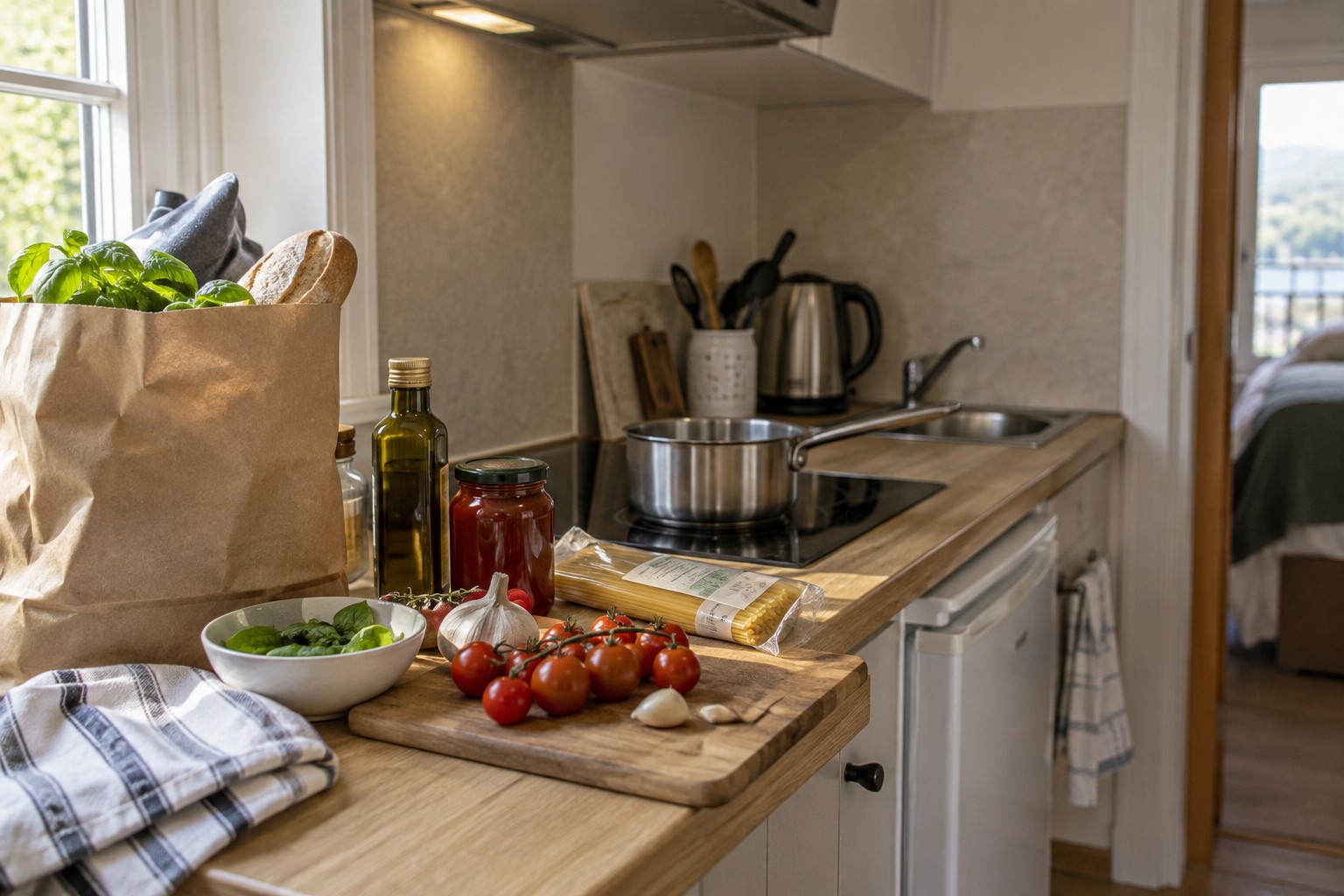
The first self-catering meal often happens after travel, a key handover and a search for the nearest shop. Plan something simple enough to survive those delays. It should not require unfamiliar equipment, a long shopping list or several pans that may not be available.
Ask the property what cooking and refrigeration facilities are provided if the listing is unclear. An oven, hob and microwave are different resources, and “kitchenette” does not describe every usable detail. Check utensils or other equipment essential to the meal rather than packing on the assumption that nothing exists.
Choose a forgiving arrival plan
A straightforward meal assembled from a few ingredients can work well: bread, suitable ready-to-eat components and vegetables, or a familiar dish suited to the confirmed equipment. Account for dietary needs and how food will be transported and stored. Do not carry perishable ingredients for hours without appropriate conditions.
Keep the first shopping list separate from the rest of the stay. Include breakfast if shops may be closed or inconvenient the next morning. Check local opening arrangements directly when they matter, and have an alternative that does not depend on arriving exactly on schedule.
Pack only the useful extras
A small quantity of a frequently used seasoning or tea may be worthwhile if permitted and appropriately packed. Avoid bringing an entire pantry. Label any transferred food and retain relevant ingredient information, particularly when others will share it.
On arrival, inspect the kitchen's condition and read appliance instructions before using unfamiliar equipment. Report problems to the host rather than improvising a repair. Decide where groceries will go before opening several bags across the work surface.
Use the first meal to learn the kitchen's limits. A small preparation area or a limited supply of dishes may suggest simpler cooking for the rest of the visit. The holiday does not have to reproduce your normal kitchen routine exactly.
Build a first-shop list from one meal
For a property with a confirmed hob and saucepan, a familiar pasta meal may need a packet of pasta, a suitable sauce or ingredients you know how to prepare, and a simple accompaniment. Check whether oil, seasoning and utensils are provided if the meal depends on them. Do not add a dozen pantry extras merely because they belong in your kitchen at home.
Breakfast then needs its own small calculation: how many people, how many mornings and what they normally eat. A large assortment can create leftovers without improving the stay. Start with enough for the first morning and add more once you know the local shops and everyone's appetite.
If arriving by train, separate what is worth carrying from what can be bought locally. Heavy jars may be less convenient than compact dry ingredients, but only if the local replacement is available. A short confirmed list is more useful than either packing everything or expecting to find everything after a late arrival.
Towards the end of the stay, plan how remaining ingredients will be used or handled appropriately. Follow the property's instructions about food left behind; do not assume the next guest or host wants opened items. A modest first shop leaves more flexibility than buying a week's supplies before understanding the place.