Organise the space beneath a sink
Work around pipes and access points instead of treating the cupboard as an empty rectangle.
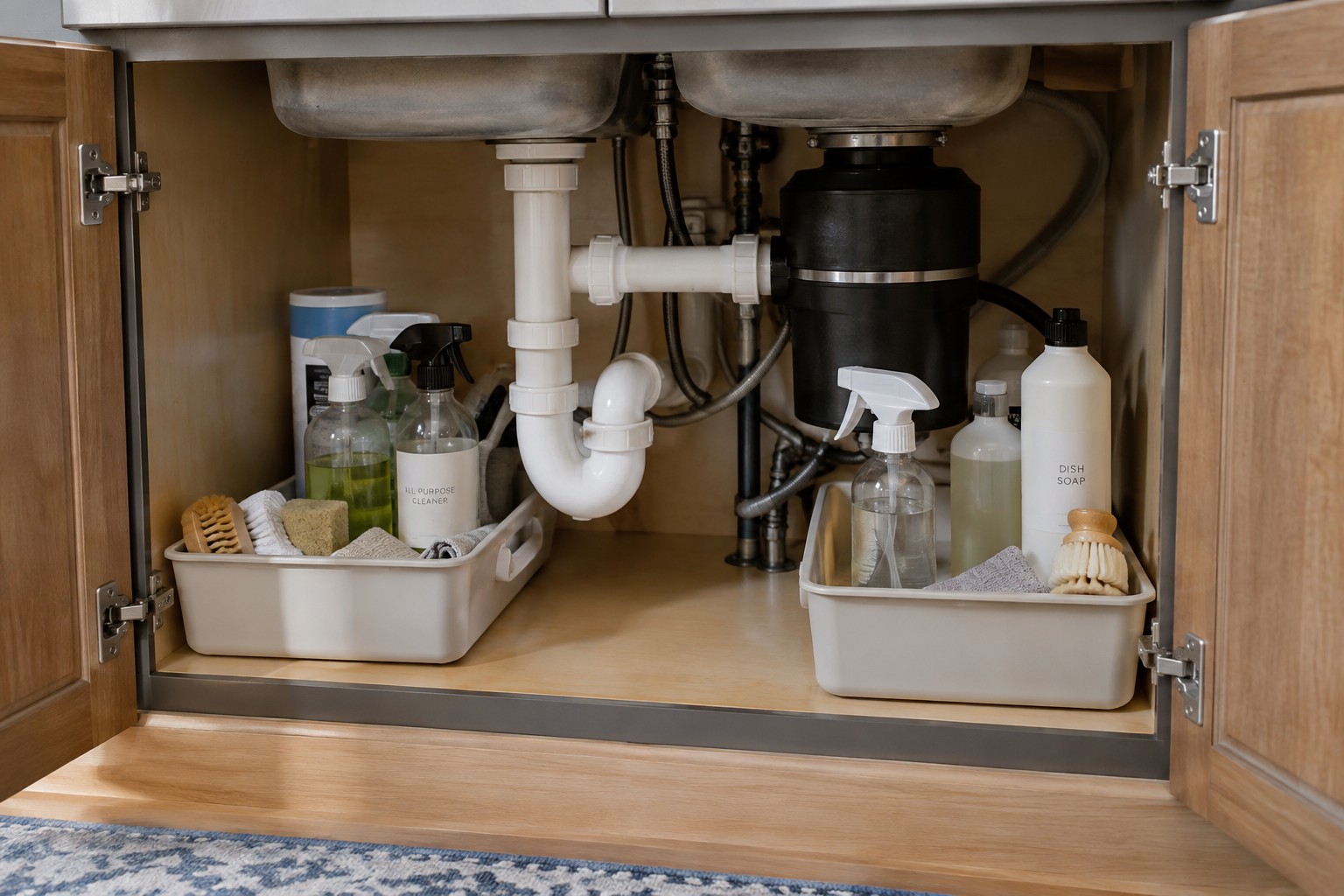
The cupboard beneath a sink is rarely the generous box shown by its external dimensions. Pipes, hinges and access points divide it into awkward pockets. Before choosing storage, empty the cupboard, check for signs of leaks and make sure maintenance issues are addressed. An organiser should not hide a problem or make the plumbing difficult to reach.
Map the usable space
Measure each side of the pipework separately, including the clear opening through the doors. A basket may fit inside the cupboard but fail to pass the hinge. Note where a shut-off valve or removable plumbing part needs access. Keep those areas clear rather than filling them with containers that would have to be unpacked in a hurry.
Group supplies according to the cupboard's actual role. Kitchen washing-up supplies are different from bathroom cleaning products, and neither necessarily belongs with spare towels. Do not move chemicals into unlabeled matching bottles for appearance. Retain original containers and follow their storage directions, including any requirements relating to children, pets, temperature or separation from other products.
Use removable groups
A shallow caddy for regularly used cleaning items can be lifted out as a unit, leaving the rear of the cupboard visible. A second group might hold unopened refills. Avoid stacking a daily-use container beneath another basket, because the need to move both often leads to products being left loose at the front.
Pull-out systems can help, but check their installation requirements and loaded dimensions carefully. A shelf that clears a pipe while empty may collide with it when tall bottles are placed on top. Door-mounted storage also needs clearance when the door closes; test it with the contents in place rather than judging the empty rack.
Leave enough room to see the cupboard floor and inspect the area periodically. A removable protective liner may make cleaning easier, but it is not a repair for a leak. Avoid storing things here simply because they fit. Paper reserves and seldom-used appliances may be better located elsewhere if they make this already awkward cupboard harder to manage.
Test a realistic cupboard load
In a cupboard divided by a central waste pipe, one narrow removable group on either side may be more workable than a wide two-tier unit. Put the tallest daily-use bottle in its intended position and close the door gently. Check the hinge, pipe and shelf above it. Then remove the bottle as if cleaning in a hurry. If it tilts against plumbing or requires moving the whole unit, change the arrangement before filling the remaining space.
Keep a modest refill group behind the everyday supplies only if you can see what it contains. A written shopping list may be more useful than storing several duplicates beneath the sink. If a leak ever requires quick access, the entire group should lift out without loose objects tumbling from the back. Practising that removal once is a more meaningful test than an empty-cupboard photograph.
The finished arrangement should let you find a product, remove it and return it with one straightforward movement. If that requires lifting three other objects, reduce the contents or change the groupings before buying another storage accessory.