Build a playlist around the pace of a gathering
Use music to support the room's changing energy, not to compete with it.
A celebration playlist is different from a list of favourite songs. It needs to work while people arrive, talk, eat and perhaps stay later. Begin with the kind of gathering and the space rather than selecting the loudest or most memorable tracks first.
Think about the guests without trying to represent everyone's entire musical history. A few familiar pieces can create connection, but constant novelty or abrupt shifts may draw attention away from conversation. Choose an overall range that suits the occasion and avoid content inappropriate for the people present.
Shape a gentle progression
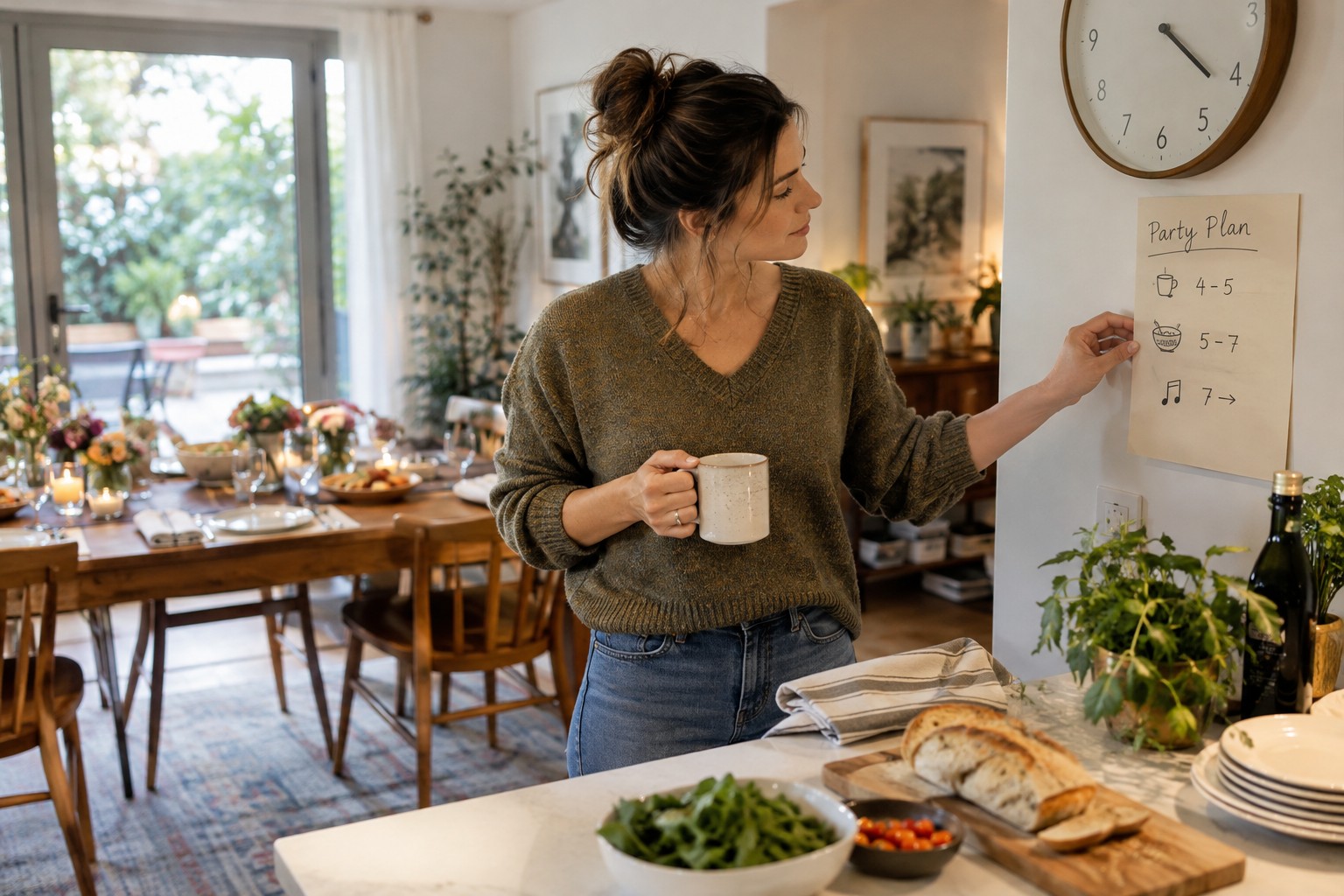
Start with music that leaves room for greetings. The middle of a meal may need a lower level and a steadier mood than an activity afterwards. Make separate sections or shorter lists if that is easier to control than one very long sequence.
Check the transitions between tracks, particularly changes in volume or pace. A playlist can feel uneven even when each song is welcome individually. Listen to a sample of the sequence through the actual speaker rather than judging only through headphones.
Test the equipment in the room
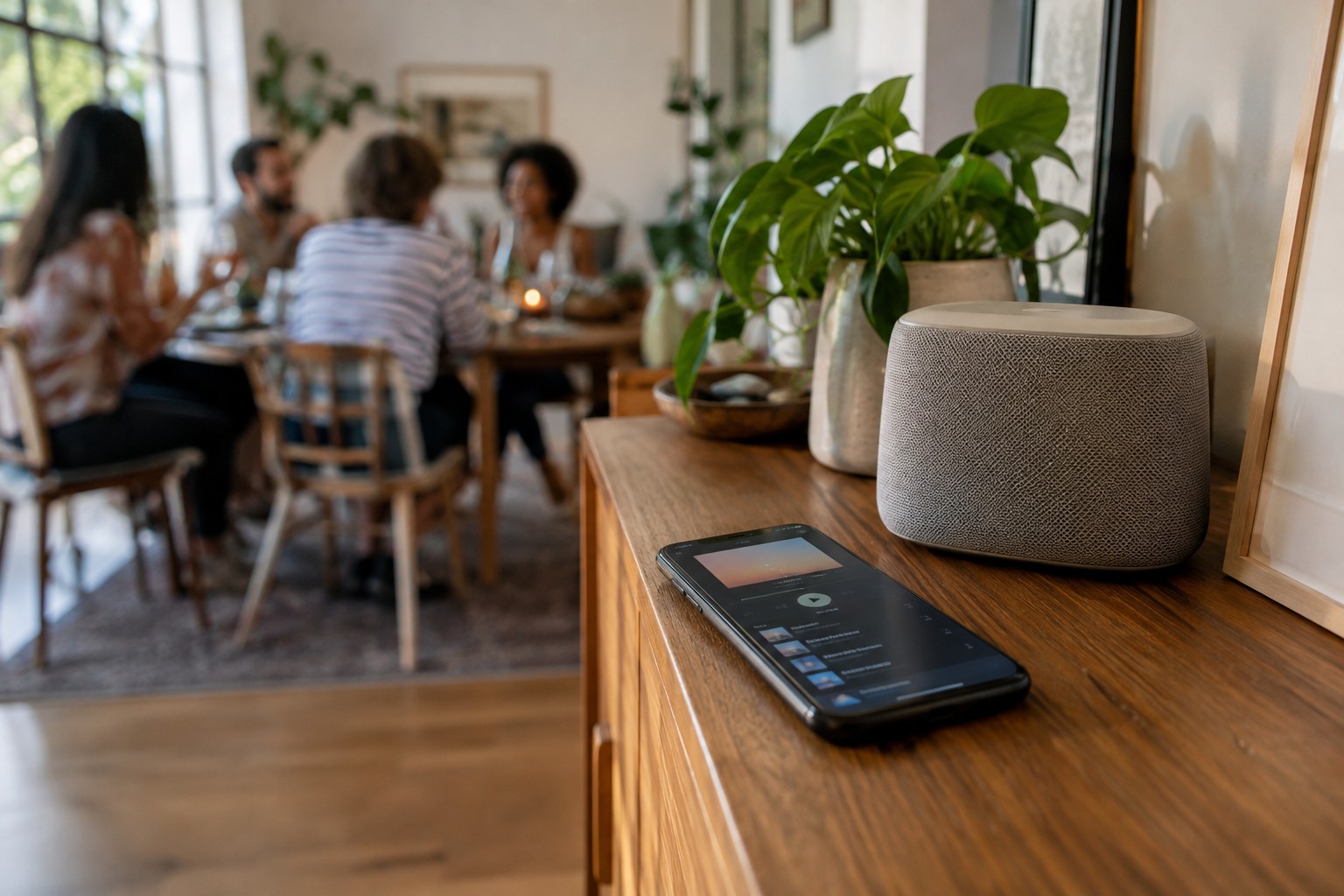
Place the speaker where it does not dominate one seat or obstruct movement. Keep cables clear of walking routes and use equipment as instructed. Check power, connection and playback settings before guests arrive so that the first minutes are not spent troubleshooting.
Set the volume while people are talking, not only in an empty room. If guests are leaning forward or repeating themselves, lower it. Someone with hearing or sensory needs may prefer a quieter setting or no background music, and that should be easy to request.
Avoid making a guest the unannounced music operator. If others are invited to add songs, agree how that works without turning every conversation into a debate about the next track. Keep the controls accessible to the person responsible.
For public, business or otherwise regulated events, check the relevant music permissions and service terms rather than assuming a personal subscription covers every use. This article concerns the arrangement of a small gathering, not licensing advice.
Have a simple fallback, including turning the music off. A playlist is supporting material. If the conversation is lively and the room feels comfortable without it, silence is not a technical failure to be corrected.