Shape a guest list around the gathering you can host
Start with the experience you can offer, not the number of people you could possibly invite.
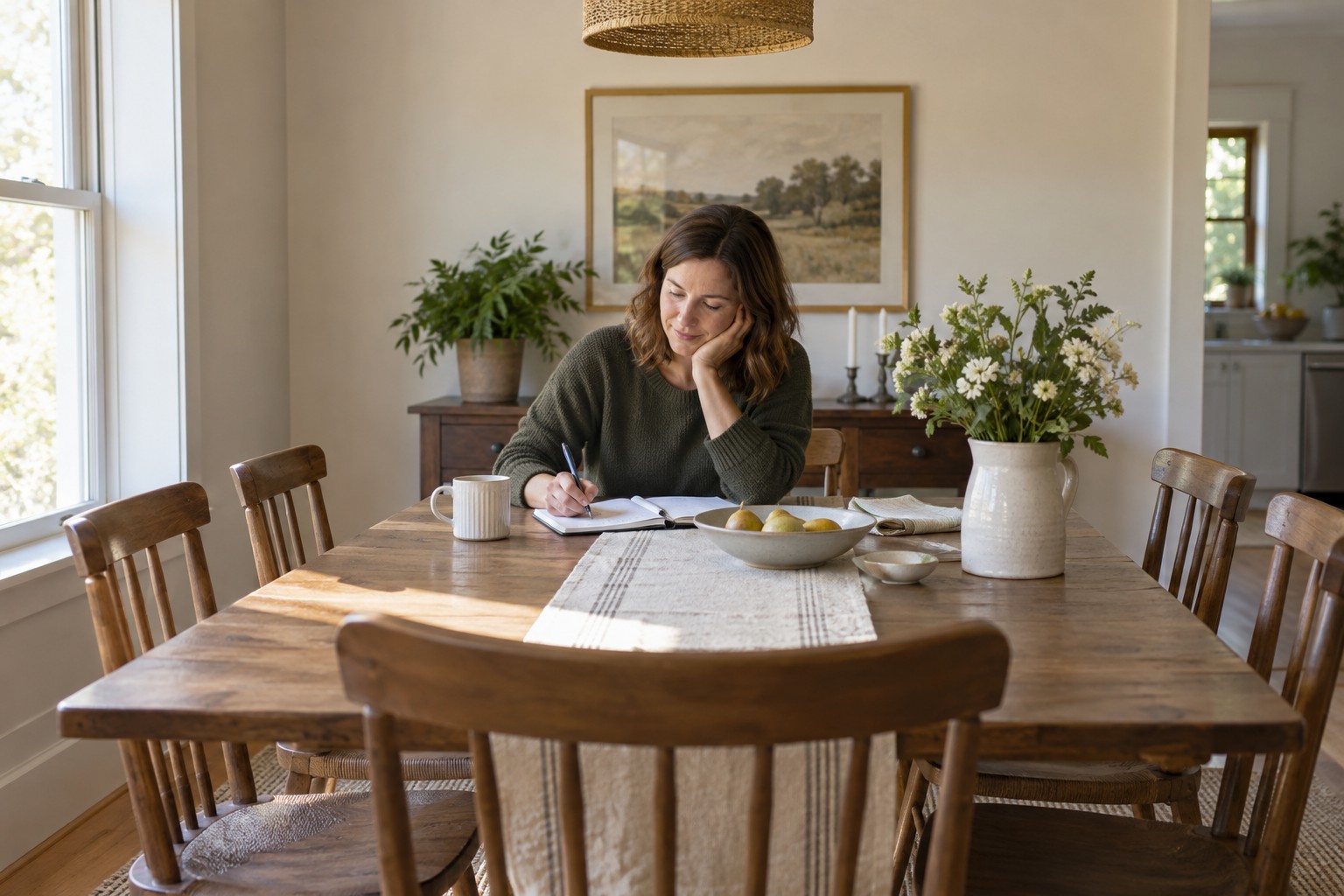
A guest list is partly a question of relationships and partly a question of capacity. Think about how people will sit, eat and move through the space before deciding the number. A room that can hold many standing guests may not support the same number for a seated meal.
Choose the kind of gathering first. A few friends around a table allows different conversation from a larger open afternoon. Neither is automatically more generous. The useful choice is the one you can host without relying on awkward seating, inaccessible routes or more preparation than you can manage.
Be clear about the invitation
State who is invited, whether partners or children are included and what kind of event to expect. This prevents guests from having to guess or ask uncomfortable questions later. Use a direct, warm tone rather than a long list of exclusions.
If capacity is limited, you do not need to justify it with an elaborate explanation. A smaller gathering can remain small. Consider separate occasions where appropriate instead of expanding one event until its original purpose disappears.
Think about comfort as well as introductions
Consider whether guests know one another and what might help conversation begin. You can introduce people through a shared interest without assigning them to entertain each other. Avoid disclosing private information as an icebreaker.
Ask about needs relevant to the arrangement, such as dietary requirements or access, through a respectful private route. Do not make someone explain personal circumstances to the entire group. If the space cannot meet a need, discuss it honestly rather than promising an arrangement that has not been checked.
Keep a simple response record so that shopping and seating reflect the people actually coming. Follow up politely when a decision is needed, and allow for ordinary changes. A declined invitation is not necessarily a judgement on the occasion.
Avoid adding guests at the last moment without reconsidering the practical effects. One extra person may require another place setting, a different table layout or a revised food plan. Check those consequences rather than assuming that hospitality always means stretching indefinitely.
Check the room with the proposed number
Place chairs where they will actually go, including the chair that usually comes from another room. Open the relevant doors and walk the serving route. A guest should not have to stand every time someone needs the kitchen. If the layout does not work, reduce the number or choose a different style of gathering instead of relying on everyone to squeeze in.
For a mixed group, avoid making one guest responsible for knowing nobody. Introduce them early and offer enough context for conversation without disclosing anything private. You might mention a shared interest in books or gardening, then let the discussion develop rather than continuing to manage it.
If someone asks to bring another person, respond to the actual capacity and invitation rather than to pressure in the moment. A warm explanation that the table is already full is clearer than agreeing and hoping to solve the seating later. Boundaries can make the gathering more comfortable for everyone who attends.
A considered guest list leaves the host able to welcome the people present. It is not a ranking of everyone important in your life, and one small event does not need to demonstrate every relationship at once.