Choose what to keep in a celebration memory box
Keep objects that carry a particular memory, with enough context to understand them later.
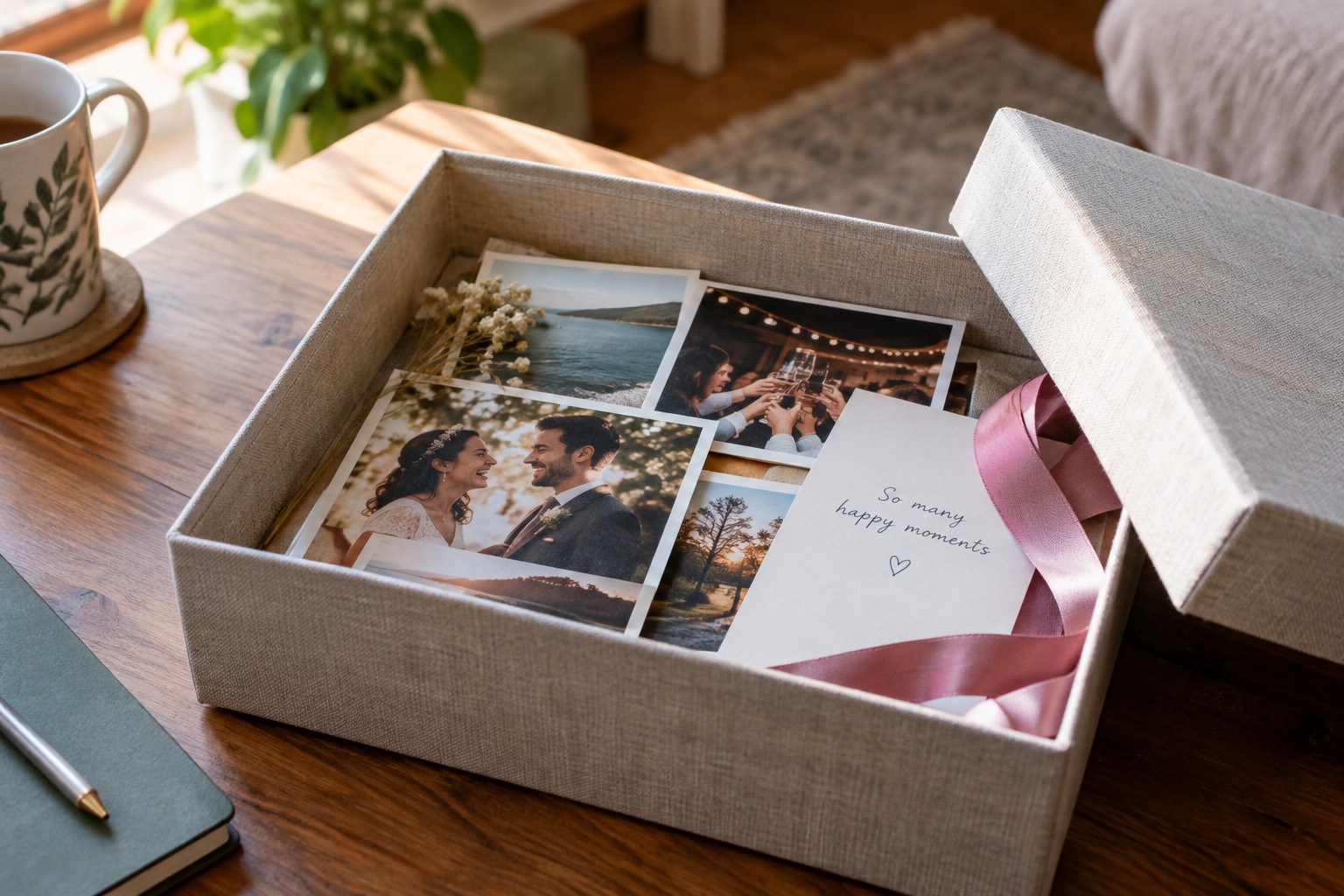
A celebration memory box works best when it is selective. Begin with the objects already connected to a particular occasion: a card, a small photograph, a programme or another item with a clear story. You do not need to preserve every piece of wrapping and every decoration to retain the experience.
Choose a box that suits the material and available storage. Keep it in a dry, suitable place away from conditions likely to damage the contents. For valuable or delicate items, seek appropriate conservation advice rather than assuming an ordinary decorative box provides long-term protection.
Keep the story with the object
Add names, dates and a brief explanation where they will be useful. Write on a separate note if marking the item could damage it. “From the lunch after the move” may mean something now but become ambiguous years later; a few specific details preserve the connection.
Ask other people before keeping something that belongs to them or sharing private messages. A family celebration can contain several people's memories, and your box should not automatically become the archive for everyone's personal material.
Choose representation rather than volume
One card that captures a relationship may carry more meaning than a large stack kept only because discarding any feels difficult. A photograph of a bulky decoration can preserve its appearance without keeping the object itself. You can also retain a small representative piece where appropriate.
Give uncertain items a temporary space and a review date. Emotional decisions may be easier after the occasion is less immediate. Do not force an instant edit, but avoid merging the temporary pile into permanent storage without another look.
Separate items needing different care. Food, damp flowers or unsuitable materials can affect other contents. Do not place something in the box merely because it was part of the celebration; consider whether it can be stored appropriately.
Occasionally open the box for the purpose it exists: remembering. Notice which objects still connect you to a clear moment and which have become unexplained clutter. The collection can change without invalidating the occasion.
Edit one occasion at a time
Lay out the material from a single celebration and identify the different memories it represents. Five similar photographs may all recall the same moment, while one handwritten card records a relationship no other item captures. Choose by meaning rather than by size or visual attractiveness alone.
A large item can be represented by a photograph with a note about its role. If you keep the original instead, make that an intentional storage decision and provide suitable space. Do not fold or dismantle something important merely to force it into the current box.
Create a simple index only if the collection needs one. A note inside the lid listing occasions or dates can help without turning the box into a museum catalogue. Keep the arrangement accessible enough that opening it is enjoyable rather than a delicate operation you continually postpone.
For a shared celebration, each person can choose a small number of items they want represented before the final selection is made. Note whose memory an object carries when that helps explain it. This avoids one person's preference for photographs erasing another person's attachment to a handwritten message, while still keeping the collection within a manageable boundary.
Leave some room for the future rather than expanding storage automatically after every event. A keepsake box is a chosen account of meaningful moments, not a requirement to retain physical evidence of every happy day.