Choose a tote for the things you carry
Test the loaded bag, its opening and its handles before judging it by empty dimensions.
An everyday tote should be chosen around its contents, not around the idea of being able to carry everything. A larger bag can encourage unnecessary weight and make small items harder to find. Start by laying out what accompanies you on an ordinary day.
Measure the largest object
A laptop, notebook or lunch container may determine the minimum usable dimensions. Check the bag's internal opening as well as the outside measurements. A tapered top or a zip can make a bag less accessible than its width suggests. If carrying a computer, use protection appropriate to the device rather than assuming an unpadded tote provides it.
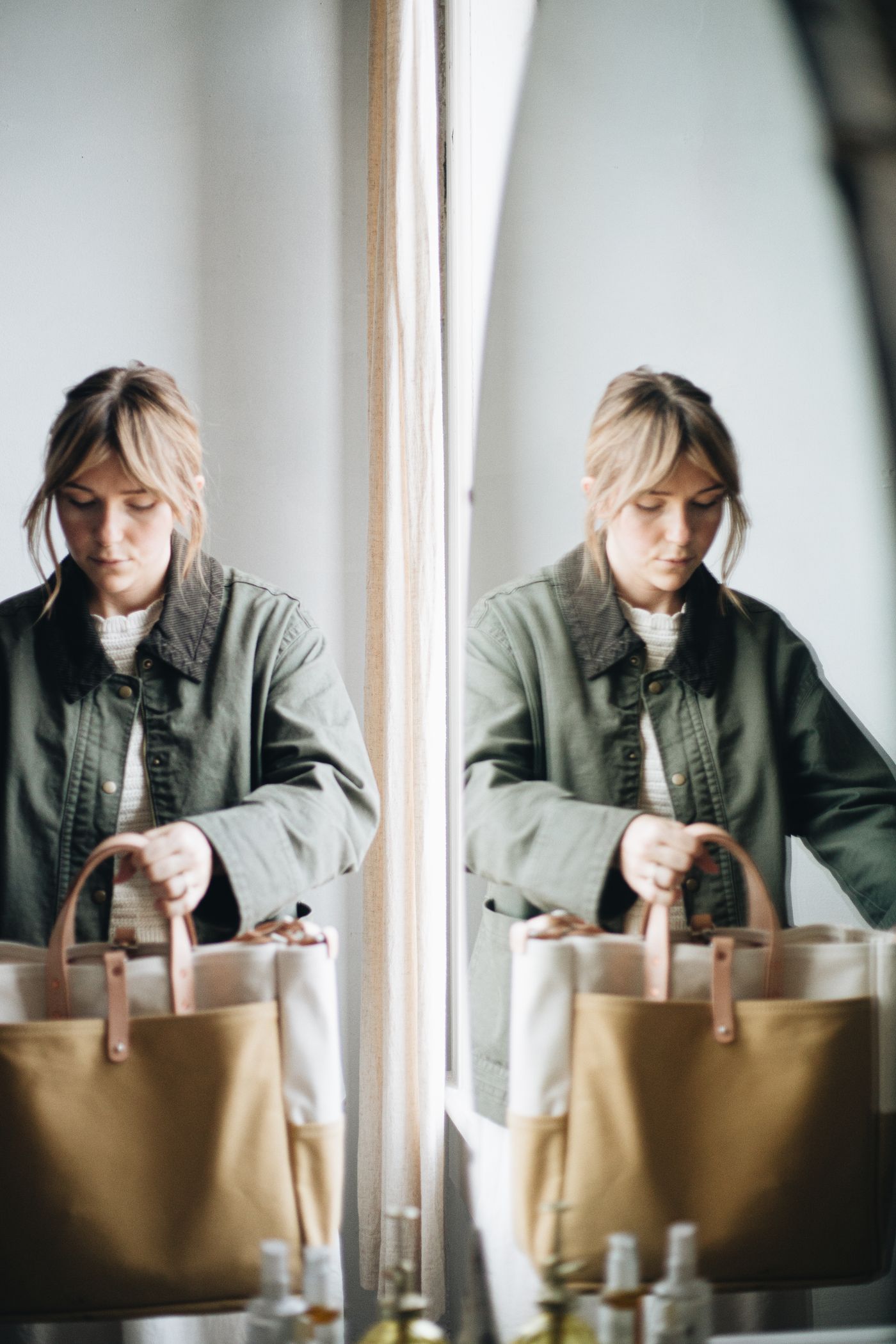
Put the usual contents in the bag if possible and try it on your shoulder. Handles that feel comfortable empty can press or slip when loaded. Check whether they fit over the coat you commonly wear, and whether the bag can be carried by hand without dragging.
Choose enough organisation
One small pocket for keys or a travel card can save repeated searching. Too many compartments may become confusing if they do not match what you carry. A removable pouch can gather small essentials, but avoid filling the tote with several pouches whose contents are equally mysterious.
Consider the closure in relation to your journeys. An open tote is easy to access but exposes the contents differently from a zipped bag. Choose a level of closure appropriate to where and how you use it. Keep valuables secure rather than relying on the tote's size to conceal them.
Inspect the practical details
Look at seams, handle attachment and the base while avoiding the assumption that appearance alone proves durability. Read the maker's load and care guidance where available. A light lining may make small objects easier to see, while a wipeable surface may suit certain routines; assess the actual material rather than marketing language.
Think about where the bag rests during the day. A soft tote may fold conveniently but not stand upright. A structured base can help keep contents organised, though it adds weight and storage bulk. Neither design is universally better.
Before purchasing, remove the things you rarely use from your current bag. The right next tote may be smaller than expected. Choose capacity for a normal day with a little flexibility, not for every possible contingency carried all the time.
Try a typical sequence
Imagine arriving at a station or café with the loaded tote. Can you retrieve the travel card or wallet without putting the bag on the floor? Can you close it again with the other hand occupied? If a water bottle is carried, does it have a secure place away from papers and electronics? These small actions reveal more than simply checking that all the objects fit inside.
Try the bag while wearing the type of outerwear used most often. A handle may slip from a smooth coat or feel too short over a thick sleeve. Cross-check the loaded bag with any other item you regularly carry, such as an umbrella. The combination should be manageable without a special grip that becomes tiring after a few minutes.
Finally, decide how the tote will be stored between uses. A structured bag may need shelf space to retain its shape, while a soft one may fold according to its care guidance. Avoid choosing a bag whose only available home is a crowded hook that strains the handles. Everyday usefulness includes the moments before leaving and after returning, not just the journey itself.