Choose a host gift that does not create extra work
Bring something the host can enjoy later, rather than another task during the gathering.
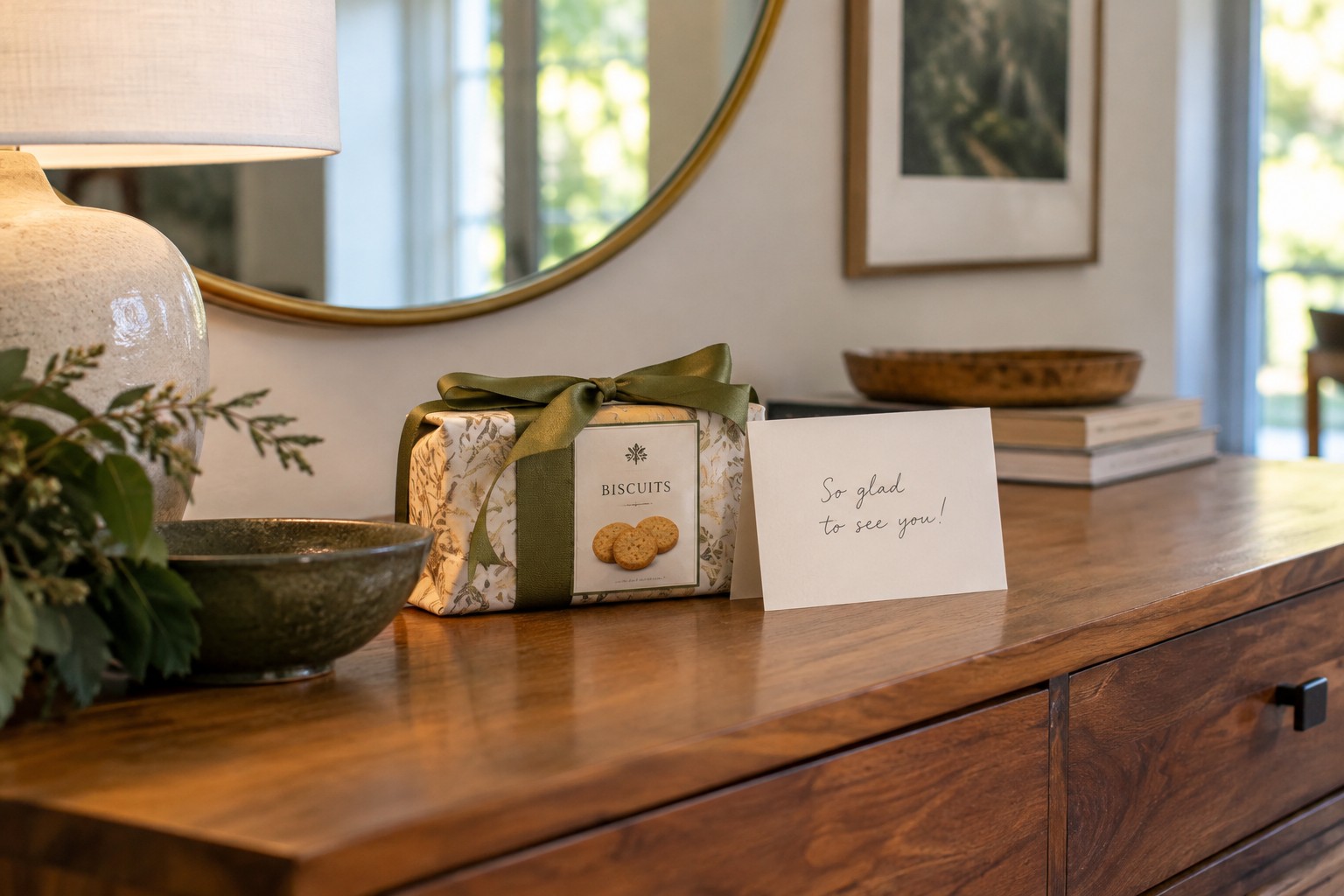
A host gift is a thank-you for the invitation, not an instruction to change the menu or display something immediately. Choose an item that can be set aside without fuss. A small consumable, a card or another modest object suited to the host can work better than a dramatic arrangement needing instant attention.
Ask before bringing food intended for the meal. The host may already have planned portions, dietary requirements and serving space. If you bring an edible gift without an agreement, make clear that it is for another time rather than expecting it to appear on the table.
Consider the moment of arrival
Loose flowers require water, a vase and a place to arrange them just as guests are arriving. If flowers suit the household, choose a manageable presentation and consider the host's preferences, pets and available space. Do not assume every household welcomes strongly scented blooms.
A bottle also deserves some thought. Not everyone drinks alcohol, and someone who does may still prefer not to serve it that evening. Choose from what you know about the host rather than treating wine as the automatic answer to every invitation.
Keep the scale comfortable
A very expensive gift can create a sense of obligation that does not match an informal meal. Choose within your means and the relationship. The gesture should not turn a simple invitation into an exchange that has to be balanced.
For a frequently visited friend, a specific offer to help or a thoughtful note afterwards may be more appropriate than accumulating gifts at every visit. If offering help, ask what would be useful and accept the answer. Taking over the kitchen is not necessarily a favour.
Hand over the gift briefly and let the host return to welcoming everyone. Include relevant information for food or care when needed, but do not require a lengthy explanation while other guests wait at the door.
Distinguish a gift from a contribution
If the host asks you to bring dessert, confirm the number of people, dietary needs and whether any serving equipment is required. That is a contribution to the meal, so timing and coordination matter. A separate small gift is optional; you do not need to add one simply because the dessert was requested.
If you bring a jar of something the host likes for another day, say so plainly at the handover. Keeping its ingredient and storage information attached lets the host put it away without stopping to ask several questions. Choose something that can be stored under the conditions available, rather than introducing an unexpected item needing immediate refrigeration.
A useful test is whether the host can acknowledge the gift and return to their guests within a moment. If it needs assembly, arranging, discussion or an urgent search for space, reconsider the presentation or agree on a different time to give it.
Thank the host after the visit as well. Mention something you enjoyed, such as a conversation or a dish, without reviewing the event as though you were evaluating a service. The lasting courtesy is recognising the time and attention they gave, not the size of the object you brought.