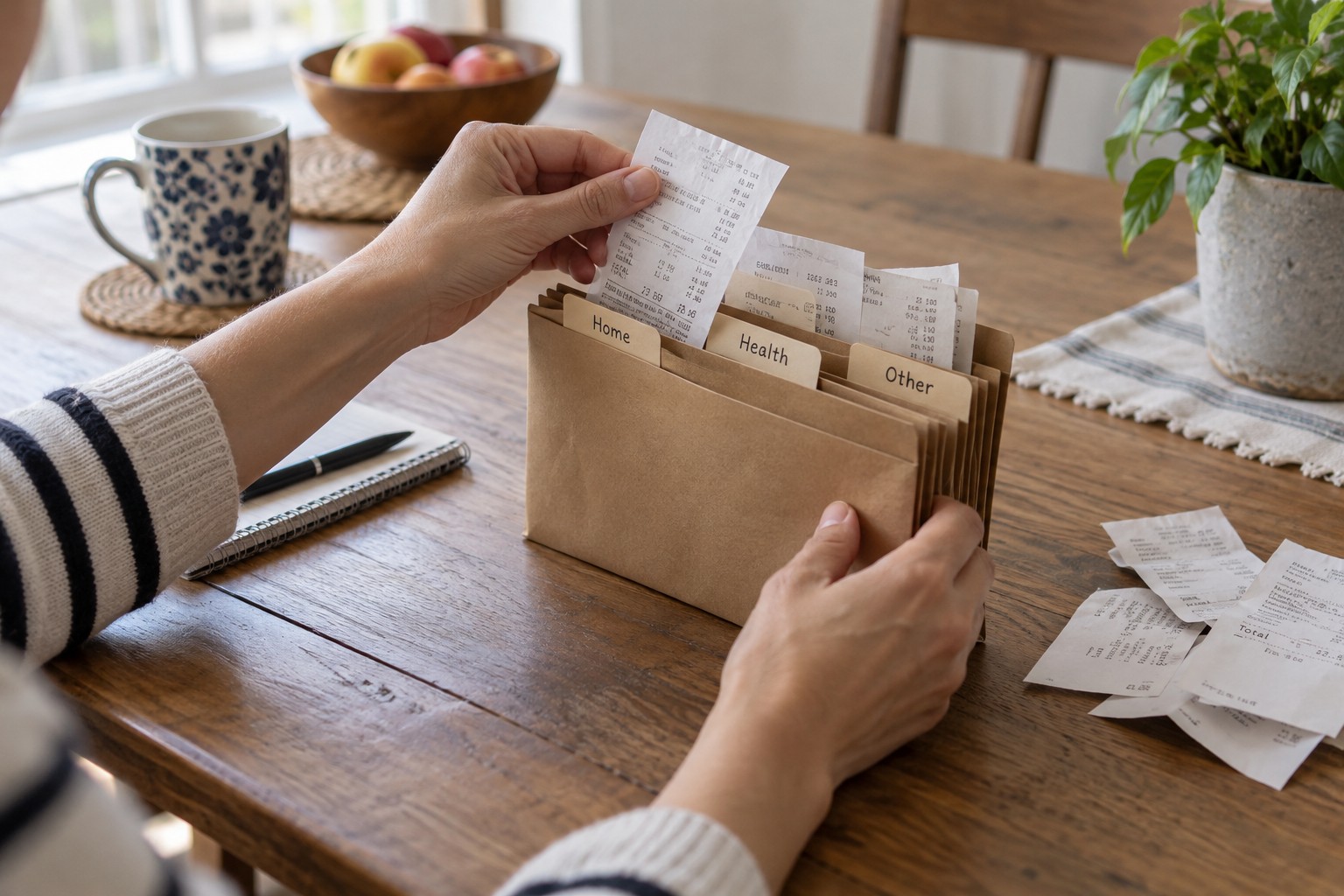
Give incoming post a short route through the house
Open, decide and route the post before it becomes an unexplained pile.
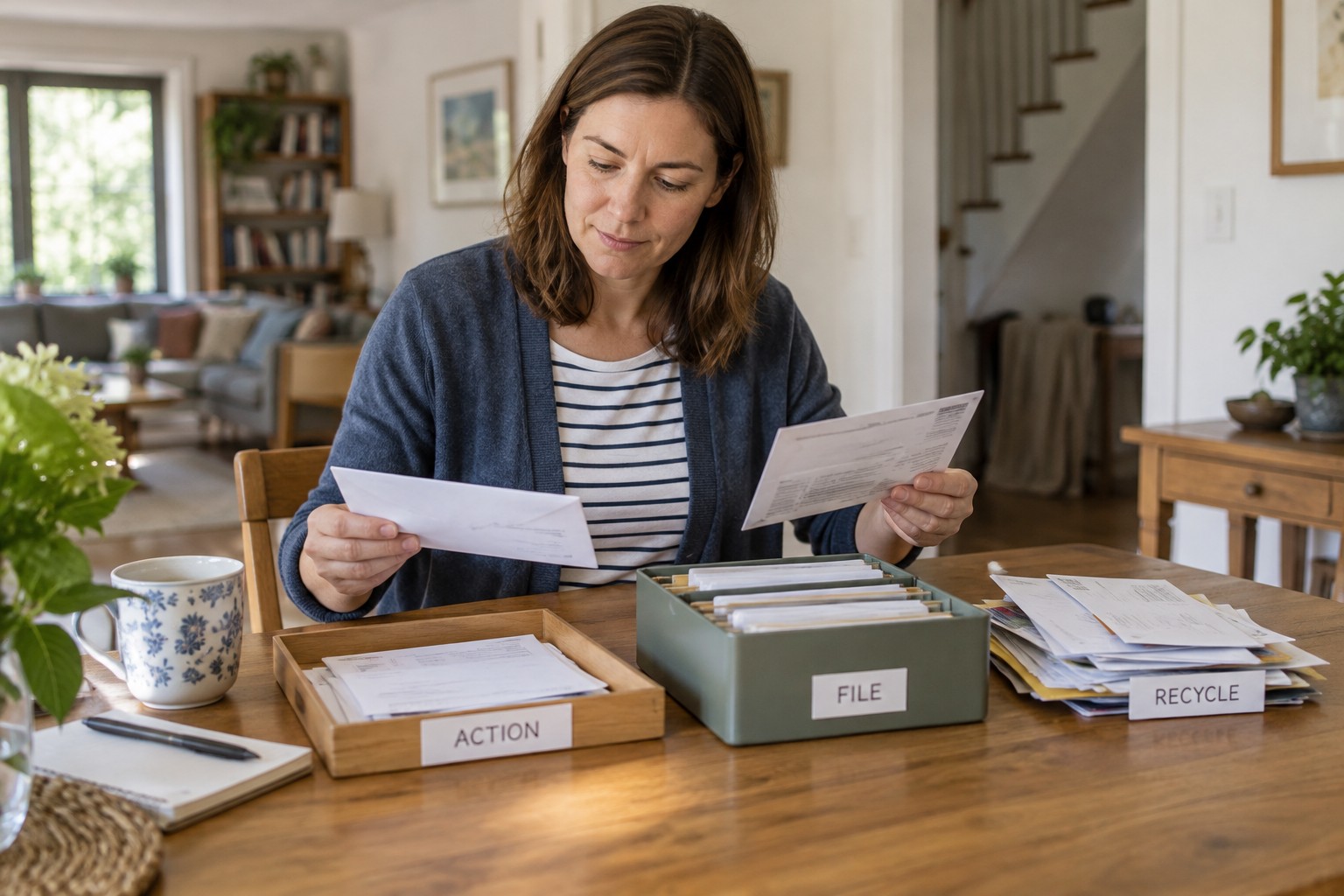
Post becomes difficult to manage when unopened envelopes, reference papers and completed actions share the same surface. Create a short route with three possible outcomes: something to act on, something worth keeping and something to dispose of appropriately. A decorative letter rack is optional; the decision is the useful part.
Open your own post at a time when you can read it. Leave other people's correspondence for them unless they have asked you to handle it. If a document looks urgent, identify the actual deadline and action rather than placing the envelope somewhere prominent and hoping visibility will be enough.
Keep the action attached
Write a short next step on a separate note or in your task list: reply, check an amount, arrange a visit or ask a question. Put the related paper in a single action folder. Avoid separating a form from the envelope or reference number needed to complete it.
Calendar the deadline with enough room for the work and any delivery time. The folder holds the material; the calendar reminds you when it matters. Repeatedly moving the same letter between the kitchen and desk does neither job.
For reference papers, file by a category you would use when looking for them. A warranty belongs with the relevant purchase information; a current service document belongs with that service. Retention needs vary by document and circumstances, so check the relevant organisation's advice rather than applying one universal disposal date.
Reduce unnecessary arrivals
If unwanted catalogues repeatedly enter the same route, use the sender's stated preference or cancellation process where available. Check what you are agreeing to when changing delivery settings for important documents. Going paperless only helps if the digital equivalent will actually be noticed and stored.
Keep a suitable disposal method for papers containing personal information. Plain advertising and sensitive correspondence need not take the same route. Do not leave a box of old statements beside the recycling indefinitely while waiting for a perfect annual sorting day.
Work through a mixed handful
Consider three items arriving together: a service appointment letter, a catalogue and a warranty document for a recent purchase. The appointment goes onto the calendar with any action needed to confirm it, and its details remain in the action folder until settled. The catalogue can be declined or disposed of if unwanted. The warranty information joins the purchase record. None of the three needs to remain in an unexplained stack by the door.
If the letter raises a question, capture that question before putting it away. For example, “confirm whether someone must be home for the full visit window” gives you a specific reason to contact the provider. Keep the relevant reference number with the question, but do not put account details on a publicly visible household noticeboard.
An action folder also needs a review point. Look through it when you plan the coming week and after completing a task. Move finished reference papers to their longer-term home. Leaving answered correspondence in the action folder makes it harder to distinguish a real outstanding issue from a task already done.
Finish each session by clearing the opening surface. Put the action folder where you review tasks and return filed documents to storage. A small amount of post handled completely can be easier to maintain than a large monthly session in which every envelope must first be understood again.