Plan meals around the week you are having
Match the cooking to your available evenings, existing ingredients and appetite for leftovers.
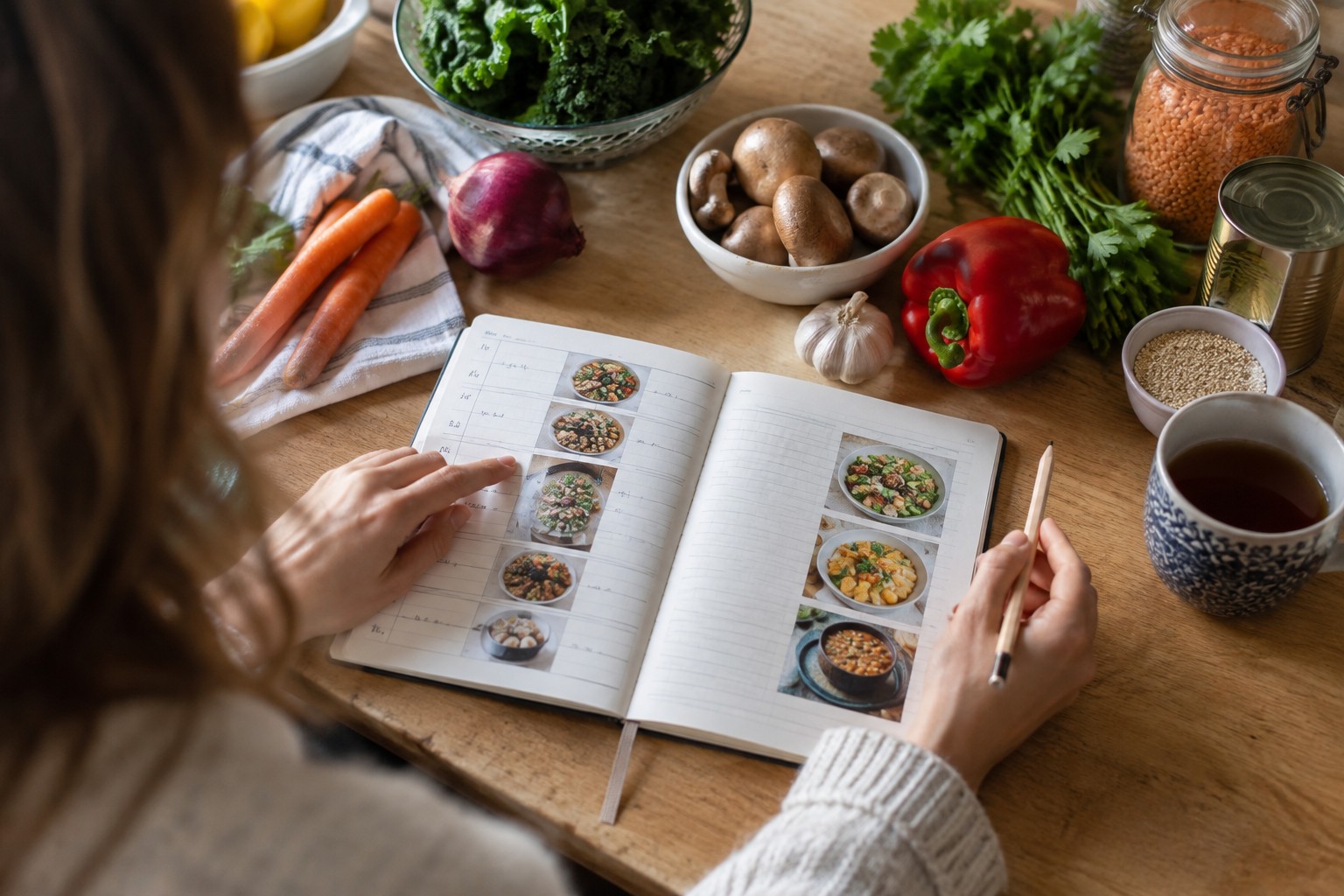
Meal planning starts more usefully with the calendar than with a collection of recipes. Mark evenings when you arrive late, days when someone eats elsewhere and occasions when several people need food at different times. A meal that requires uninterrupted cooking is not a helpful choice for an evening with repeated departures and returns.
Next, look at what is already in the kitchen. Identify ingredients that need using and check their storage instructions and dates. Do not plan around food that is no longer suitable to eat. Choose two or three ingredients you can use across different meals without making every dinner feel like a repetition.
Give each evening the right amount of cooking
Reserve a more involved dish for a day with time to prepare it. Put familiar quick meals on the crowded evenings. A plan might include a vegetable pasta, a tray roast and a simple omelette rather than seven new recipes. Familiarity reduces the amount of checking and shopping needed.
Leave one meal open if the week often changes. It can use an appropriate leftover, a freezer option or ingredients that keep for another day. This is different from buying perishable food for a meal you already suspect will not happen. Flexible ingredients give the plan room to move without creating waste.
Check portions against the people who will actually eat. If making extra, decide who wants the additional food and when it will be used. Follow current food-safety guidance for cooling, storage and reheating rather than assuming every cooked dish can wait until the end of the week.
Make the list from the plan
Write down missing ingredients in useful amounts. A recipe calling for a handful of herbs may leave most of a bunch unused; another meal can use the remainder if that suits the menu. Do not add an unwanted recipe solely to rescue a cheap ingredient, though. Sometimes buying a smaller quantity is the simpler choice.
Include breakfasts, lunches and ordinary snacks that are easy to overlook while concentrating on dinner. Check basic supplies before shopping. The plan becomes less useful if dinner is arranged but there is nothing for the next morning.
Work through the overlapping ingredients
Imagine you have carrots, half a bag of spinach and a packet of couscous, with one late evening and one evening at home. A carrot-based dish on the quieter day and a familiar quick meal using spinach on the late day may fit better than buying ingredients for two unrelated new recipes. The couscous can support a suitable meal later if its storage and date allow. Existing food gives you options, not a command to combine everything in one dish.
Check what a recipe means by preparation time. Chopping, washing equipment and finding ingredients may sit outside the attractive cooking figure. For a crowded evening, choose based on your own experience of making the dish, including cleanup. A one-pan label does not automatically mean little work.
Different arrival times may call for components served separately rather than one finished dish everyone must eat simultaneously. Agree how each person's portion will be kept and served safely. If that arrangement becomes complicated, choose a different meal instead of expecting the cook to repeat the entire process several times.
Keep a brief fallback list made from familiar meals and ingredients you normally have. This is not an additional menu to shop for. It is a way to make one change quickly when an appointment overruns or someone unexpectedly eats elsewhere.
After the week, notice which meals were moved or abandoned and why. Too much preparation, a disliked ingredient or an unrealistic serving time is information for the next plan. Keep a short record of meals that fitted well, so each new week does not have to begin with an empty page.