Write a grocery list from the food you already have
Shop from a short inventory and a few planned meals, rather than from memory at the shelf.
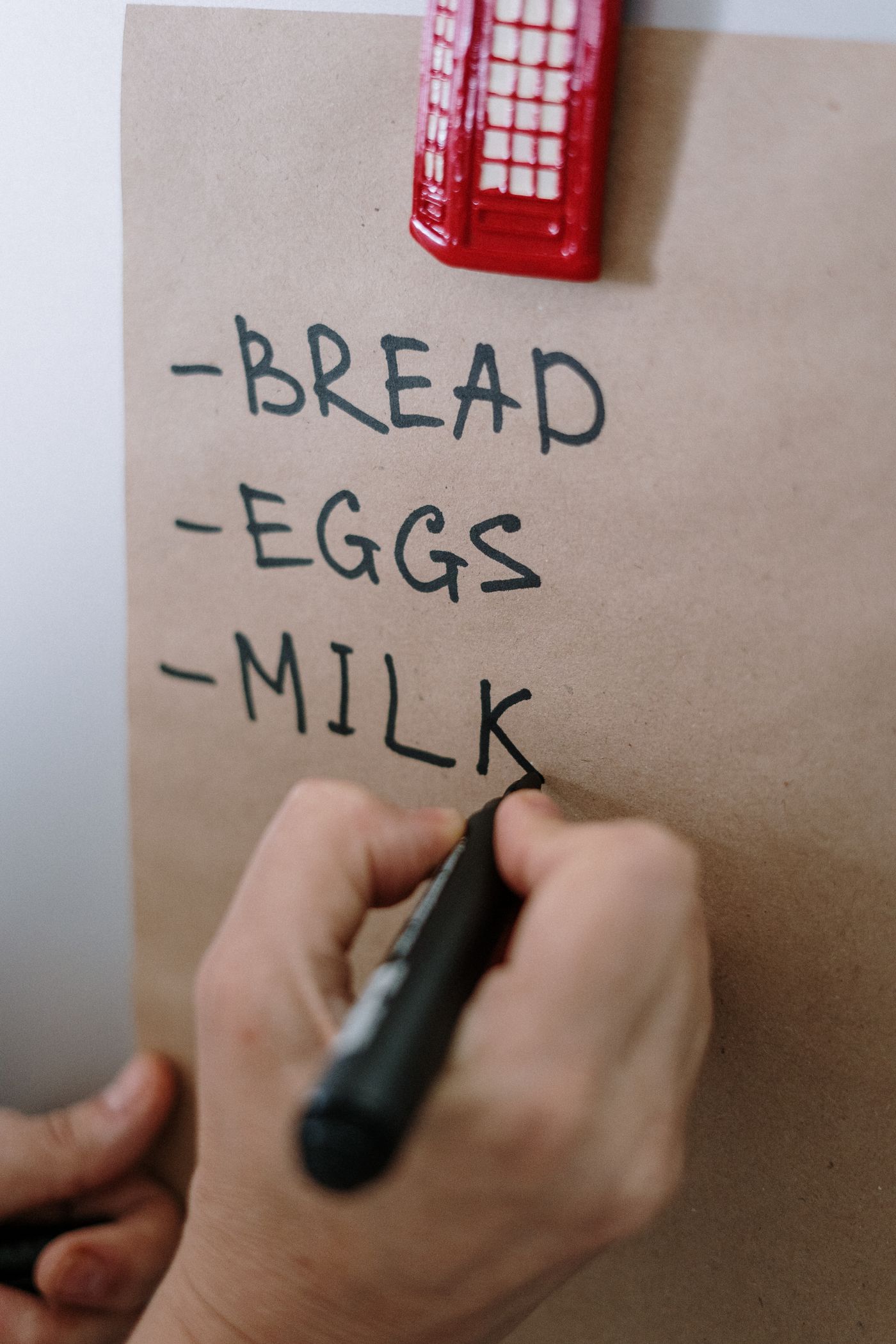
The most useful grocery list begins with an open cupboard. Check the foods you expect to use before writing down replacements, especially ingredients that hide behind larger containers. Finding two unopened packets after buying a third is often a visibility problem rather than a failure to remember everything in the kitchen.
Take one small area at a time: fridge, freezer, then dry storage. Note suitable ingredients that need using, but avoid turning the exercise into a full clean. The purpose is to decide what is missing for the next few meals. Follow labels and storage guidance when assessing food; a shopping plan is not a reason to use something unsafe.
Write quantities you can shop from
“Tomatoes” may be enough for a familiar household staple, but a new recipe needs an amount. Write the quantity beside the ingredient and check whether a pack will cover more than one planned meal. For loose produce, think about the number of people eating rather than automatically choosing the largest bag.
Group the list roughly by the areas of the shop. Produce, chilled items, cupboard goods and household supplies are sufficient for most trips. You do not need to reproduce the exact aisle order, which may change. Leave space to mark an item unavailable so that it is not confused with something already bought.
Decide on substitutions before they become extra purchases
If a dish depends on one ingredient, consider a realistic alternative. A flexible vegetable soup can accommodate a different vegetable; a particular baking recipe may not tolerate an arbitrary swap. When the key ingredient is missing, changing the meal can be better than purchasing several uncertain substitutes.
Agree how shared requests reach the list. Someone finishing the last tea bag can add tea immediately instead of relying on a message remembered later. Keep additions specific: the preferred size or variety matters when several people use different versions.
At the shop, treat promotions as optional information. A larger pack is only useful if you will use or appropriately store it. Compare the amount needed with the space available at home before accepting a multi-buy as a saving.
Plan one complete shopping example
Imagine the cupboard contains rice and two tins of beans, while the fridge has peppers and half a tub of yoghurt. If you plan a familiar rice-and-bean meal, the list may need only an onion, a preferred seasoning and whatever fresh accompaniment you want. Check amounts before assuming that the existing supplies cover everyone. An almost-empty rice packet is not the same as enough rice for dinner.
Now add breakfast and the second planned meal. If both require yoghurt, note the combined quantity and compare it with what remains. This small calculation prevents buying too little for one recipe or a large replacement that duplicates an open tub. Do the same for ingredients sold in portions, such as bread rolls.
When another person does the shopping, include a useful fallback beside a preference: an acceptable alternative variety or permission to leave the item if unavailable. For dietary requirements, substitutions need particular care and appropriate label checking. Clear instructions reduce hurried messages from the aisle without asking the shopper to guess what matters.
After unpacking, note anything the list missed repeatedly. Perhaps breakfast supplies need their own check or household items belong on a separate page. Adjust the process to those omissions rather than making the entire list longer by default.