Choose a side table for what you actually put on it
Height, reach and the shape of the base matter as much as the tabletop.
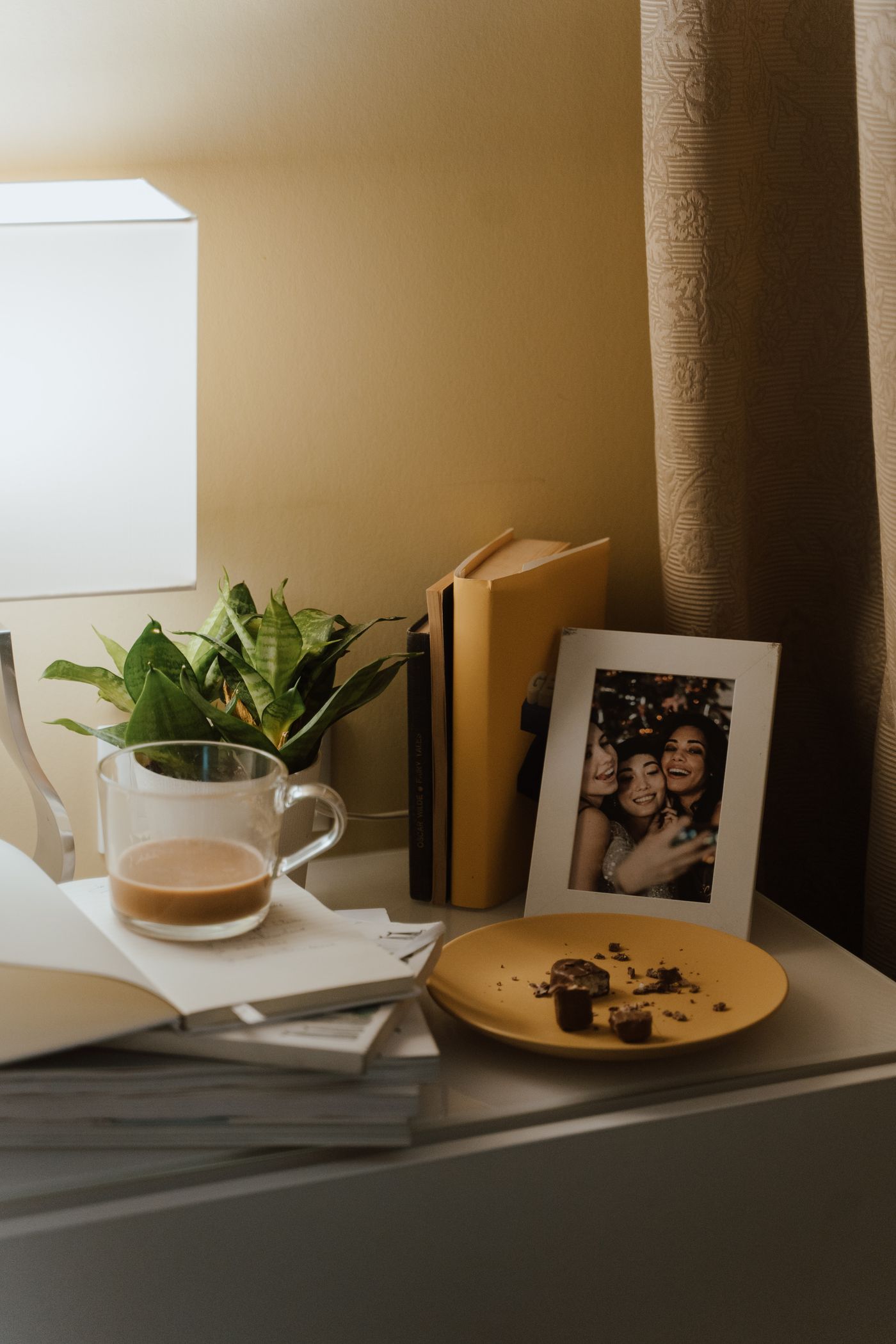
Take a look beside your usual seat before shopping for a side table. A mug, glasses, a remote control and an open book require a different surface from a lamp that stays in place all day. Write down the ordinary contents and distinguish between objects that live there and objects that arrive during use. That small inventory gives the table a job before its appearance takes over the decision.
Measure the space beside the chair, but also sit down and test the height with a temporary surface. The most convenient position depends on the seat and the person using it. A tall sofa arm can make a low table awkward to reach, while a table level with the arm may be easier for setting down a drink. Avoid relying on a photograph taken from standing height.
Look below the top
A broad pedestal, projecting legs or a low shelf can interfere with feet even when the tabletop fits. Check the whole footprint against the walking route. If you expect to pull the table towards you, consider whether it can move on the actual flooring without tipping, snagging or being too heavy to handle comfortably. A table that looks portable may be surprisingly cumbersome once a lamp is plugged in.
The surface should suit your habits. A delicate finish that needs a coaster every time may be fine for someone who enjoys that care, but inconvenient beside a frequently used family seat. Read the maker's cleaning instructions rather than assuming all stone, painted wood or metal behaves alike. Raised edges can contain small objects, although they may also reduce the space available for a wide plate or book.
Decide whether storage helps
A drawer can hold remotes and glasses out of sight. Check that it opens fully beside the sofa and that its interior fits the objects, not just that the exterior looks generous. An open shelf makes books accessible but also invites a growing stack. Choose one storage function rather than expecting the table to become a miniature cupboard.
Compare shape through a seated test
A round table can soften a narrow route, but its curved edge may provide less usable area for a rectangular book than the diameter suggests. A square top may hold the same objects more efficiently while placing a corner in the passage. Cut out both shapes at the proposed size and arrange the lamp base, coaster and book on them. Compare the remaining landing space, not merely the overall measurements.
If the table is shared by two seats, check reach from both without moving it. A position convenient for the sofa may be behind the armchair's elbow. In that case, two smaller surfaces can be more useful than one larger shared table, provided they do not crowd the room. Choose the solution that works during use, even if it differs from the symmetrical arrangement you first imagined.
Before committing, create the proposed tabletop size with paper or cardboard and place the usual belongings on it. Leave room for a hand to put down a cup without rearranging the display. If a lamp consumes nearly all the usable surface, a different light position might solve the problem more effectively than buying a much larger table.