Apple crumble with an oat topping
A shallow dish gives enough fruit beneath each spoonful of loose, golden crumble.
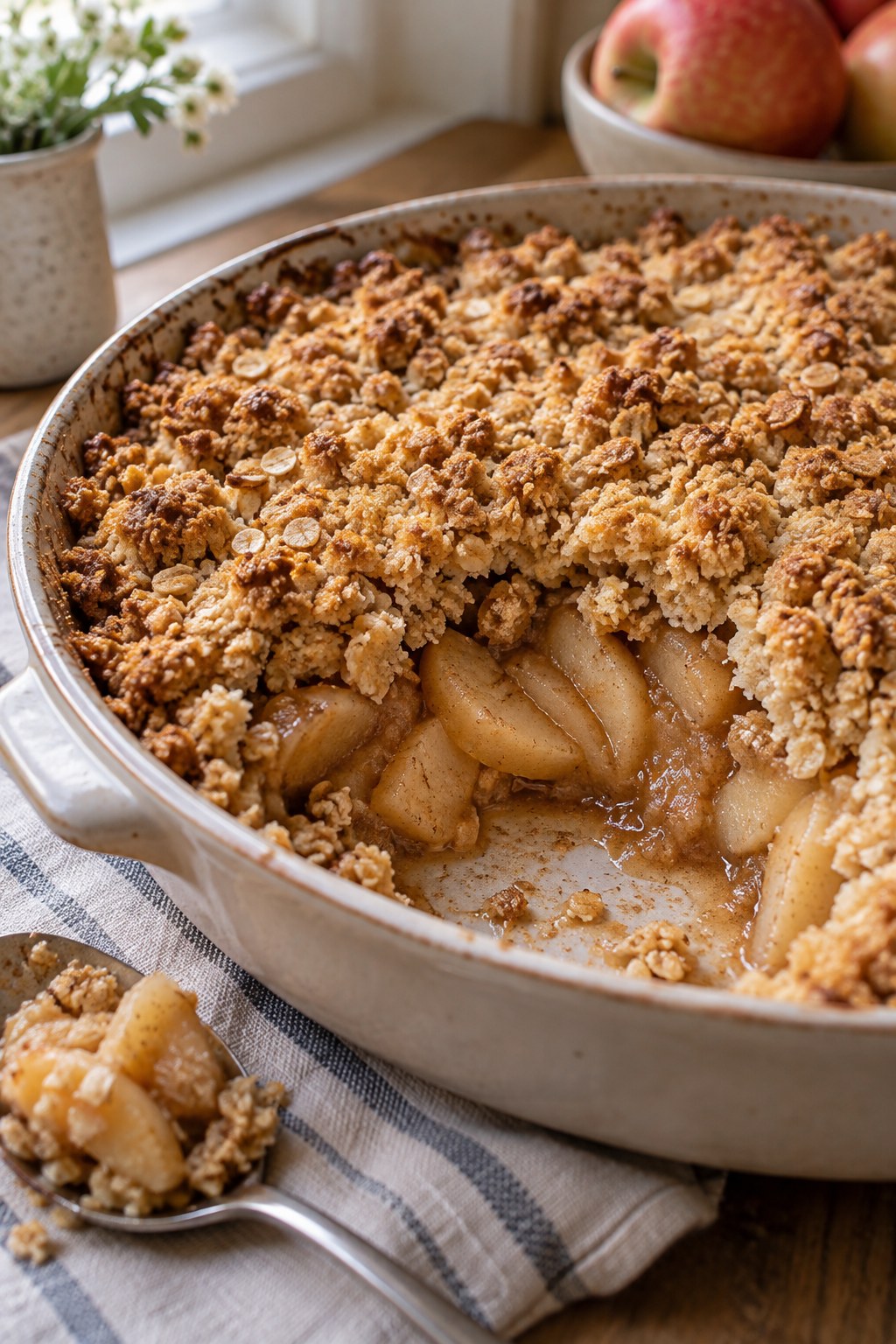
Crumble is about the balance between soft fruit and a topping that remains distinct. A very deep dish can leave the apples unevenly cooked while the surface browns. Choose a shallow ovenproof dish and slice the apples consistently. This recipe has no pastry base; the oat mixture sits directly on the fruit.
For four to six servings
Use 750 g apples before peeling and coring, two tablespoons light brown sugar, one tablespoon lemon juice, two tablespoons water and half a teaspoon cinnamon. For the topping, measure 100 g plain flour, 60 g rolled oats, 75 g cold butter cut into cubes and 60 g light brown sugar. Allow about 20 minutes to prepare and 35–45 minutes to bake. A dish around 20 cm square is suitable.
Prepare the fruit
Heat the oven to 190°C conventional or 170°C fan. Peel, core and slice the apples into roughly 5 mm pieces. Toss them in the baking dish with the lemon juice, two tablespoons sugar, cinnamon and water. If your apples are particularly sweet, reduce the fruit's sugar a little; keep the topping quantities unchanged on your first attempt.
A mixture of cooking and eating apples gives both softness and recognisable pieces. If using only firm eating apples, slice them thinly and check their tenderness towards the end of baking. Very tart cooking apples may need a little more sugar, but adding large amounts can turn the fruit syrupy rather than simply balanced.
Make a loose topping
Put the flour and cold butter in a bowl. Rub them together with your fingertips until the mixture resembles uneven crumbs, leaving some small butter pieces. Stir in the oats and remaining sugar. Stop before it becomes a dough. If your kitchen is warm and the butter begins melting, chill the bowl briefly rather than working it harder.
Scatter the topping evenly over the apples without pressing it down. Bake for 35–45 minutes, until the top is golden and fruit juices bubble around the edges. Push a small knife into an unobtrusive corner to check that the apples are tender. If the top is ready before the fruit, cover loosely with foil and continue baking.
Let the filling settle
Leave the crumble for ten to fifteen minutes before serving. The fruit beneath the topping is much hotter than it looks, and a short rest makes the juices easier to spoon. Offer custard, cream or plain yoghurt separately so people can choose. The dessert is already rich in butter and sugar, so a small first serving is sensible when it follows a substantial meal.
For advance preparation, keep the raw topping covered in the fridge and prepare the fruit closer to baking. You can bake the finished crumble ahead, cool it promptly and refrigerate it, but the topping will soften as it absorbs moisture. Reheating uncovered in the oven can restore some crispness; it will not be exactly the same as a fresh bake.
Leftovers
Refrigerate cooled leftovers in a covered container and use within 48 hours. Reheat only the quantity needed until hot throughout, allowing extra time for a deep portion. A microwave is convenient but softens the topping. For longer storage, freeze cooled portions in suitable containers for up to two months for quality, defrost in the fridge and reheat thoroughly.
If the crumble is dry and floury, the butter may not have been distributed well, or the topping may have been spread too thickly for the dish. If it is hard like a biscuit, it was probably compressed or overworked. The next batch should look like loose crumbs when it goes into the oven, with enough gaps for fruit steam to escape.