Mix a small batch of herb butter
Chopped parsley and chives turn a little softened butter into a portionable finishing ingredient.
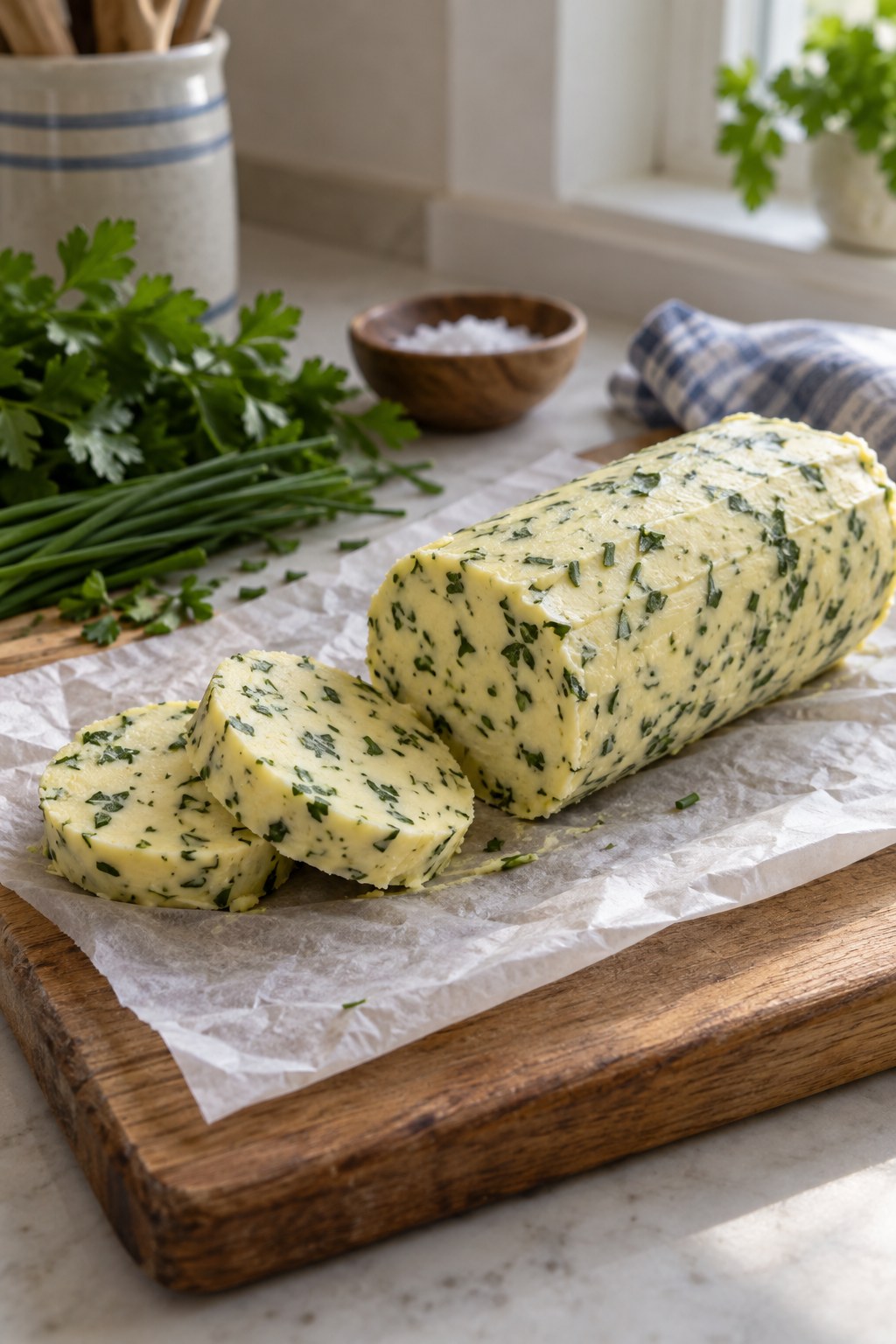
Herb butter is most useful when made in a quantity you will actually use. A small roll can be sliced onto warm vegetables or spread on bread without leaving a large tub in the fridge. This version uses parsley and chives, with no raw garlic. The herbs need to be dry before mixing so the butter does not become watery.
One small roll
Use 100 g unsalted butter, one tablespoon finely chopped parsley, one tablespoon finely chopped chives, half a teaspoon finely grated lemon zest and a small pinch of salt. Allow ten minutes for mixing, plus softening and chilling time. Use clean utensils and wash the herbs, then dry them thoroughly with a clean towel or salad spinner.
Let the butter soften only until it yields easily to a spoon. It should not be melted or oily. Chop the herbs finely enough to distribute through a thin slice of butter, removing tough parsley stems. Grate only the coloured outer layer of the washed lemon, avoiding the bitter white pith.
Mix and shape
Mash the butter in a bowl with a fork, then fold in the herbs, zest and salt. Scrape down the bowl and turn the mixture several times to distribute the green flecks. Taste a tiny amount on a piece of bread before adding more salt. Salted butter can be used, but omit the additional salt at first.
Spoon the mixture onto a piece of baking parchment and shape it into a short cylinder. Roll the paper around it and twist the ends gently, without squeezing the butter out. Place in a covered container and refrigerate until firm. Alternatively, press it into a small covered dish if you prefer to spread it rather than cut rounds.
Use a little at a time
Cut a thin slice with a clean knife and let it melt over freshly cooked potatoes, carrots or green beans. The vegetables should already be cooked and seasoned with restraint, since the butter adds both flavour and salt. For toast, allow a small portion to soften rather than repeatedly leaving the whole roll on the table.
Keep refrigerated and use within three days, or freeze small wrapped portions promptly for up to one month for quality. Label the container so it is not mistaken for plain butter. Defrost a portion in the fridge. Fresh herbs change the storage behaviour of the original butter, so do not rely on the unopened butter packet's much longer date.
If the herbs clump, they were probably too wet or too roughly chopped. If the butter separates into an oily mixture, it became too warm; chill it until spreadable and mix again gently. There is no need to add extra herbs simply to make the colour stronger. A small, evenly distributed amount is easier to use across several meals.