Keep track of things you lend and borrow
Record the handover while it is fresh, then make returning an item easy.
Borrowing works smoothly when both people have the same understanding of what has changed hands and when it will come back. That understanding can be informal, but it should be explicit. A book lent for a relaxed read is different from a tool needed for someone else's job next weekend.
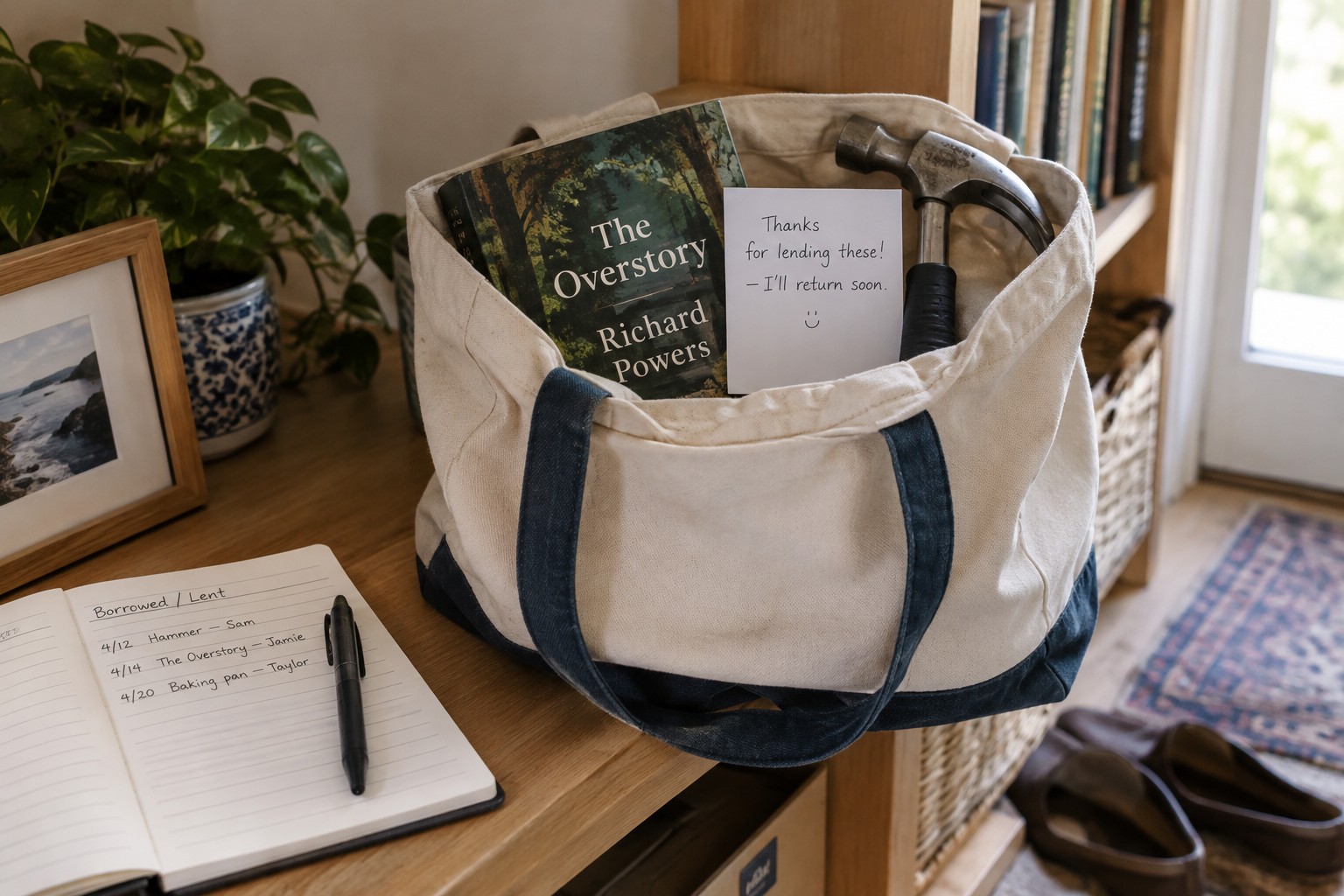
At the handover, note the item, person and any agreed return date. A brief message can serve as a shared record. Include accessories such as chargers, cases or attachments, especially when an item will not work properly without them. Avoid relying on a photograph alone if it does not identify who has the object.
Store borrowed things together
Keep borrowed items distinct from your own collection where practical. A library book can have a dedicated shelf; a borrowed serving dish can wait near the belongings for the next visit. Do not put another person's possession into deep storage where it may be forgotten.
Follow any care or use instructions provided. If something is damaged or does not work as expected, tell the owner promptly rather than quietly returning it without explanation. Agree on the next step together. Do not attempt a repair that could make the situation worse.
Make the return a complete action
Check that all parts are present and the item is in the agreed condition. Confirm a convenient handover instead of leaving something outside a home without permission. If returning it during a social visit, put it with your bag before departure so that remembering does not depend on the last minute.
For things you lend, a friendly specific reminder is usually clearer than a vague hint. Mention the item and when you need it. If the original timing was uncertain, acknowledge that and agree a new plan rather than assuming the other person understood an unstated deadline.
Review your small record occasionally and remove completed loans. If an object has effectively become a gift, make that clear to both people. Keeping an indefinite mental account of old loans can create unnecessary ambiguity.
Track the entire set, not only its largest part
A borrowed appliance may arrive with several attachments, while a board game can have pieces that are easy to leave under furniture. At the start, check the complete set with the owner if practical. Keep a note or agreed photograph showing what should return together. This is particularly useful when the manufacturer's box is no longer available.
Store the owner's instructions with the item, and separate your own accessories from theirs. Two similar charging cables can become difficult to distinguish after a weekend. A temporary label can prevent an accidental swap without marking the borrowed object permanently.
If the agreed return date no longer works, make contact before it passes. Explain the situation and offer a specific alternative, including how the item can be collected sooner if needed. The owner should not have to initiate a search for something you already know will be late. A timely conversation preserves the flexibility that made the loan useful.
It is also reasonable to decline lending an item that is fragile, irreplaceable or needed regularly. A clear boundary at the beginning is easier than an anxious arrangement neither person enjoys. The purpose of a tracking system is to support generosity and responsibility, not to turn ordinary sharing into a complicated transaction.