Arrange a buffet so guests can move around it
A useful serving order prevents people from balancing too much while looking for a fork.
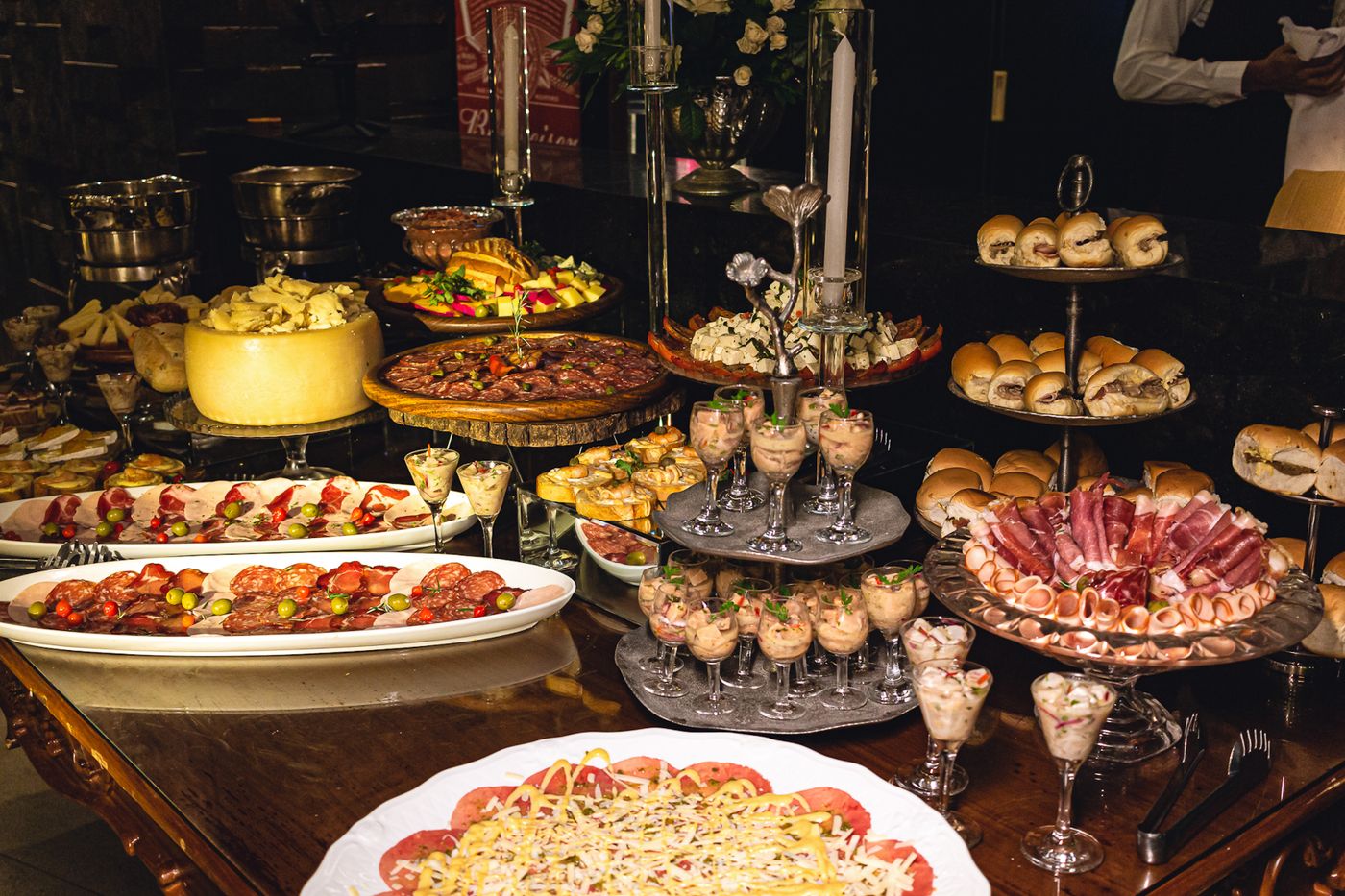
Walk through a buffet arrangement with an empty plate before any food is on the table. Where do you pick it up? Which hand holds it? Can you reach the serving spoon without leaning across another dish? These small tests reveal more than a carefully symmetrical display. The aim is a clear route, not a queue of people making the same awkward manoeuvre.
Start with the plate, finish with the extras
Place plates where you want the line to begin. Put the main food next, followed by accompaniments that make sense with it. Cutlery and napkins often work better at the end, or already laid at the seats, so guests do not have to carry them while serving. If a dish needs two hands to manage, give it an especially clear space.
Keep drinks away from the main food route when possible. Filling a glass can take longer than serving a spoonful of salad, and spills are easier to deal with when they are not among the plates. Leave space beside the drinks for someone to put down a glass while opening a bottle or pouring water.
Give every dish its own tool
Set out the correct utensil with each dish and leave a small rest for it. A large spoon may be awkward in a narrow jar, while tongs can be more useful for bread. Put sauces where their purpose is clear. Labels should describe what a dish is rather than making broad assurances about dietary suitability that you cannot verify.
Ask guests about allergies in advance, retain ingredient information and use separate utensils. Those steps help people make informed choices but do not guarantee that cross-contact has been eliminated. If a guest needs stronger precautions than you can provide, discuss an alternative before the gathering.
Plan replenishment as part of the layout
The FDA advises using small serving batches and replacing dishes rather than topping up food already on the table. Keep perishable cold food at 40°F or below and hot food at 140°F or above. Without safe temperature control, discard perishables after two hours, or one hour when the surroundings exceed 90°F. Use a thermometer rather than judging a warmer by touch.
Keep the replacement dishes somewhere accessible. If every spare bowl is behind the buffet, replenishing it will interrupt the line. A small clear kitchen surface for the next dish is more useful than filling every surface with decoration. Decide who will check the food while you are greeting guests.
Finally, provide a separate place for used plates and rubbish. People should not need to carry an empty plate back against the serving flow. You can test the whole arrangement before the event with one plate, one glass and a serving spoon; if it feels fiddly when the room is empty, simplify it before the guests arrive.