Plan coat hooks for the people using them
Allow for the width of real coats and bags, not just the spacing between empty hooks.
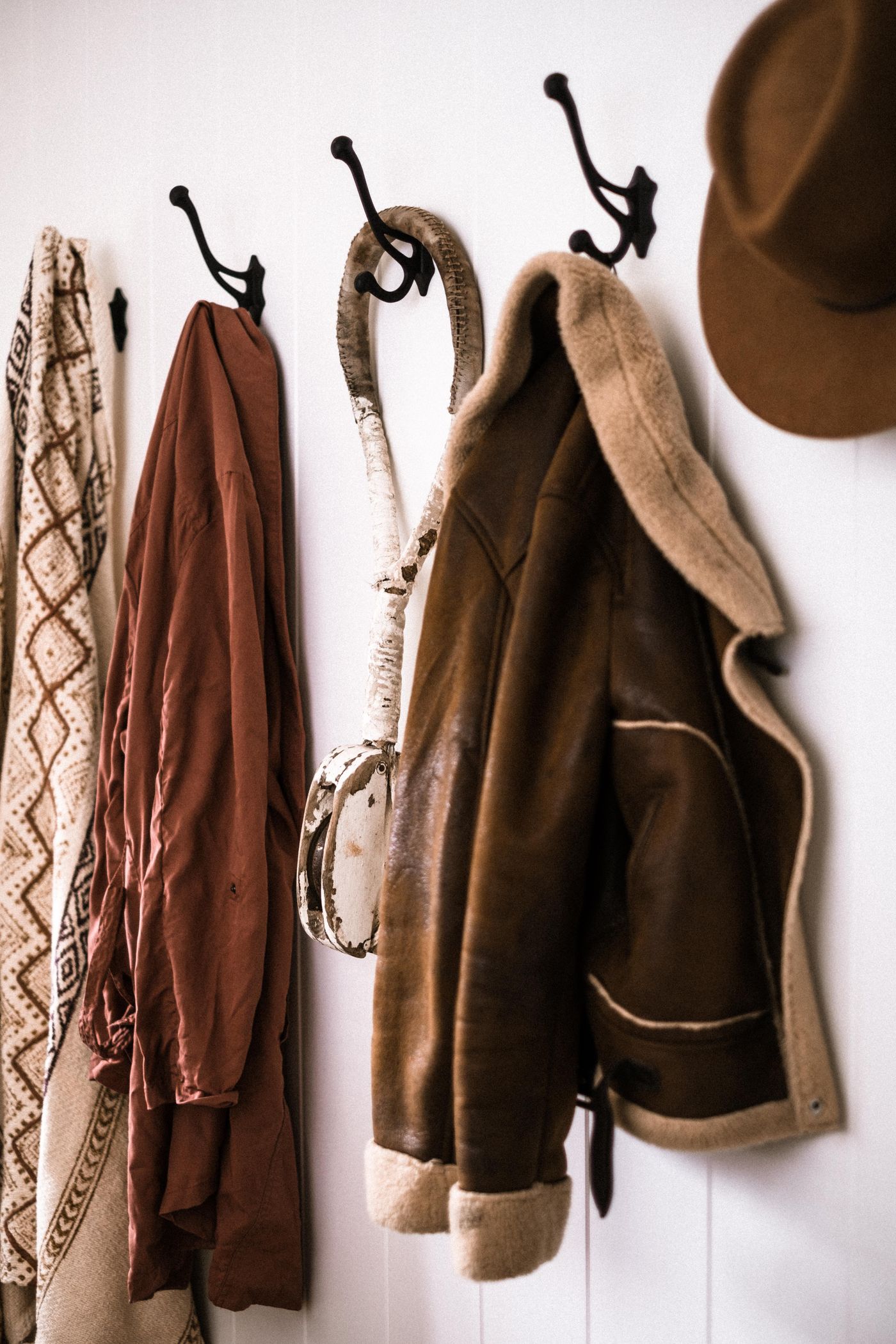
A row of hooks can look spacious until winter coats arrive. Sleeves overlap, bags push into the passage and one person's belongings hide another's. Plan hooks using the objects they will carry and the people who need to reach them.
Hang a typical coat temporarily in the proposed area to understand its width and length. Add a bag if one usually shares the entrance. Mark the lower edge as well as the hook height, especially above a bench or shoe storage. A coat should not trail across footwear or prevent someone sitting down.
Choose usable heights
Place everyday hooks where their users can reach comfortably. A lower row may help children or others who cannot easily use high hooks, but check that garments do not reach the floor. Different heights can work without making the wall visually chaotic if the arrangement has a clear purpose.
Leave enough lateral room for the actual coats. Closely spaced hooks may be suitable for light items but frustrating for bulky outerwear. Assigning one position per person can clarify shared storage, although a spare hook for visitors or a temporary item is useful when space permits.
Match the fixing to the load
Follow the hook or rail manufacturer's instructions and use fixings suitable for the wall construction and expected load. Do not assume a decorative adhesive hook can support a heavy coat and loaded bag. Get appropriate help if the wall or installation method is uncertain. Over-door hooks also need the door to close and operate properly with them in place.
Check the hook shape against the garments. A narrow projecting end may not suit every hanging loop or delicate fabric. Some coats are better kept on suitable hangers elsewhere, leaving the hooks for items designed to hang this way.
Keep the entrance selection current. The hooks do not need to carry every jacket owned by the household. Rotate less-used pieces to a wardrobe and remove bags that are not in use. If the rail remains crowded after that edit, reconsider its capacity or location rather than installing more hooks into every remaining gap. An entrance works better when belongings can be taken down without unhooking several others first.