Build a low centrepiece for an everyday dining table
Keep conversation, serving and the ability to clear the table at the centre of the decision.
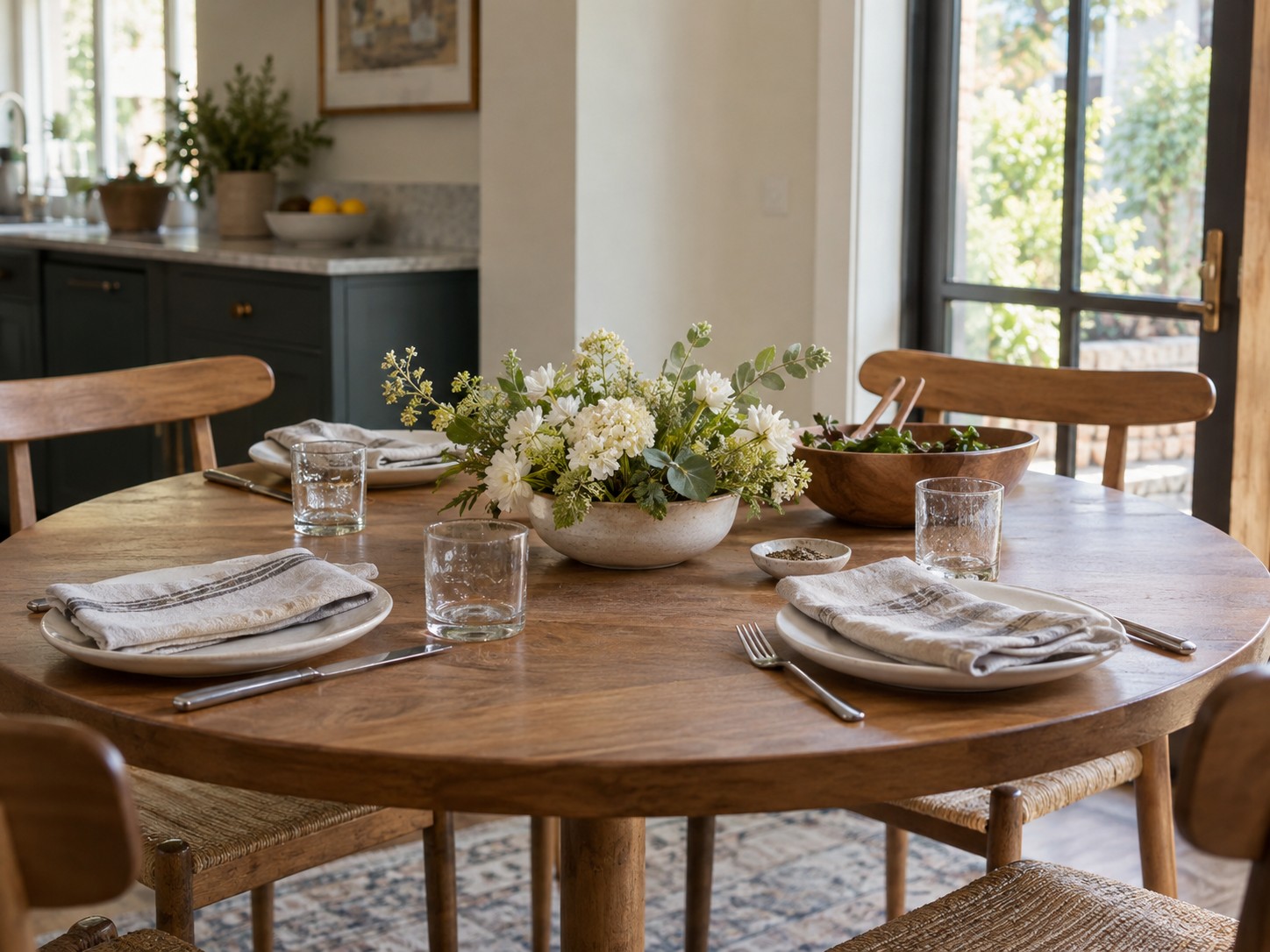
An everyday centrepiece has to share a table with breakfast, paperwork, serving dishes and people looking at one another. It should be easy to move and small enough to leave those activities intact. Begin with the empty space left after setting places, not with the largest bowl or vase you own.
Choose the footprint before the objects
Set the table for its usual number of diners. Add the water jug and serving dishes you regularly use, then see what remains. On a compact table, one small vessel may be enough. A long table may accommodate a short group, but spreading objects along its entire length can make passing dishes awkward.
A tray can define the arrangement and let you move it in one action. Check its weight when filled and give it a realistic temporary home, such as a nearby sideboard. If there is nowhere to put the centrepiece during a meal, it may be too ambitious for the room.
Keep the sightline open
Sit opposite another person and check the arrangement from that height. A vase that seems low when standing can still hide a face across a narrow table. Keep flowers or other objects below the conversational sightline, or choose a form that does not create a solid barrier. Do not assume delicate stems are invisible simply because there are few of them.
Use a small number of materials. A ceramic bowl and a modest plant can have enough variation without adding scattered ornaments. Objects should be stable and suitable for the surface. Protect the tabletop from moisture in a way consistent with its care instructions, and check beneath vessels rather than relying on their appearance.
If you enjoy candles, flameless versions can provide the visual element without requiring an open flame on a busy table. Any real candle needs appropriate safe use and should not be squeezed among paper, foliage or serving items. A centrepiece does not need candles at all to feel complete.
Choose maintenance you will actually do
Fresh flowers need attention, while a bowl of seasonal fruit changes as it is eaten. Neither should be treated as a permanent prop. Remove spent material, clean the vessel and allow the arrangement to become simpler between replacements. A clean empty bowl can be preferable to a display kept past the point when it is enjoyable.
Consider scent as well as appearance. Strongly scented flowers or decorative products can compete with food, and preferences differ among diners. For the everyday table, restraint often makes the arrangement easier to live with.
At the end of a week, ask whether the centrepiece has been moved repeatedly to the floor or a chair. That is useful evidence. Reduce its size, choose fewer objects or reserve it for particular meals. The table should remain a place people can use without asking permission to disturb the decoration.