Write a card that sounds like you
Use one real detail to replace the phrases that could belong in anyone's card.
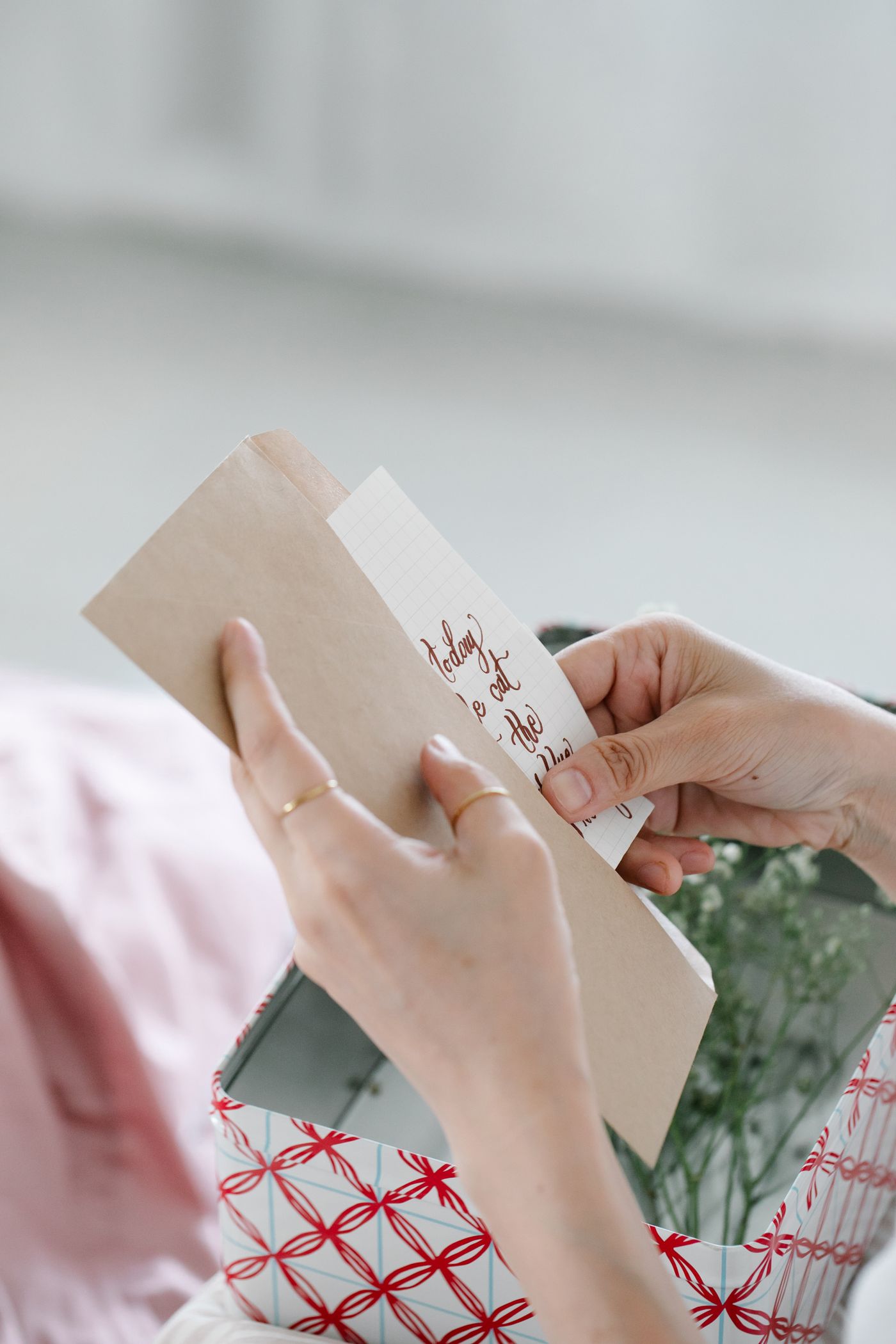
A card sounds personal when it contains something only you would think to say to that recipient. Begin with a particular memory, quality or shared moment rather than searching for a grand opening. “I still think about our rainy walk after lunch” gives you somewhere to go that “Wishing you all the best” does not.
Match the tone to the relationship. A close friend may enjoy a private joke, while a colleague may appreciate a warm but less intimate message. Do not borrow a level of emotion from a sample greeting that you would not use in conversation. Plain language often carries sincerity more clearly than ornate wording.
If you are thanking someone, name what they did and what it meant in concrete terms. If celebrating, mention something you are looking forward to sharing or something you appreciate about them now. The message does not need to summarise the entire relationship.
A short structure can help without becoming a script: acknowledge the occasion, add a specific detail and close in your usual way. Write a rough version on scrap paper if you are concerned about space. It is easier to shorten a draft than to squeeze the final sentence into the card's lower corner.
Avoid making the message mostly about yourself. A memory is useful when it connects you to the recipient, not when it becomes a long account of your own experiences. Similarly, keep advice out unless it is genuinely welcome; a birthday card need not include a plan for how someone should spend the next year.
Choose legibility over decorative handwriting. A pen that writes reliably matters more than a special ink colour. Let the ink dry before closing the card, and check that any message on the front suits the tone of what you wrote inside.
For a difficult or sensitive occasion, simple acknowledgement may be better than trying to explain the situation or promise how someone will feel. You do not have to solve anything in a card.
Sign clearly, particularly when the recipient will receive several cards or does not know your handwriting. Then send or give it. A modest message delivered on purpose has more value than the perfect wording kept indefinitely in a drawer.