Create a desk area in a shared room
Define the work space through access, equipment and a clear way to finish for the day.
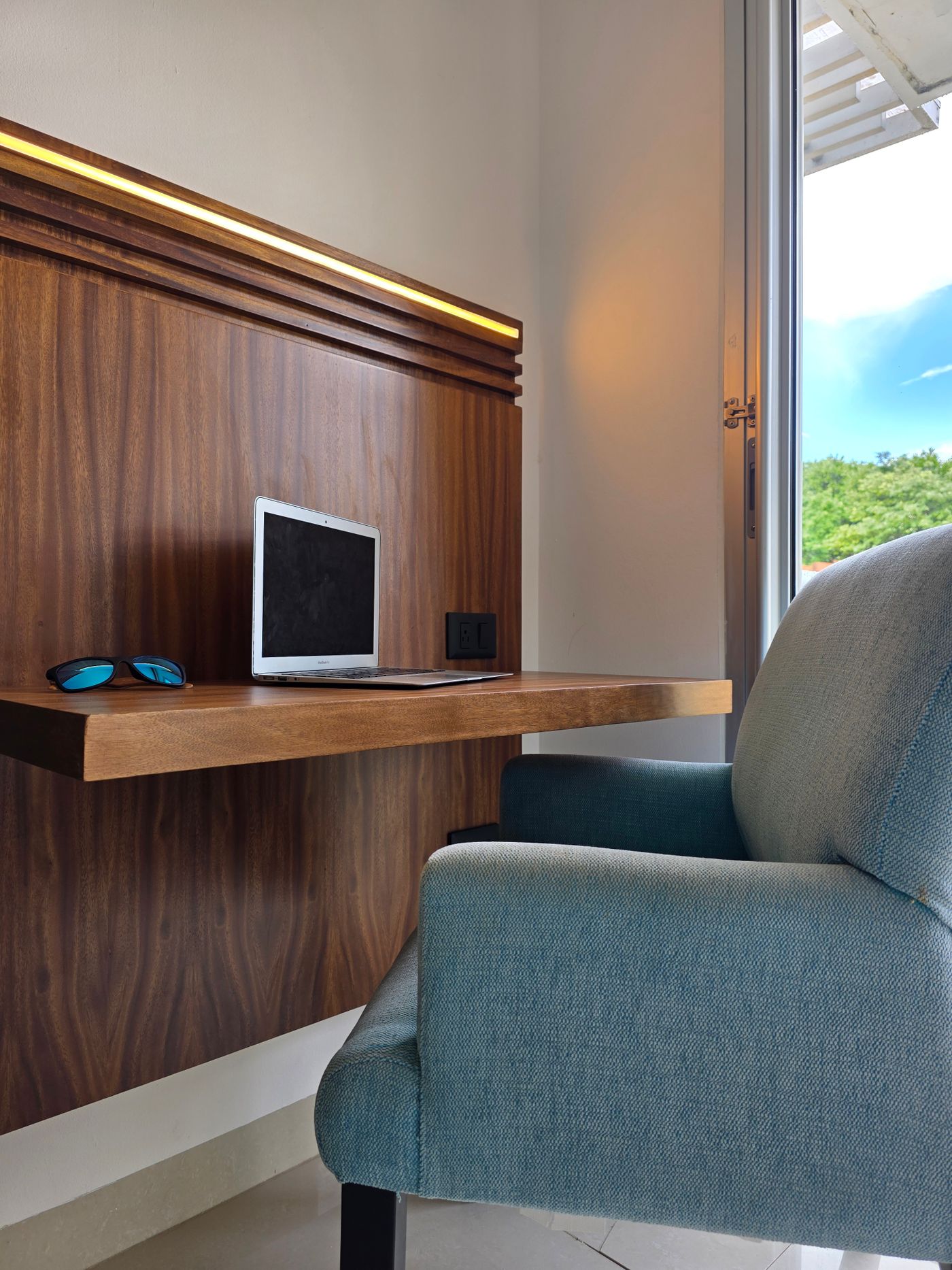
A desk in a shared room needs to function while the rest of the room remains available. The solution is not always a tiny desk hidden in a corner. If the surface cannot hold the equipment or the chair blocks a route, a compact-looking arrangement may create more disruption than a slightly larger, better-positioned one.
List the real equipment
Put the objects used during a normal work session together: computer, keyboard if used, notebook, lamp and any recurring paperwork. Measure their working footprint, including the space needed to move a mouse or open a book. A desk chosen from the closed laptop's dimensions will underestimate the actual requirement.
Think about the chair in use. It needs room to move away from the desk without colliding with a sofa or blocking a doorway. If the room also serves as a dining area, decide whether the desk chair stays there or moves after work. The daily transition should be realistic enough that it happens.
Control the view and the light
Check daylight on the screen at the hours you work. A window directly reflected in a display can be distracting even when the corner looks attractive. Adjustable window coverings and a suitable task light can help, but test the actual position instead of assuming facing a window is always best.
Arrange the equipment so you can work comfortably and seek suitable ergonomic guidance for prolonged computer use. A decorative stool or very shallow console may not be appropriate for a full working day. If your needs involve particular equipment or physical requirements, choose those first and let the appearance follow.
Keep cables out of shared walking routes. Use equipment according to its instructions and avoid creating a cluster of connections that cannot be inspected or reached. If the only available arrangement requires a cable across a doorway, reconsider the position rather than covering the problem with a rug.
Define the boundary without building a wall
A different lamp, a shallow shelf or a contained set of desk accessories can mark the area without a bulky divider. Avoid placing tall storage where it reduces light for the rest of the room. If visual separation is important, try the position of the desk itself before buying another piece of furniture.
Provide somewhere to put work away. A drawer, closed box or dedicated shelf can hold the current project, while confidential papers need storage appropriate to their sensitivity. Do not assume an attractive open basket offers privacy. If video calls happen here, inspect what is visible behind the chair and whether others can comfortably use the room without entering the frame.
Agree on shared use where necessary. A household may need quiet periods, a way to signal a call or a clear rule about borrowing the desk surface. These conversations often solve more than an elaborate divider.
End a session by clearing the active surface and leaving only the equipment that belongs there. The desk need not disappear completely, but it should stop spreading. A shared-room workspace succeeds when beginning work is straightforward and finishing it returns the rest of the room to ordinary life.
Plan a genuinely shared surface
If the desk is also used for hobbies or household administration, allocate storage to each activity. A removable work tray can hold a current notebook and papers, while another container keeps drawing materials together. The surface can then change purpose without mixing the contents. Choose containers shallow enough to see what is inside rather than creating another stack of closed boxes.
Consider sound during the hours the room is busiest. A position beside a frequently used door may be inconvenient for calls even if the desk fits well there. Headphones can help with some situations, but they do not solve every need for quiet or privacy. Agree on realistic expectations instead of promising that a small decorative screen will turn a busy living room into a separate office.