Arrange a laundry corner around the tasks it needs to do
Provide a route from sorting to putting away instead of filling the area only with product storage.
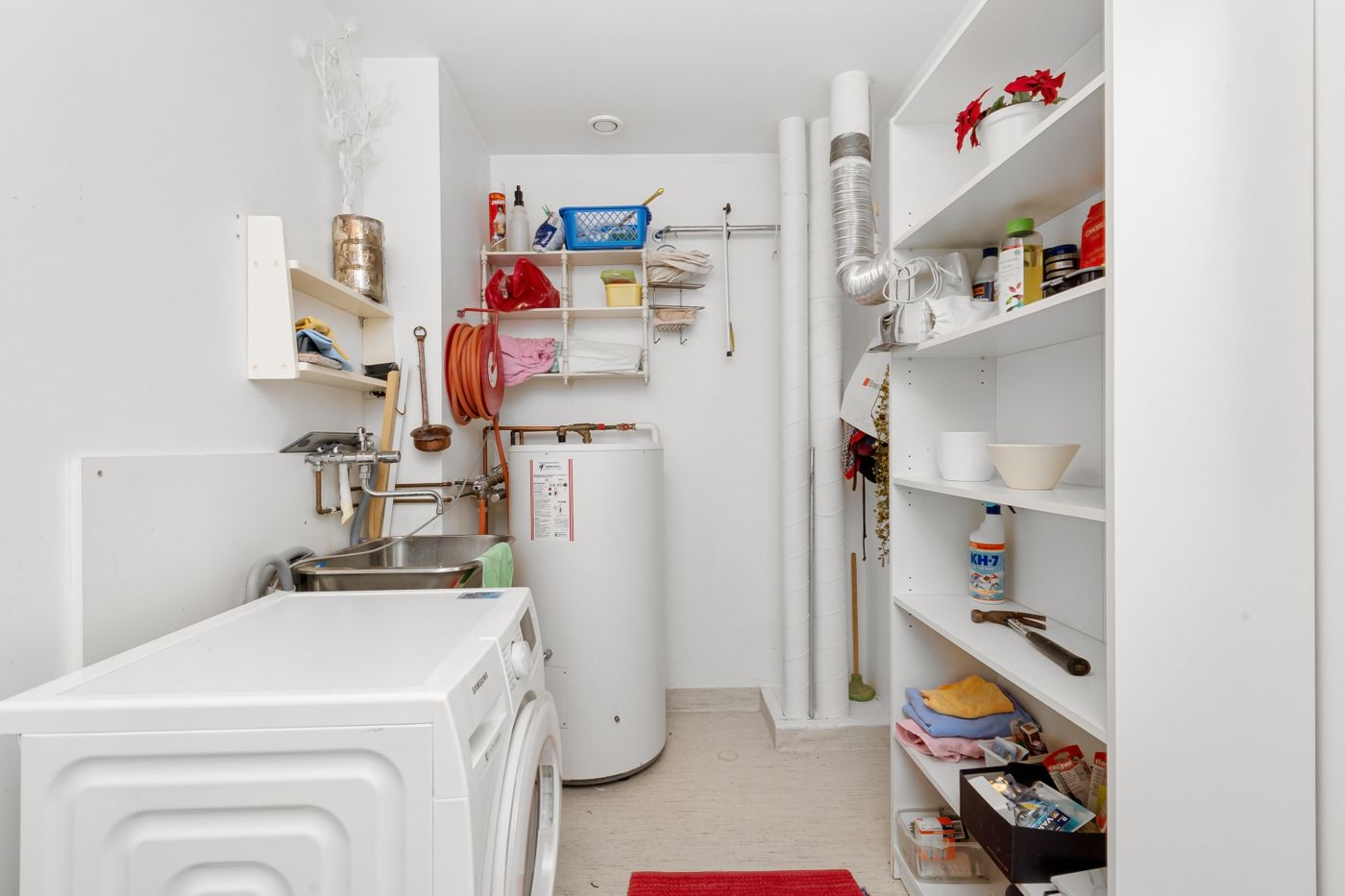
A laundry corner may be a cupboard, a utility-room section or the space beside a machine. Its usefulness depends on the tasks it supports: sorting, loading, drying, folding and moving clean clothes back to their rooms. A shelf full of matching containers addresses only a small part of that sequence.
Watch where laundry currently stops. If clean clothes remain on a chair, the missing element may be a manageable way to carry them away rather than another sorting basket. If products are repeatedly left on the machine, their assigned shelf may be too awkward to reach.
Protect the machine's working space
Follow the appliance's installation instructions for clearances, ventilation and access. Do not fill required gaps with narrow storage units or hang items where they obstruct operation. Keep controls, filters and other maintenance points reachable. Any plumbing or electrical changes need appropriate professional work rather than a decorative workaround.
Store laundry products in their original containers and according to their labels, particularly where children or pets may be present. Keep them separate from food and do not transfer concentrated products into drink-like bottles. An attractive container is not a substitute for proper identification and storage.
Give each stage a landing place
One or two sorting containers may be enough if they reflect the way you actually wash. Avoid a large set of categories that delays a load until every bin is full. Use garment care labels to decide how items should be treated rather than relying only on colour.
A folding surface can be temporary. A clear table nearby may be more useful than a tiny permanent shelf that cannot hold a shirt. Make sure clean items are placed on a suitable clean surface and are fully dry before storage. A basket dedicated to returning clean clothes can keep that final stage separate from incoming laundry.
Keep a small place for items requiring a decision, such as a repair or a missing care label, but review it. Otherwise the corner acquires a permanent pile of exceptions.
At the end of a normal laundry cycle, follow the clothes all the way back to their storage. Any step that feels unnecessarily awkward is a candidate for change. The corner is finished when it supports the whole sequence, not when every shelf has been filled.