Make room for a reading corner
A comfortable chair is a beginning. Light, reach and the route through the room decide whether the corner gets used.
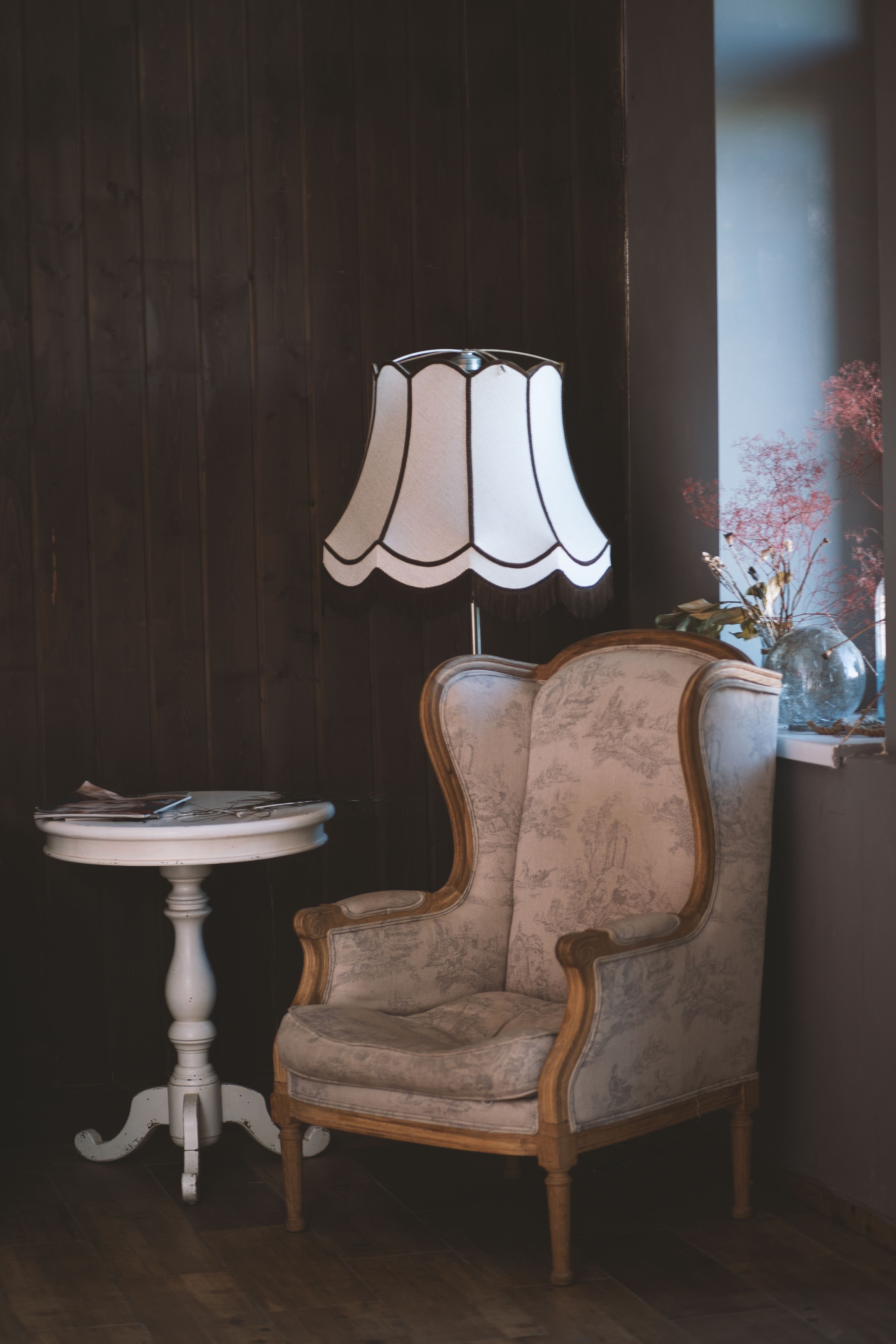
A reading corner does not need a spare room or a wall of books. It needs a place where you can sit comfortably, see the page and put down a drink without balancing it on an armrest. Before buying anything, look at the chair you already use when the house is quiet. That spot may tell you more about a workable arrangement than an empty corner selected only because it photographs well.
Start with the way you sit
Try the seat for longer than a quick showroom pause. Your feet should have a comfortable resting place, and the back should support the position in which you actually read. A deep lounge chair might suit someone who curls up, while a more upright chair can make it easier to hold a book without folding forward. An extra cushion can adjust depth, but it cannot fix every mismatch between a person and a chair.
Measure the chair with its usual accessories in place. A footstool takes up space beyond the chair's footprint; a recliner needs clearance behind and in front. Use removable tape on the floor to mark the proposed arrangement, then walk past it carrying a laundry basket. If the corner interrupts the everyday route, reduce the furniture before adding decoration.
Give daylight a useful partner
A window can make the corner inviting during the day, but check the position at the time you normally read. Direct sun on a glossy page may create glare, and a seat that feels bright at lunchtime can become dim by late afternoon. A curtain or blind gives more control than continually moving the chair.
Place a reading lamp so that its light reaches the page without shining directly into your eyes. Adjustable heads make this easier. Try the lamp with a book open rather than judging it only while standing. Keep cables out of walking routes and follow the lamp manufacturer's instructions for bulb type and wattage. If the nearest socket requires a cable across a doorway, choose a different location instead of disguising the cable under a rug.
Make the small surface do enough
A side table earns its place when it holds the things you use during a reading session: a mug, glasses and perhaps the current book. Check reach from the seated position. A table that looks aligned in a photograph may still require an awkward lean. Leave some of its surface empty so that putting down a drink does not first require moving a display.
Keep the book storage close but modest. A shallow shelf, a small basket or the lower level of the table can hold the next few books. There is no need to relocate the entire collection. If the floor starts collecting unfinished stacks, give the corner a limit that fits its storage rather than adding another container every time.
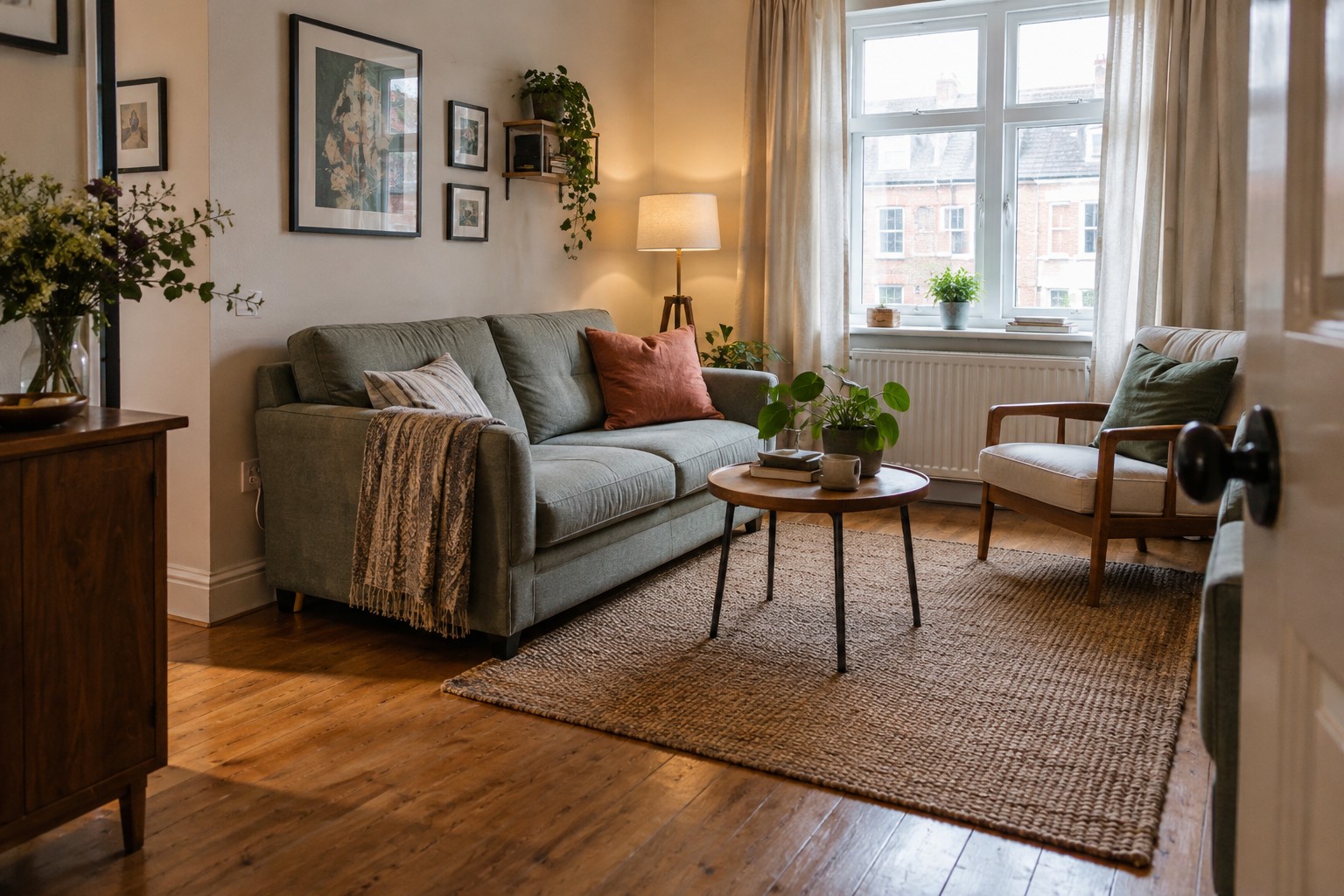
Texture can make the area feel separate without building a new zone. A washable throw or a cushion may be enough. If you add a rug, consider door clearance, stable furniture placement and the risk of a curled edge. A reading corner should not introduce a trip point into the busiest part of the room.
Leave it ready for tomorrow
Use the arrangement for a week before deciding what is missing. Notice whether you turn on the lamp, bring a cushion from elsewhere or leave your drink on the floor. Those repeated actions identify useful changes. At the end of a session, return the book and clear the mug. The aim is not a permanently styled photograph, but a place that is easy to sit down in again.