An entryway drop zone that does not become a dumping ground
Separate the things arriving today from the possessions that need a permanent home.
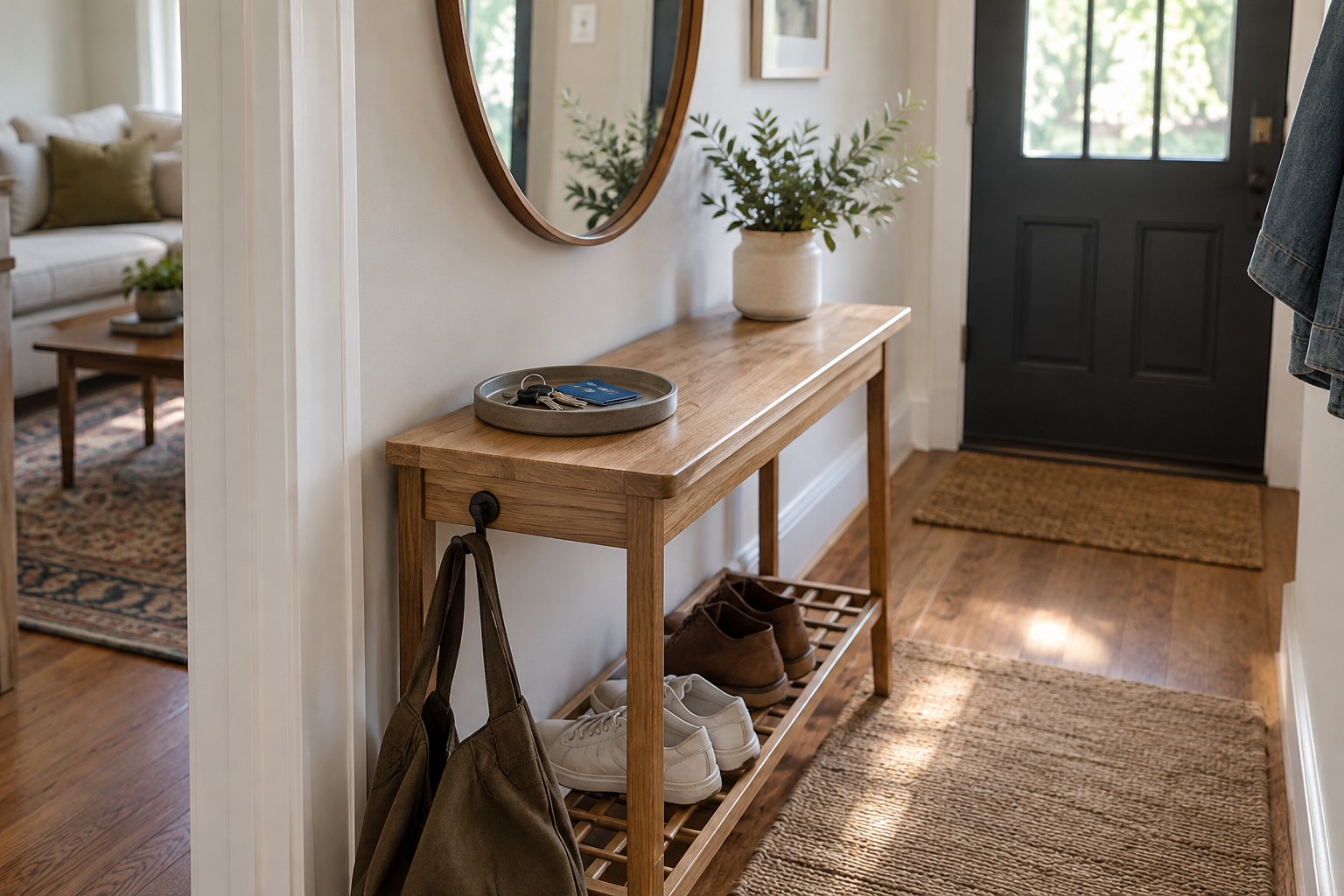
The most useful entrance storage follows the order in which people arrive. A person carrying shopping needs somewhere to put a bag before removing a coat; someone returning with wet shoes needs a different landing place from someone coming home with paperwork. Watch that sequence before choosing a console table. A beautiful surface in the wrong position will be passed over in favour of the nearest chair.
Give the first surface a limit
Choose a shallow tray for small daily objects such as keys and a travel card. Its size should reflect those contents, not the width of the table. Leaving the rest of the surface clear makes it possible to set down a parcel temporarily without displacing everything. If several people use the entrance, separate compartments can be more helpful than one communal bowl whose contents have to be searched every morning.
Mail needs a route beyond the entrance. A single upright slot can hold items awaiting attention, but it should not become the archive for household documents. Put recycling nearby if that suits the space, and move items requiring action to the place where you handle paperwork. Give outgoing objects their own visible position so a return parcel does not disappear beneath incoming shopping.
Separate storage from parking
A hook holds the coat being worn this week; it does not need to accommodate every coat the household owns. Likewise, a small shoe area works better with current pairs than with an entire seasonal collection. Store less-used items elsewhere. The entrance gains more from this distinction than from adding another tier of hooks to an already crowded wall.
Test any new arrangement with the door fully open and with someone walking past another person putting on shoes. Bags hanging from hooks can project farther into the route than their empty shape suggests. A bench with storage might combine two needs, but it is only useful if its lid or drawer can open without moving the usual pile of belongings first.
Keep a small space for objects that belong elsewhere, then empty it at a predictable moment, such as after dinner. This is a temporary transfer point, not a miscellaneous basket. When the same item repeatedly lands there, reconsider its permanent home. The aim is an entrance that helps an arrival finish, rather than a tidy-looking collection of everything the household has not yet decided about.