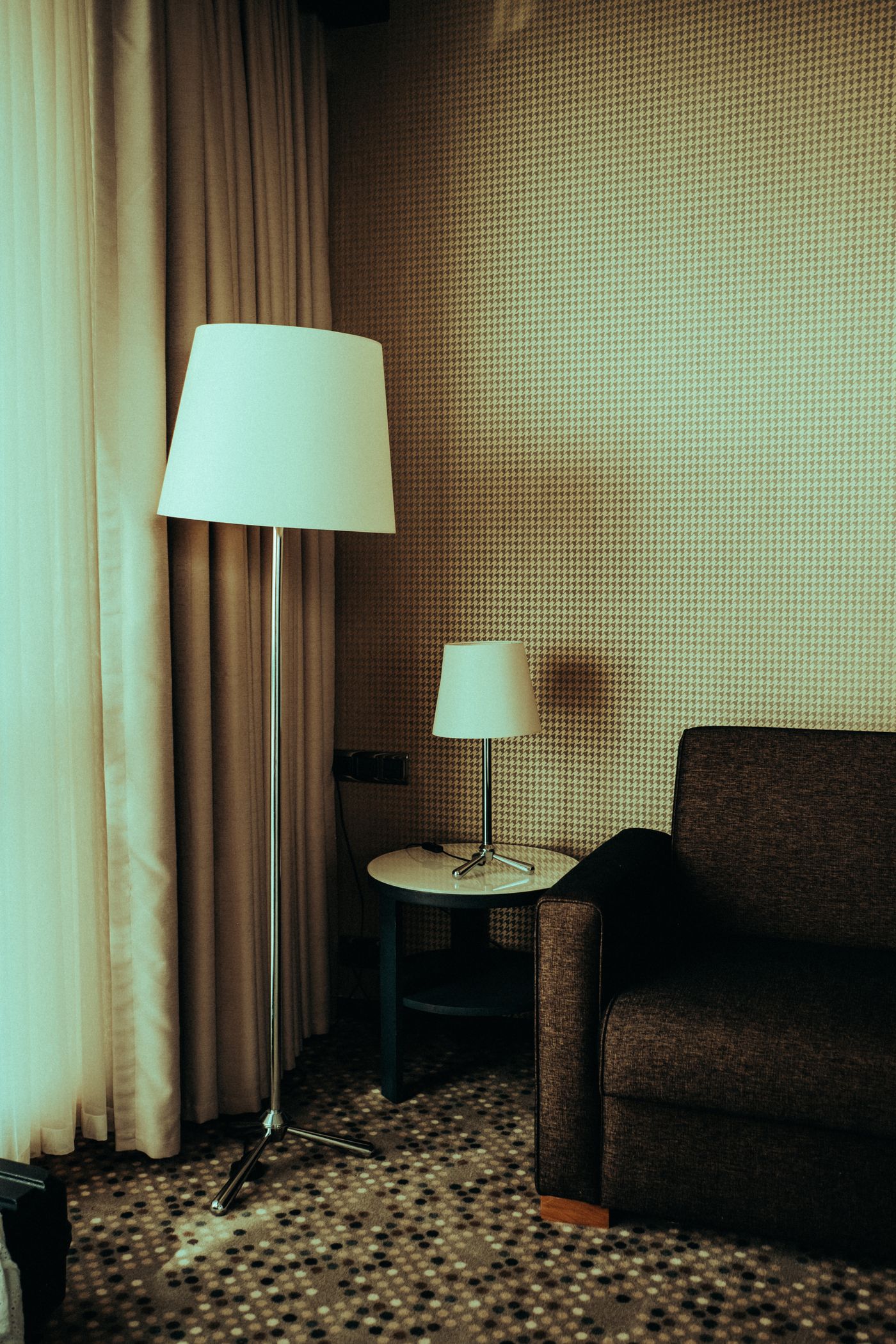
Decide where your curtains should finish
Choose the endpoint around the room's use, then measure from the actual hanging system.
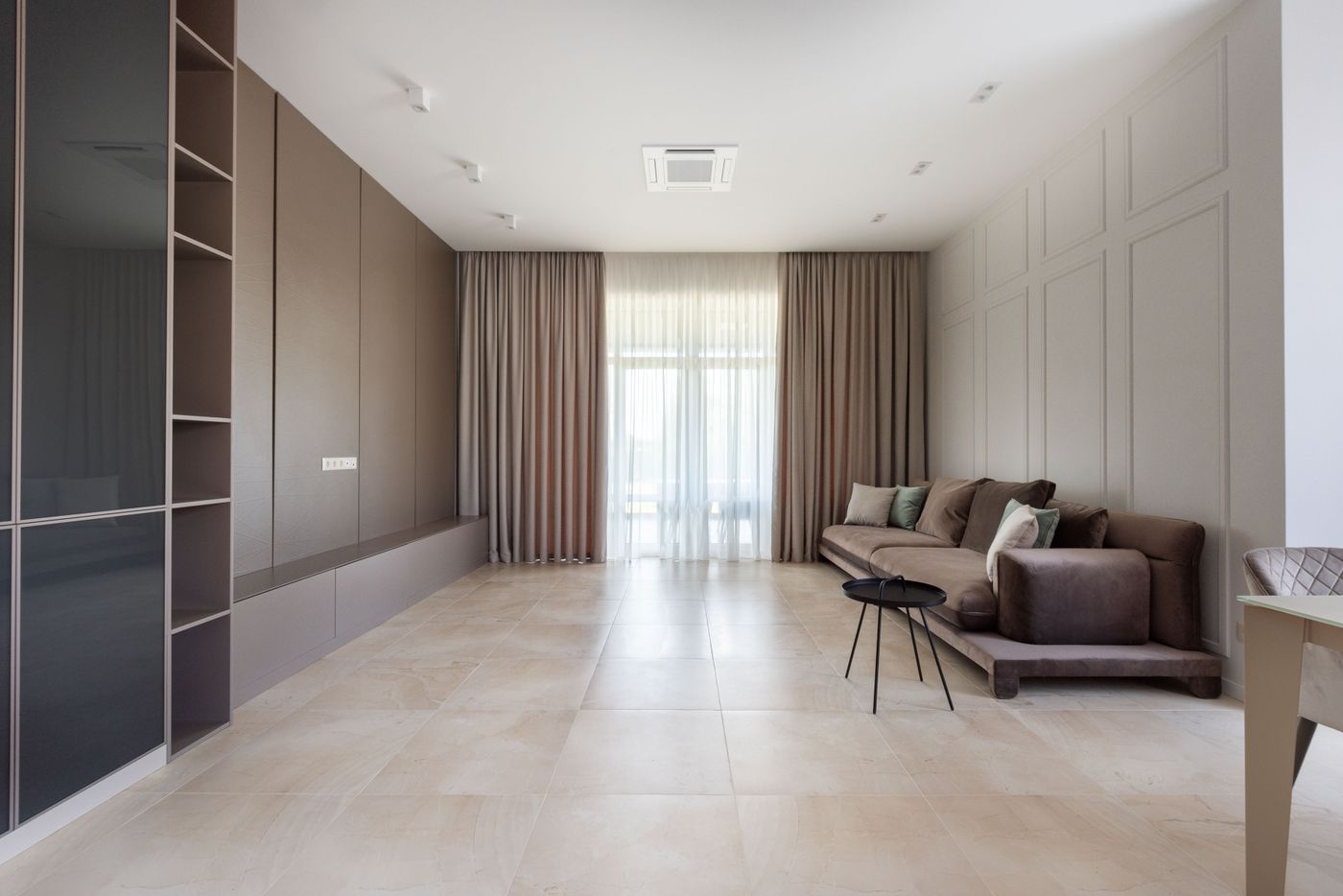
Curtain length changes both the appearance of a window and the work involved in living with it. Fabric that rests on the floor can look relaxed in a quiet room, but it is less convenient beside a frequently opened door or where the floor needs regular cleaning. Start by deciding how the curtains will be used rather than choosing the longest option automatically.
Choose a clear endpoint
For a floor-length curtain, decide whether the hem should sit just clear of the floor or meet it. Fabric pooling beyond that point is a separate decorative choice, not an inevitable result of long curtains. Think about pets, vacuuming and the need to draw the panels every day. An endpoint that works for a rarely used guest room may be frustrating in a busy living room.
Shorter curtains can make sense where furniture or the window arrangement prevents a full drop. A deliberate finish at the sill or below it tends to look more resolved than a hem stopping at an arbitrary point halfway down the wall. Check what sits beneath the window, including any heater, and follow the appliance's clearance instructions rather than letting fabric hang against it.
Measure the system, not just the window
The relevant starting point depends on the heading. Eyelets, hooks and a track do not suspend fabric from exactly the same place. Choose the rail or pole and curtain heading first, then use the supplier's measuring instructions. Measuring from the top of the window frame and hoping the finished curtain lands correctly can create a surprisingly large error.
Take measurements at several positions across the opening because floors and ceilings are not always level. Keep a note of the intended hem clearance alongside the raw measurements so it is clear which figure is which. If ordering made-to-measure curtains, confirm whether the seller expects an exact finished drop or makes an allowance themselves.
Resolve an obstruction before choosing the drop
Imagine a window above a desk that sits close to the wall. Full-length curtains may be pushed backwards by the desktop, preventing them hanging or closing freely. Move the desk temporarily and test the curtain route before ordering. If the desk must stay, a deliberate shorter treatment or a different window covering may serve the room better than long panels permanently trapped behind furniture.
For curtains beside a glazed door, mark the proposed hem with the door open and closed. Include the movement of the person operating the handle. Fabric that rests attractively on the floor can be caught underfoot on this route. Where two panels meet, check their closed position too: the final length should work across the whole opening, not just at the outer corners.
Consider width at the same time. Panels need somewhere to gather when open; otherwise the curtains may cover more of the glass than expected. Check that the chosen position allows access to window handles and does not obstruct another door. Hold a length of fabric or a temporary paper strip at the proposed endpoint to judge the effect from across the room. A few minutes of testing makes the final length a decision rather than an accident.