Plan a wall-art arrangement in a rented home
Separate the visual arrangement from the question of how the wall can safely support it.
A rented wall does not have to stay empty, but choosing artwork and choosing a fixing are different tasks. Begin with the tenancy terms and ask the landlord or agent about permitted changes where necessary. A product marketed as removable is not a guarantee that it suits every painted surface or that using it complies with an agreement.
Plan before making marks
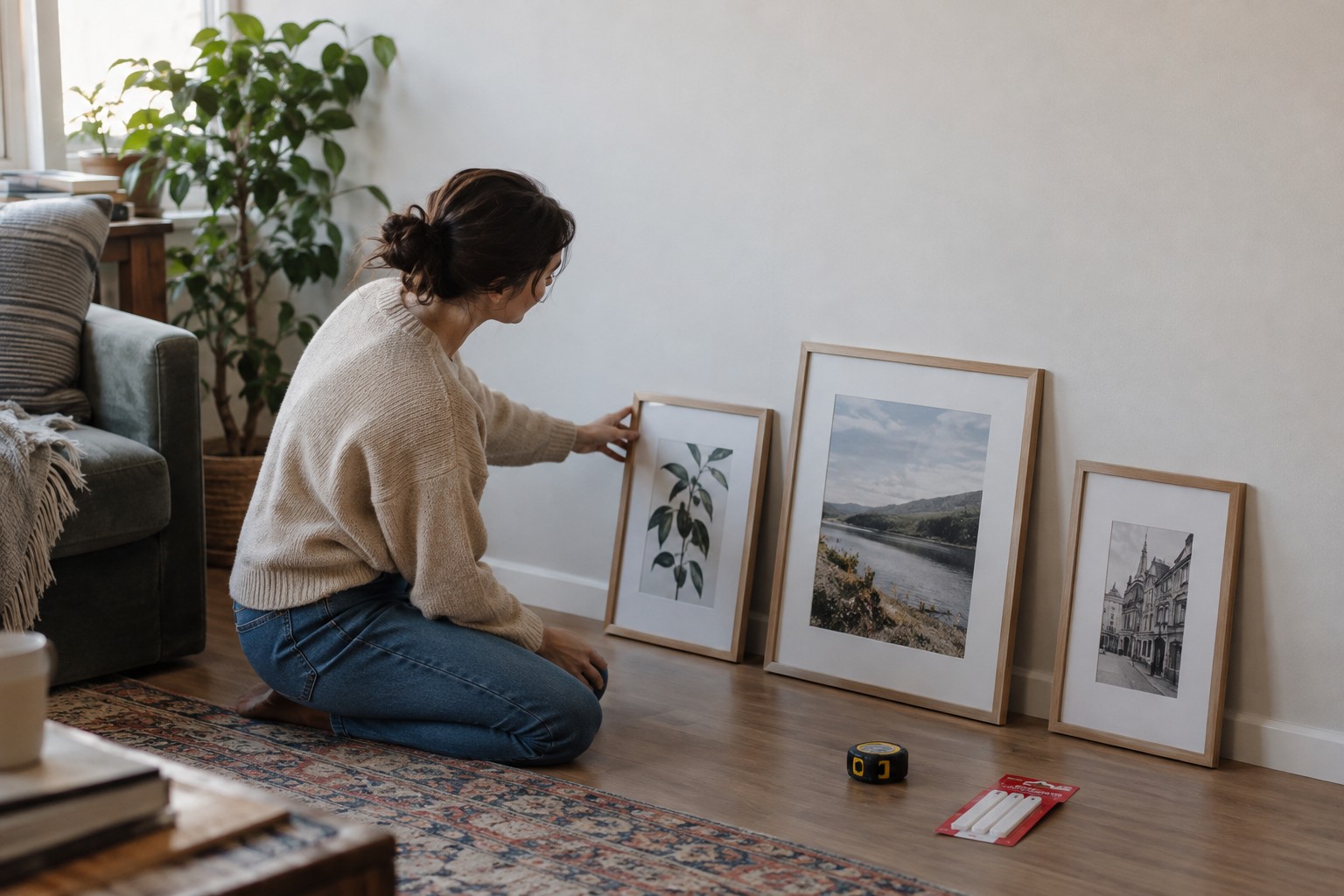
Lay the frames on the floor in the proposed arrangement. Include their outside dimensions, not only the print sizes. Photograph a few options so you can compare them without relying on memory. A single larger piece may be easier to place than a cluster of small frames, especially if you expect to move soon and want the arrangement to work in another home.
Use lightweight paper outlines to judge scale on the wall, with a temporary method that is suitable for the finish. Look from the doorway and from the seat where the art will usually be seen. The available wall may be larger than the visually useful area; artwork above a small desk can relate to that desk rather than filling every empty centimetre.
Match the support to the object
Weigh the complete frame and check its back fittings. Follow the fixing manufacturer's instructions for wall material, preparation, weight limit and removal. Do not combine several unsuitable products in the hope that their capacities add together. If you cannot establish a safe fixing method, choose a lighter object or another display location instead.
Leaning a frame is an option only when the support is stable and the frame cannot easily slide or be knocked down. Avoid creating a precarious display above a bed or busy seat. A picture ledge may still require approved wall fixings, so it is not automatically a solution to a no-holes rule. Ask before installing one rather than treating its small size as an exemption.
Choose a layout that can move with you
For a narrow rented living room, try two prints above a desk rather than distributing several small pictures across every wall. Keep their frames related in size or finish so they can later work as a pair in a hallway. This gives the current room a settled arrangement without purchasing a collection tailored to a wall you may not keep.
If permission for fixing is unclear, pause the installation rather than treating an adhesive product as a loophole. You can still choose the art and plan its scale. An existing secure shelf may offer a suitable alternative, but check the frame's stability and the shelf's intended use. Do not prop a heavy glazed frame on a narrow ledge simply because it avoids drilling. The visual plan can wait; a damaged wall or falling object is harder to undo.
Keep the original hanging instructions and any agreed permissions with your household documents. When moving out, remove fixings using the specified method instead of pulling them abruptly from the wall. Most importantly, choose a display you enjoy living with now. A modest arrangement of two well-placed prints can feel more personal than a wall filled quickly with objects selected only because they were easy to hang.