Arrange a small living room around the sofa
Start with the routes through the room, then decide which extra seats and surfaces earn their space.
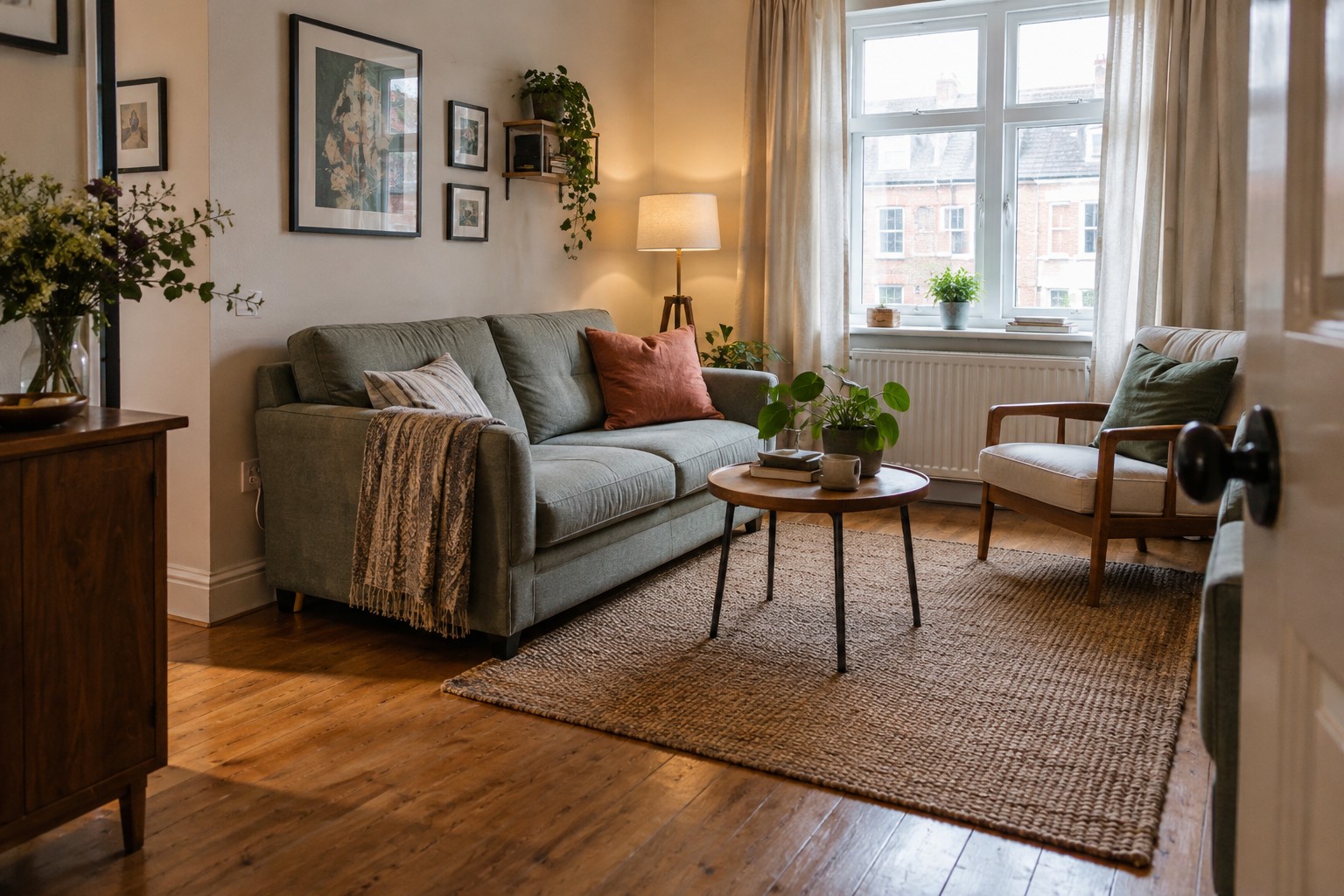
A small living room can contain all the expected furniture and still feel difficult to use. Often the problem is not the sofa itself but the narrow routes created around it. Before rearranging, identify the paths people actually take: door to window, sofa to bookshelf, hallway to the next room. Furniture should support those routes rather than force a daily sideways shuffle.
Find the sofa's working position
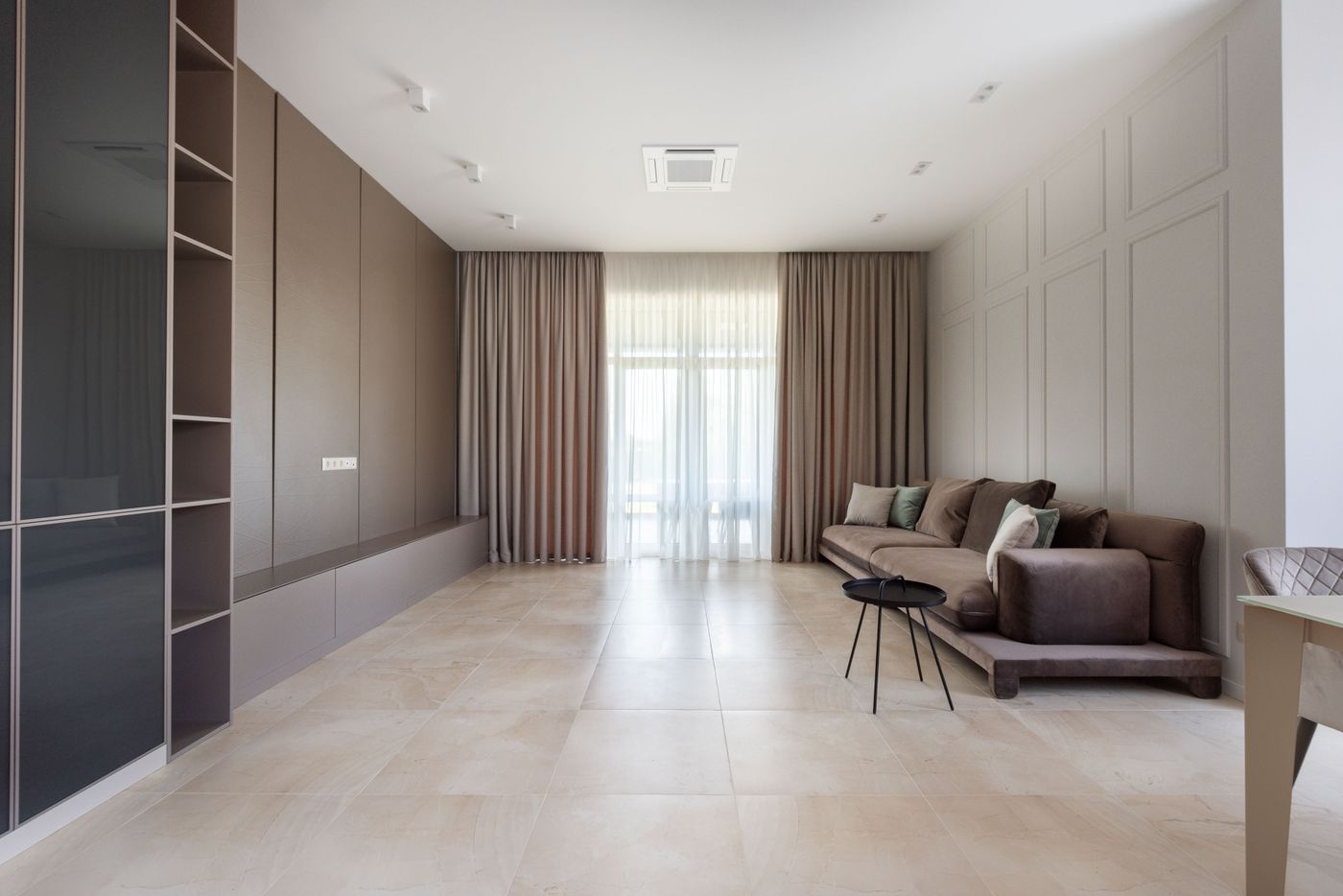
Mark its full footprint on a simple room drawing, including arms and the space behind any reclining mechanism. Try more than one position on paper before moving heavy furniture. Against a wall may be the sensible answer, but a slight gap can accommodate curtains or avoid crushing a cable. Floating the sofa can divide a shared room, provided the resulting passage is genuinely comfortable rather than merely visible.
Consider the direction of conversation as well as the television. If the room is mostly used for talking, a chair angled towards the sofa may contribute more than a large coffee table. If television is central to the room's use, test reflections at the hours you watch. A layout that depends on sitting awkwardly at one end of the sofa is unlikely to feel settled.
Remove one assumption at a time
A matching pair of side tables is not compulsory. One table at the busiest seat and a movable small surface elsewhere may be enough. Nor does every room need a central coffee table. Try living without it for a few days, using a reachable side surface for drinks. This reveals whether its absence creates a real problem or simply makes the arrangement look unfamiliar.
Extra seating can be occasional rather than permanently placed. A dining chair brought in for a visitor might be preferable to a bulky armchair that blocks a cupboard all week. Keep comfort in the decision, however: a decorative stool is not an equivalent substitute for a proper seat during a long visit.
Compare two workable compromises
In a room with a doorway near one corner, a sofa placed centrally on the longest wall may leave its arm directly in the route. Moving it slightly off centre can create a better passage even if the wall no longer looks symmetrical. Use the rug or artwork to relate to the seating group rather than trying to restore symmetry by adding another large object beside the sofa.
If a chair and coffee table cannot both work comfortably, decide which solves the more frequent need. A household that regularly talks with a visitor may keep the chair and use small side surfaces. Someone who often uses the table for a board game may prefer a movable extra seat. Test each arrangement for an ordinary evening; an attractive empty-room plan cannot tell you which compromise fits your habits.
Finally, test the room in use. Open cupboard doors, pull curtains, carry a tray and sit in every seat. Notice whether reaching a lamp requires climbing behind the sofa or whether the rug catches a door. Move objects in response to those specific problems. A successful compact layout is not one where every centimetre contains furniture; it is one where the furniture leaves enough room for ordinary movements.