Store everyday shoes near the door
Keep the current rotation accessible and move the rest out of the entrance's working space.
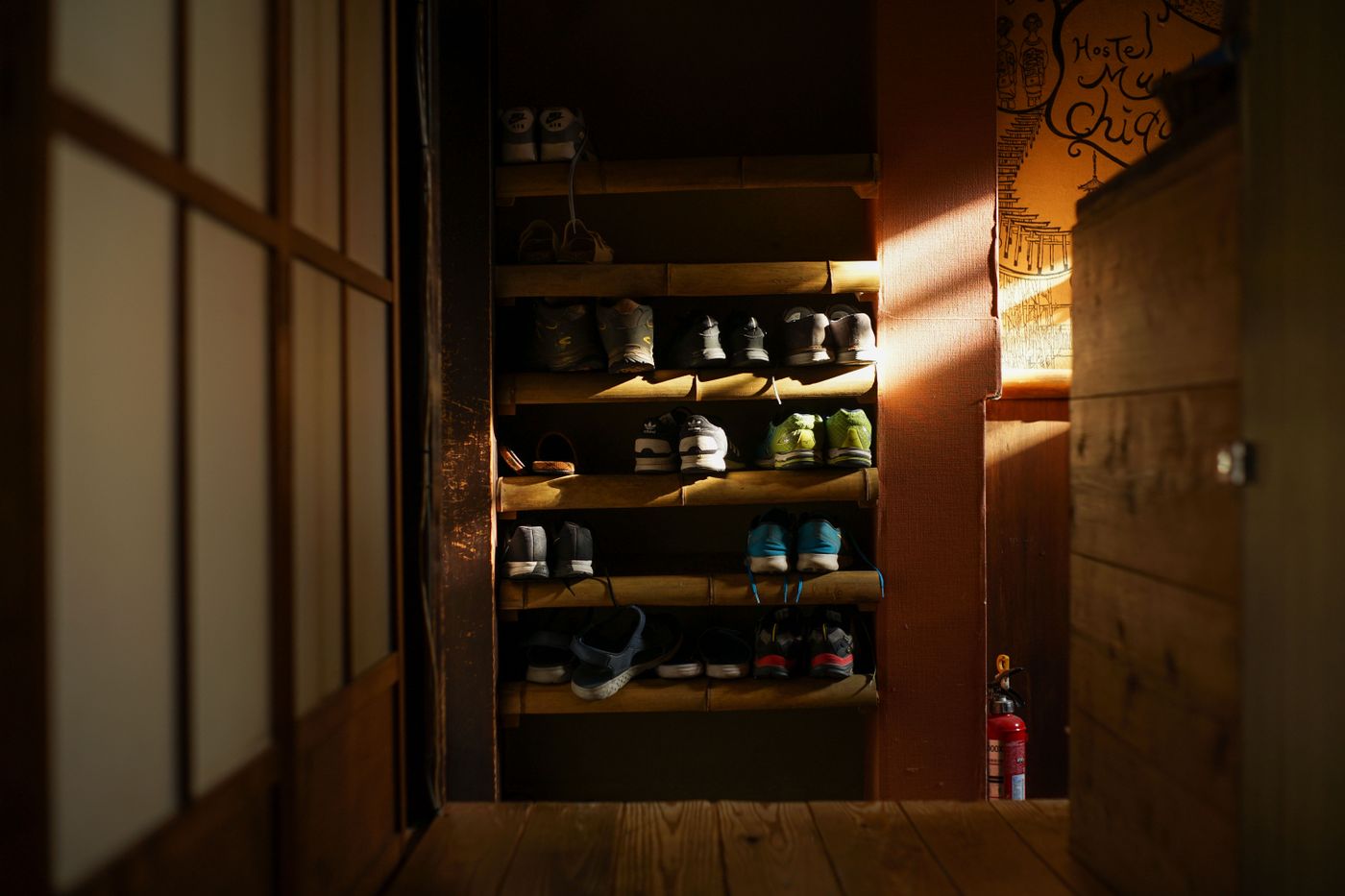
Entrance shoe storage usually fails when it is expected to hold the household's entire footwear collection. The pairs needed this week have different access requirements from occasion shoes or another season's boots. Begin with the everyday rotation and decide how much of it can comfortably live near the door.
Gather the pairs that regularly land there and check their actual dimensions. Tall boots, broad trainers and delicate flats do not fit every rack equally well. A storage unit described by the number of pairs it holds may assume smaller or more uniform shoes than yours.
Choose access over maximum capacity
Try removing a pair from the lowest and highest positions. If shoes have to be wedged sideways or another pair moved first, the advertised capacity is not useful capacity. A shallow open rack may work for a small rotation, while a cabinet can reduce visual clutter if it provides suitable storage for the shoes and is installed as instructed.
Do not put wet or dirty shoes directly among clean stored pairs. Give them an appropriate place to dry and follow their care instructions. A removable tray can help contain ordinary dirt near the entrance, but it should not become a permanent layer of damp footwear.
Account for the person putting them on
A seat nearby may be useful, provided it does not narrow the entrance so much that another person cannot pass. Keep the shoes within comfortable reach from that position. Children or people with different access needs may require different shelf heights; one arrangement need not serve everyone identically.
Keep the door swing and walking route clear when shoes are actually present. A rack that fits empty can project into the route once larger pairs sit on it. Avoid placing footwear where it prevents an exit door opening properly.
Review the selection as the weather or routine changes. Move unused pairs back to their longer-term storage instead of adding another rack each time the season shifts. If shoes repeatedly remain on the floor beside the unit, look for friction: an awkward door, a crowded shelf or a position too far from where people sit. Solving that detail usually helps more than asking everyone to be tidier.