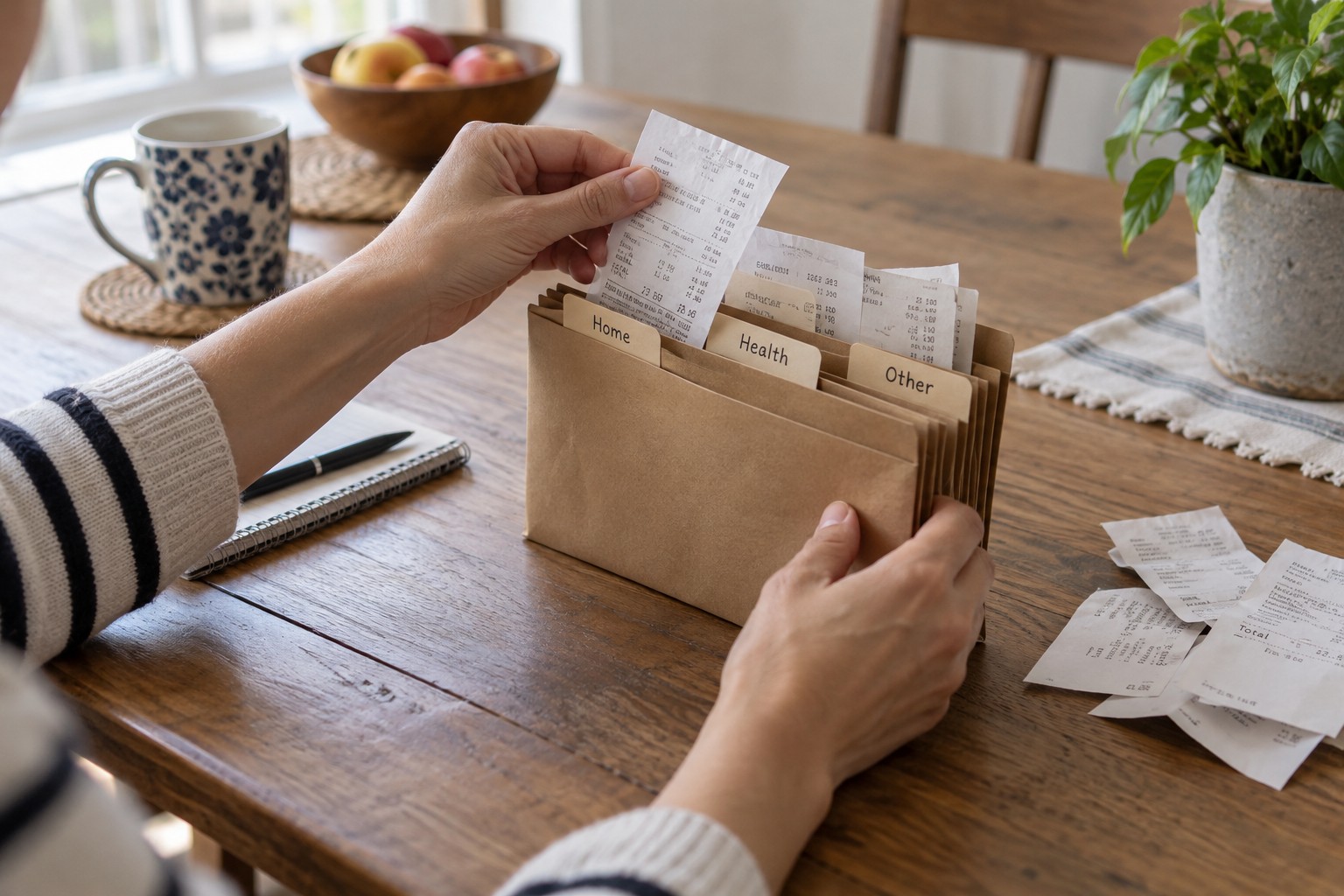
Choose one reliable place for keys
Choose a landing place that balances easy retrieval with household security.
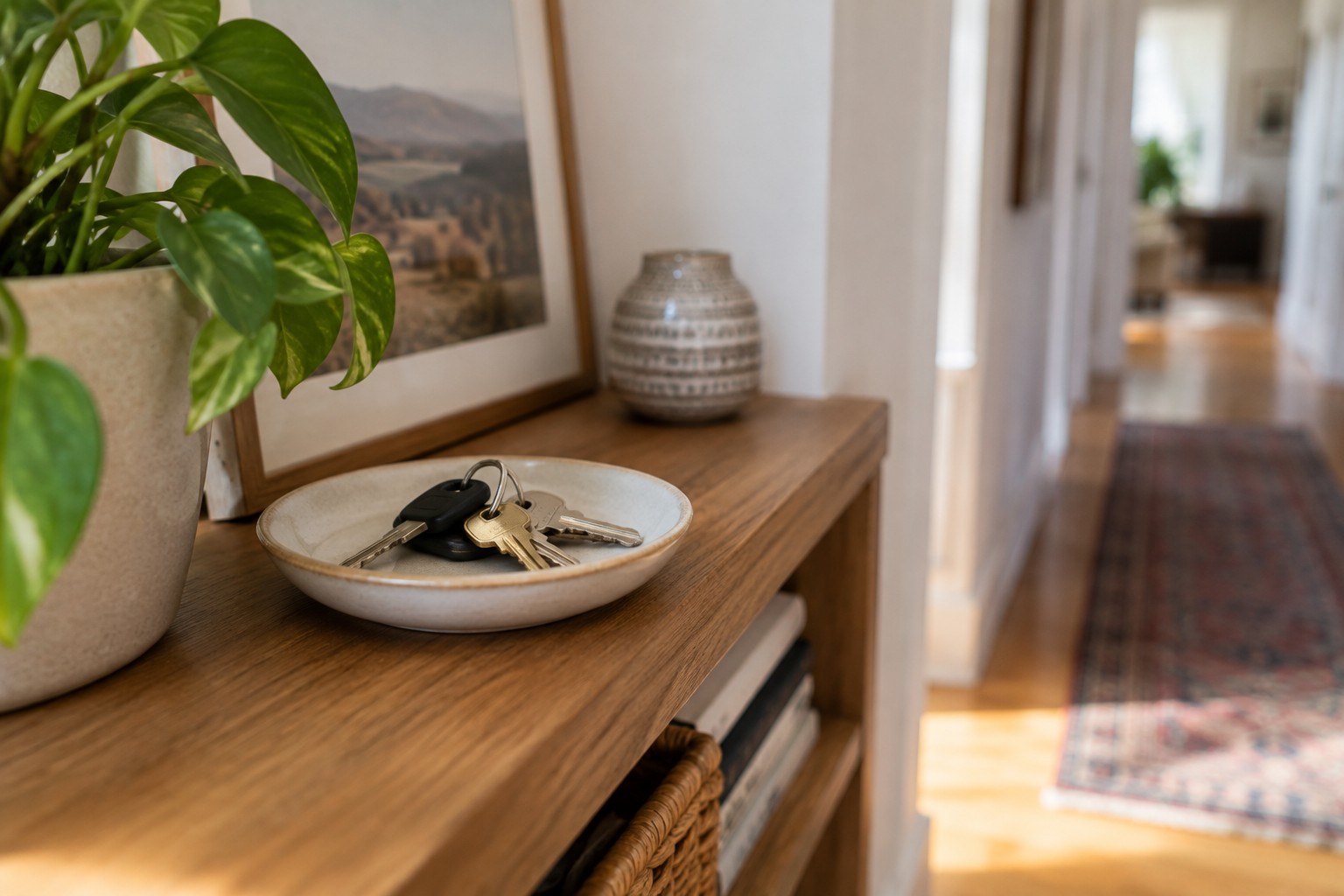
A key hook solves very little if it is on the wrong part of your route. Notice where your hands are full when you arrive, where you put down shopping and when you next need the keys. The best landing place is close to that sequence without leaving keys visible or accessible to someone outside.
Do not choose a position solely because there is empty wall space. Consider windows, letterboxes and the advice supplied for your particular locks or vehicle keys. Keep spare keys in a separate appropriate location. A household routine should not make every key easier to take in a single handful.
Give each set an identity
Separate daily keys from occasional ones. A bulky ring containing shed, suitcase and old office keys makes the everyday set harder to use. Label stored keys in a way the household understands without exposing unnecessary identifying information to visitors.
If several people share a key, give it a distinct position and agree how to indicate that it has been taken. A small note can prevent someone searching the house for an item that is already out. Do not rely on another person remembering an unspoken handover.
Try the landing place for a week before installing a permanent fitting. A temporary dish or tray can show whether you naturally use the location. Check that it will not be knocked over by a bag or buried under post. If the dish begins collecting coins and receipts, move those items to their own destinations.
Connect arrival and departure
Put the keys away as part of putting down your bag, rather than after several other tasks. On departure, check keys before closing the door. This small sequence matters more than the style of the holder. A beautiful hook does not help if the keys remain in yesterday's pocket.
For households with different schedules, make the arrangement explicit. Explain which set is shared and which belongs to an individual. Children should have an age-appropriate routine agreed with their caregiver, not access to keys simply because they can reach the rack.
When keys repeatedly go missing, review the occasions rather than blaming memory in general. Are they transferred between coats, used for an evening errand or handed to someone else? Add a specific return step at that point. One reliable place works when the journeys away from it are understood.