Make a kitchen utensil drawer easier to use
Sort tools around the way you cook and the drawer's real dimensions.
A utensil drawer often collects objects from several different kitchens: the tools used every night, a few gifts, duplicates from an old home and specialised implements bought for one recipe. Sorting it is easier when you judge each object by its current job rather than whether it might conceivably be useful someday.
Empty the drawer onto a clear surface and group similar tools. Separate cooking utensils from serving pieces and occasional baking equipment. This exposes duplicates without requiring an immediate decision about every object. Keep the version that is comfortable to use and in suitable condition; a second tool may be justified when it genuinely prevents interruptions during cooking.
Measure before adding dividers
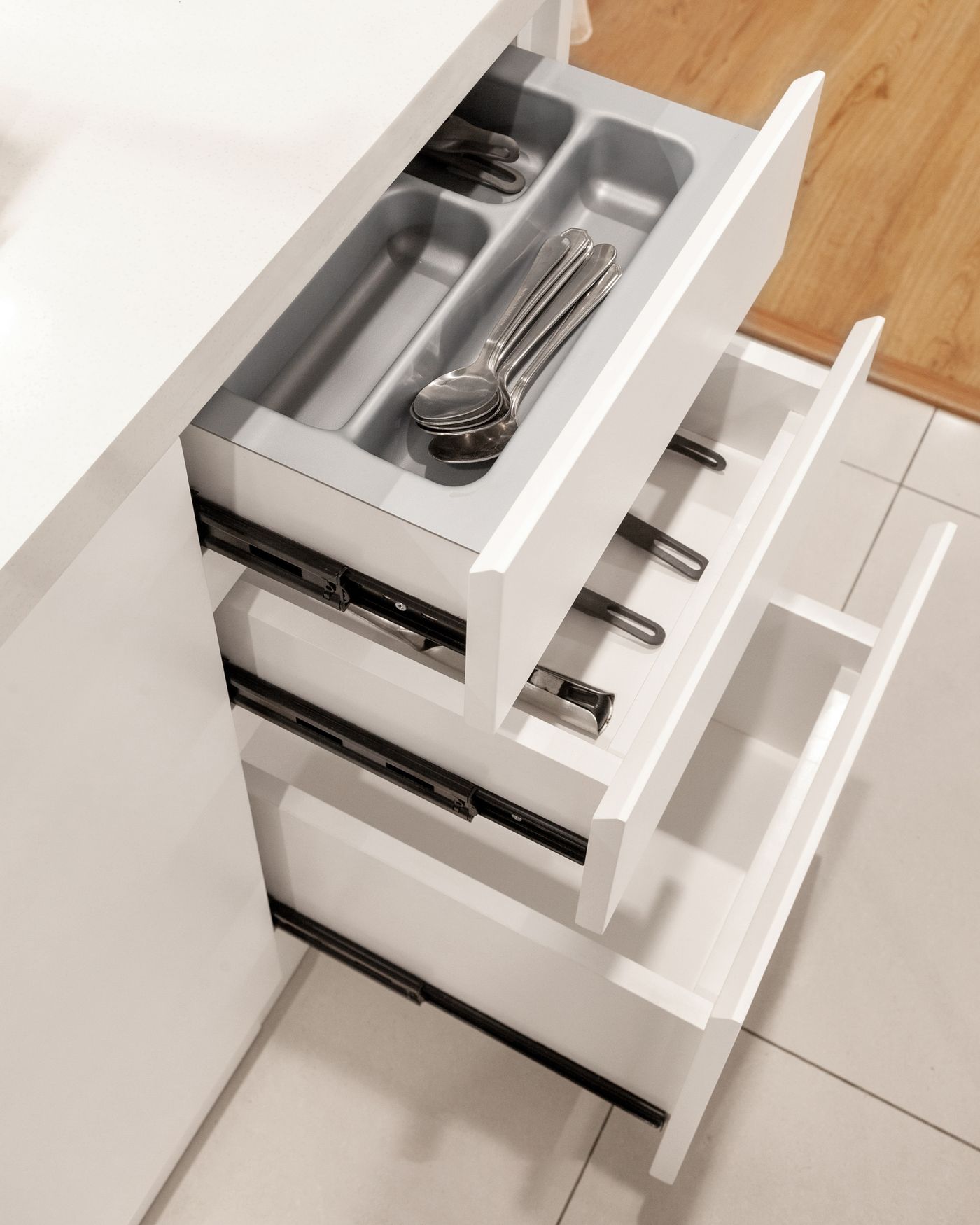
The usable dimensions are inside the drawer, with attention to the height beneath the cabinet frame. Long handles and bulky scoops can stop a drawer closing even when the base footprint fits. Try arranging the tools directly in the empty drawer before choosing compartments. An adjustable divider may be more useful than a fixed tray whose small sections do not match anything you own.
Place frequently used items where your hand naturally reaches. A spatula, wooden spoon and tongs used at the hob should not be buried behind occasional serving utensils. Keep sharp tools in appropriate protective storage rather than loose beneath other objects, and follow the knife or tool manufacturer's storage guidance.
Give awkward pieces another home
A long rolling pin or large whisk may consume more drawer space than its frequency of use warrants. A nearby cupboard can suit occasional equipment, provided retrieving it does not require dismantling a stack of cookware. Conversely, a countertop utensil pot can be useful for a small set of everyday tools, but it should not simply reproduce the crowded drawer vertically.
Return only clean, dry utensils and make the compartments easy to wipe. Overfilling defeats even a carefully selected organiser. Leave enough room to put a tool back without aligning every handle precisely.
Cook several ordinary meals before declaring the layout finished. Notice which tools you search for and which compartments are repeatedly disturbed. Move those items in response to the actual sequence of cooking. The best drawer arrangement is not necessarily symmetrical; it is the one that lets a familiar meal happen without repeatedly stopping to rummage.