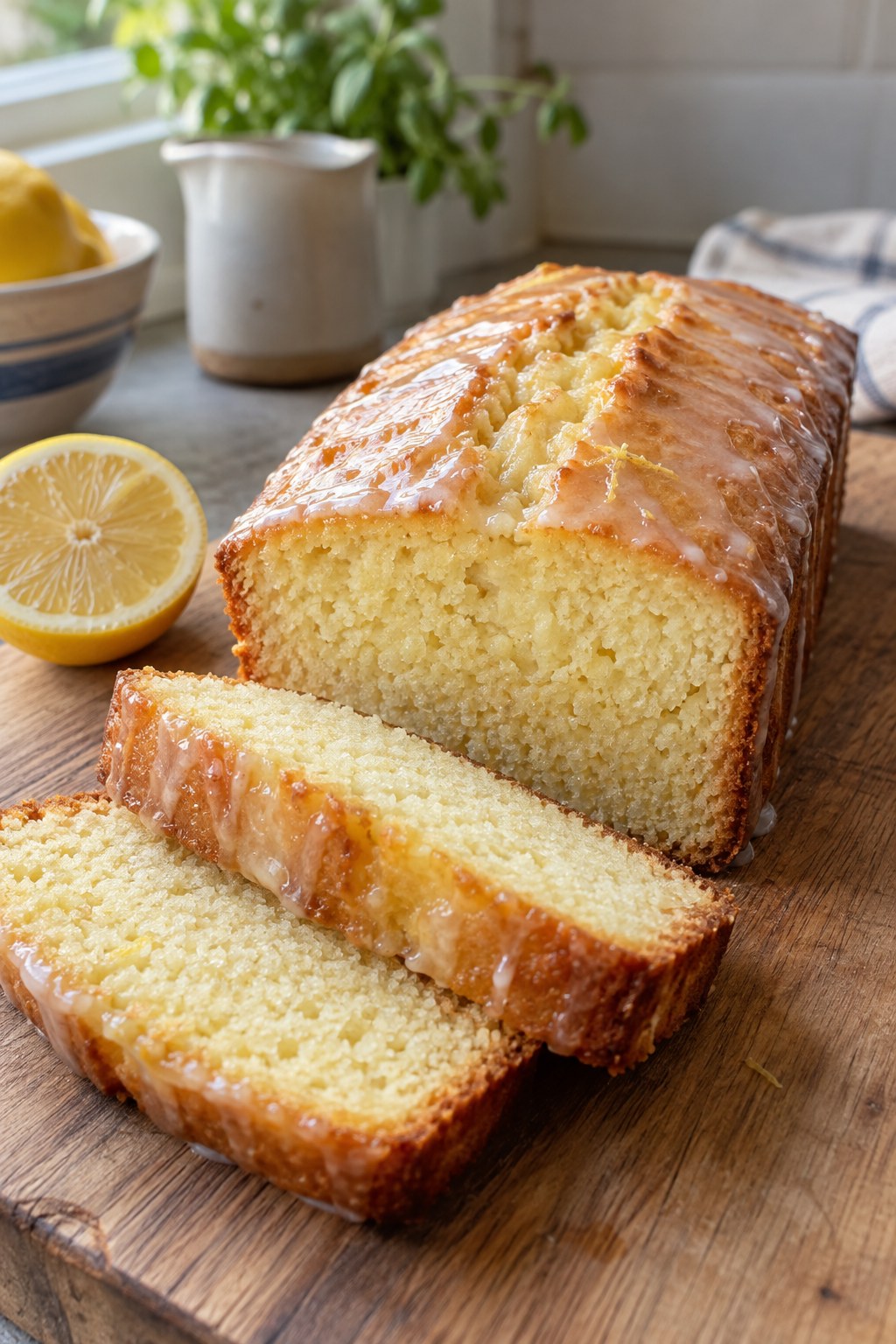
A lemon yoghurt loaf to share
Zest flavours the crumb, while a thin glaze brings lemon to the surface without a thick icing layer.
A yoghurt loaf is a useful cake for a table where people will help themselves to a slice. This version uses oil rather than creamed butter, so the batter comes together with a whisk and spoon. Measure the ingredients before starting and use a loaf tin close to the size below. A much smaller tin can overflow; a wider one changes the baking time.
Ingredients and equipment
For one loaf, approximately eight to ten slices, use 200 g plain flour, two teaspoons baking powder, 150 g caster sugar, two large eggs, 150 g plain yoghurt, 100 ml neutral oil, the finely grated zest of two washed lemons and two tablespoons lemon juice. Add a small pinch of salt. For the optional thin glaze, use 60 g icing sugar and one to two tablespoons lemon juice. You need a roughly 23 × 13 cm loaf tin, baking paper and a wire rack. Allow about 15 minutes to prepare and 45–55 minutes to bake, followed by cooling.
Prepare the tin before the batter
Heat the oven to 180°C conventional or 160°C fan. Lightly grease the tin and line its base and long sides with baking paper, leaving enough paper above the edges to lift the loaf later. Do not leave loose paper touching an oven element. Mix the flour, baking powder and salt in a bowl so the raising agent is evenly distributed.
In a larger bowl, rub the lemon zest into the sugar with clean fingertips until fragrant. Whisk in the eggs, yoghurt, oil and lemon juice until smooth. Fold in the flour mixture with a spoon or spatula, stopping once there are no dry pockets. Scrape the bottom of the bowl where flour can hide, but avoid beating the batter for several minutes.
Bake until the centre is ready
Pour the batter into the prepared tin and level it gently. Bake on the middle shelf for around 45–55 minutes. Begin checking near the earlier time: the top should be golden and a skewer inserted into the centre should come out without wet batter. A few moist crumbs are different from a liquid streak. If the top colours too quickly, cover it loosely with foil while the centre finishes.
Let the loaf stand in its tin for about ten minutes, then lift it carefully onto a rack. Remove the paper when the loaf is firm enough to handle. Allow it to cool before glazing. Mixing glaze over a hot cake causes it to run off and soak unevenly into the crust.
A glaze, not a shell
Sift the icing sugar into a small bowl and stir in one tablespoon of lemon juice. Add more a few drops at a time until it is just pourable. Spoon a thin layer over the cooled loaf and let it settle. You do not need to use every drop if you prefer a less sweet finish. Cut with a serrated knife once the glaze has stopped running.
If the loaf sinks, check whether it was fully baked before changing the recipe. Opening the oven repeatedly early in baking, using an oversized quantity of baking powder or substituting a very different tin can all affect the structure. A dense streak at the bottom can also follow poorly combined ingredients or underbaking. Keep notes on the actual tin and oven setting rather than assuming the printed time will be identical in every kitchen.
Storage and sharing
Once completely cool, wrap the loaf or keep it in an airtight container in a cool place and enjoy within two days. In a hot kitchen, refrigerate it and allow slices to lose their chill before serving. Freeze individual unglazed slices, well wrapped, for up to two months for quality. Defrost covered at room temperature and glaze afterwards if desired. Do not wrap a warm loaf tightly: trapped condensation makes the surface sticky.
For a gathering, slice part of the loaf and leave the rest whole with a clean knife nearby. Keep the ingredient list available for guests; this cake contains wheat, egg and dairy. It is not a tested allergen-free recipe, and replacing all three at once would require a different formulation rather than a casual one-for-one swap.