Choose a mirror position by its reflection
Look at what the mirror shows from seated and standing positions before fixing it in place.
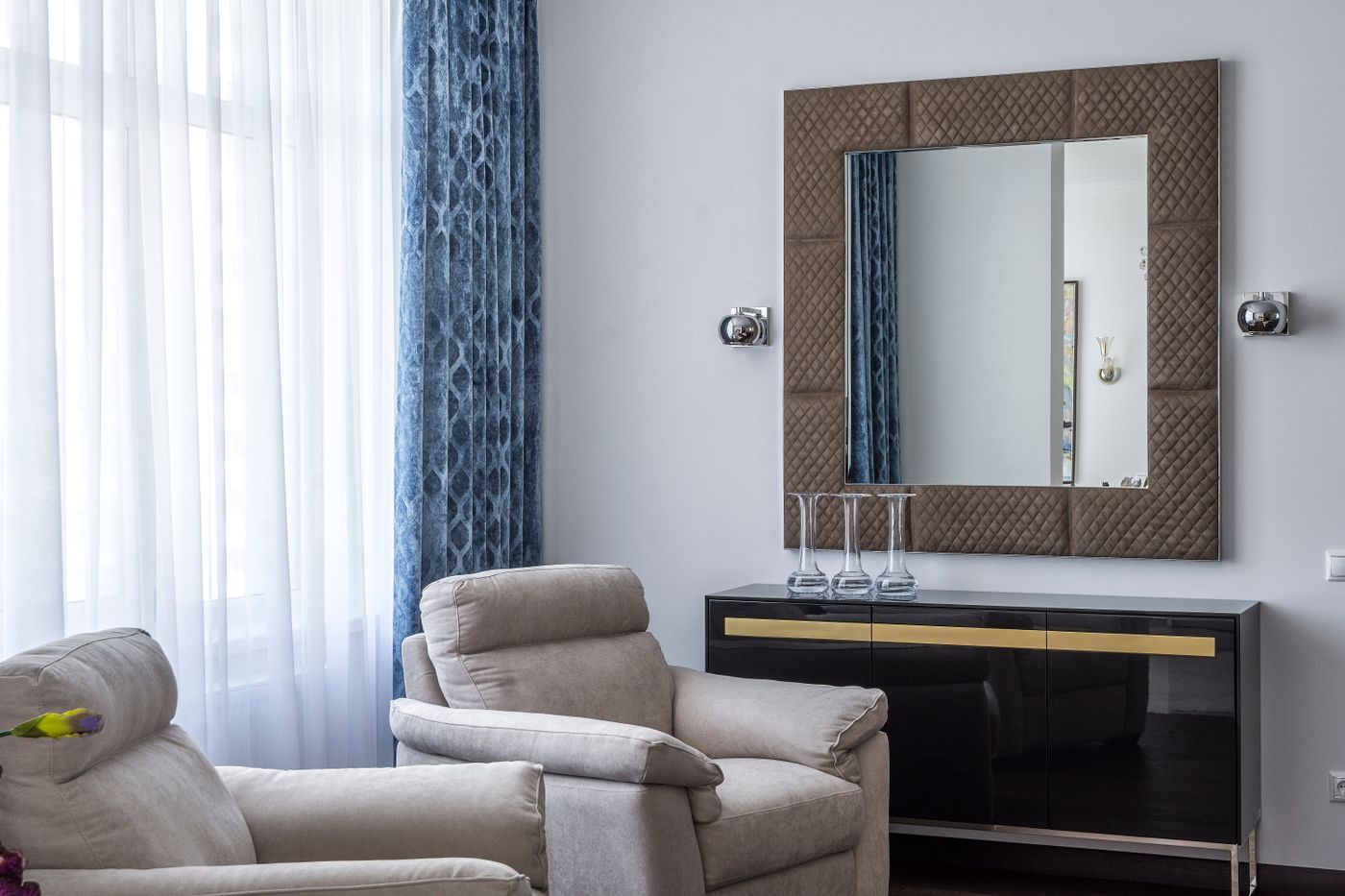
A mirror does not only fill the wall where it hangs. It introduces a second view of the room. A position chosen because the wall is empty may reflect a crowded shelf, a bare ceiling or an open doorway you would rather not emphasise. Decide what the reflection contributes before judging the frame.
Have someone hold a lightweight template or safely support the actual mirror while you inspect the proposed position. Do not balance a heavy mirror precariously for this test. Look from the entrance, the sofa and any other regular viewpoint. The reflection can change considerably between standing and sitting.
Give the mirror a purpose
An entrance mirror used to check clothing needs a different height and width from a decorative mirror above a mantel. Test whether the relevant part of the person is visible without an awkward step backwards. If the mirror is mainly decorative, consider whether it reflects something worth repeating, such as a window view or an attractive part of the room.
Be cautious about assuming every mirror will brighten a space in the way you imagine. Its effect depends on placement and existing light. Check for uncomfortable glare at different times of day. Avoid positioning a reflection where it distracts someone using a desk or watching a screen.
Plan the support as carefully as the view
Use fixings suitable for the mirror's weight, hanging hardware and wall material, following the maker's instructions. A large leaning mirror also needs appropriate securing; leaning is not a substitute for safe installation. Get qualified help where the wall construction or fixing method is uncertain.
Check the surrounding objects. A lamp or vase can create a pleasing overlap, but it should not prevent the mirror from serving its intended purpose. Leave room to clean the glass without dismantling a complicated arrangement. In a narrow passage, also consider whether the frame projects into the route.
Finally, observe the mirror at night with the usual lights on. A bulb reflected directly towards the sofa may be more noticeable than it was during the daytime test. Small shifts in position can improve the result. Choose the place that gives a useful or enjoyable view, not merely the largest available patch of wall.