Use a monthly home review to catch small tasks
Look for small maintenance and household tasks without turning the review into an inspection of everything.
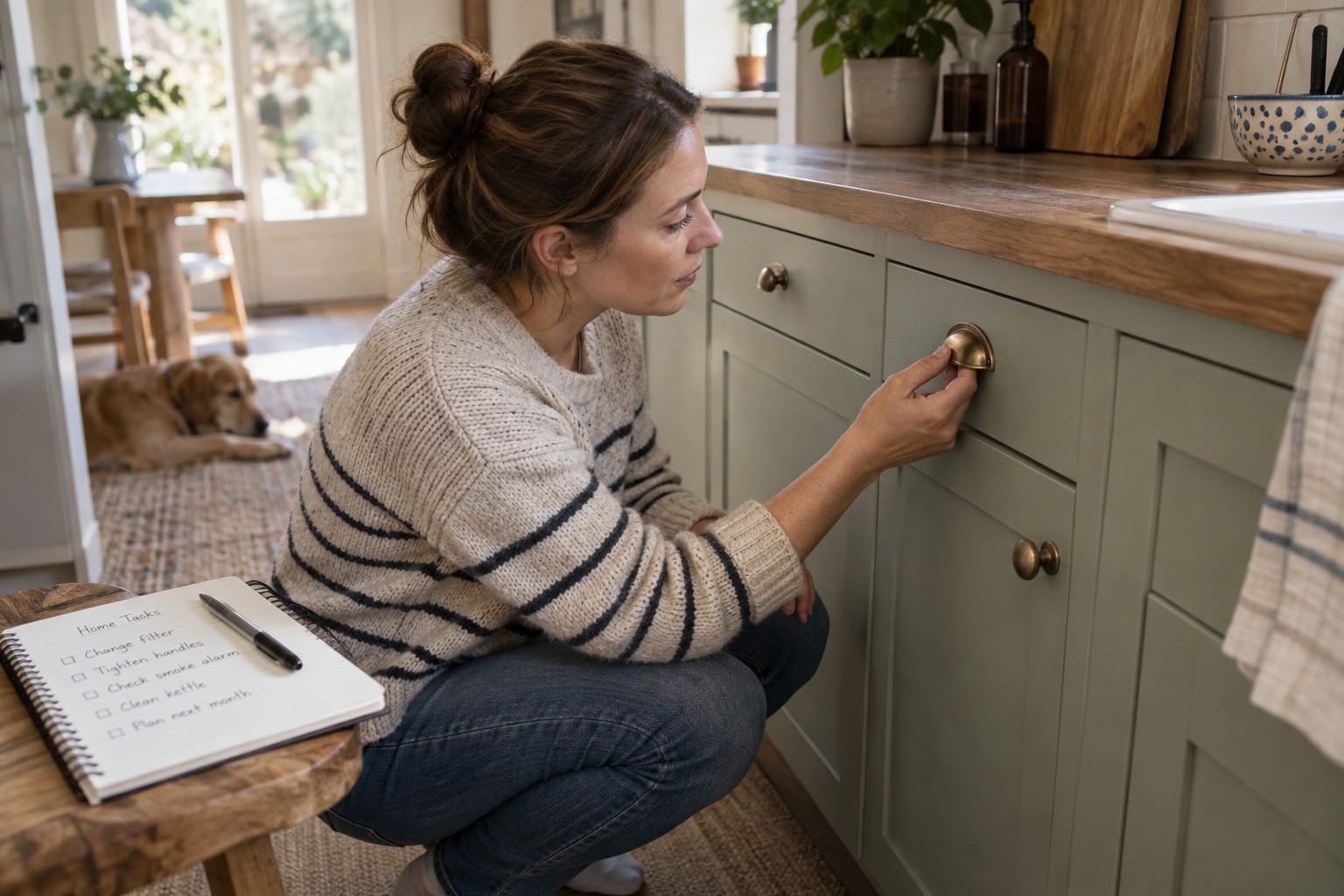
A monthly home review is a chance to notice what has been repeatedly worked around. Perhaps a cupboard handle is loose, a lamp has been moved because its cable is awkward or a storage area no longer fits what belongs there. These small frictions are easy to ignore individually, yet they shape how the home is used.
Choose a short route through the rooms rather than opening every drawer. Look at the places where something has been temporarily propped, taped, stacked or moved aside. Ask what the temporary arrangement is compensating for. The answer may be a repair, a different storage location or simply removing something no longer needed.
Separate observation from action
Record the issue in plain language and include the location. “Bedroom wardrobe door catches at the bottom” is more useful than “fix wardrobe”. Take a photograph if it will help explain the problem to someone qualified to deal with it. Do not dismantle equipment merely because you are doing a review.
Distinguish routine household adjustments from safety concerns or work requiring professional help. Follow relevant manufacturer instructions and arrange appropriate assistance when needed. The review is not a substitute for required inspections, servicing or responding promptly to a dangerous situation.
Choose what happens this month
Group the notes into actions you can do, things to purchase and enquiries to make. Assign a person and a realistic next step. If a repair needs an appointment, the next task may be contacting the provider rather than completing the repair itself.
Limit optional projects to the capacity available. A review that generates twenty new tasks every month can become discouraging. Some observations can be deliberately postponed, especially if they are cosmetic and do not affect use. Record that decision so the same item does not feel newly urgent at every review.
Check the previous list before adding more. Close completed tasks, update waiting items and remove ideas that no longer matter. If something remains unresolved, ask what is blocking it: cost, permission, missing information or an unclear next step.
End by sharing the relevant decisions with the household. A moved storage area or planned visit affects other people. The review earns its place when it leads to a few clear actions, not when it produces an increasingly detailed catalogue of the home's imperfections.