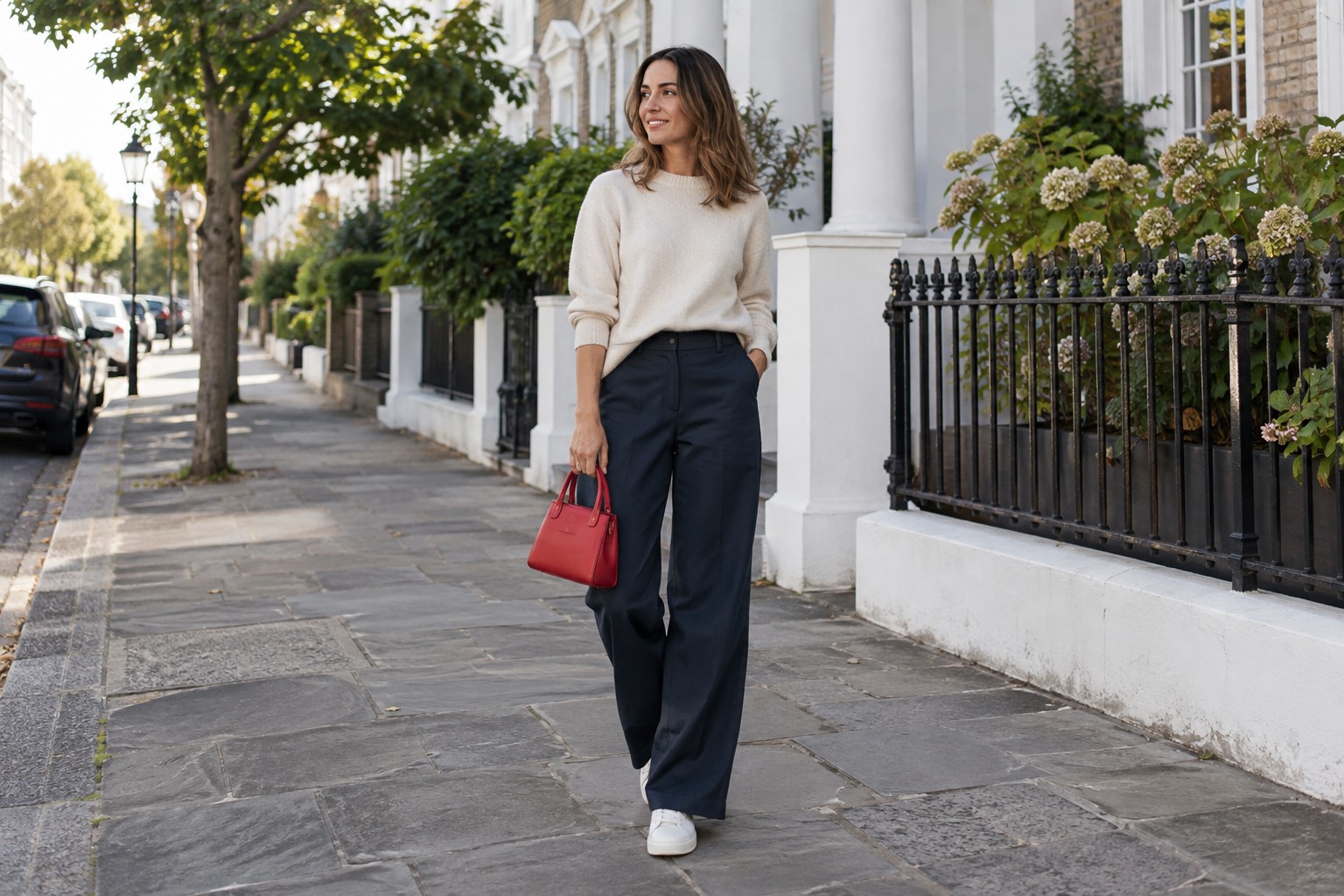
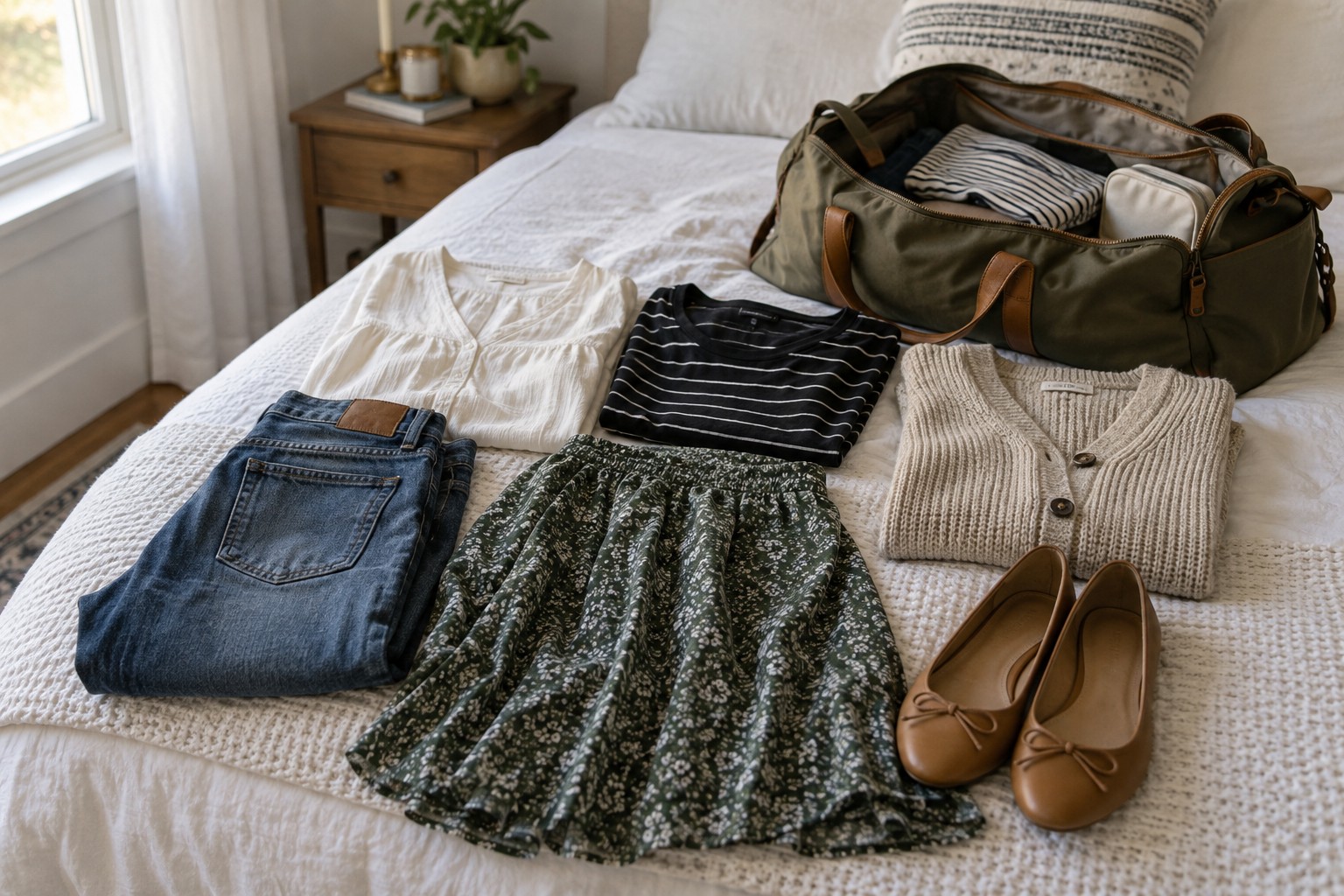
Make an all-neutral outfit feel considered
Use differences in tone, texture and shape rather than expecting similar colours to do all the work.
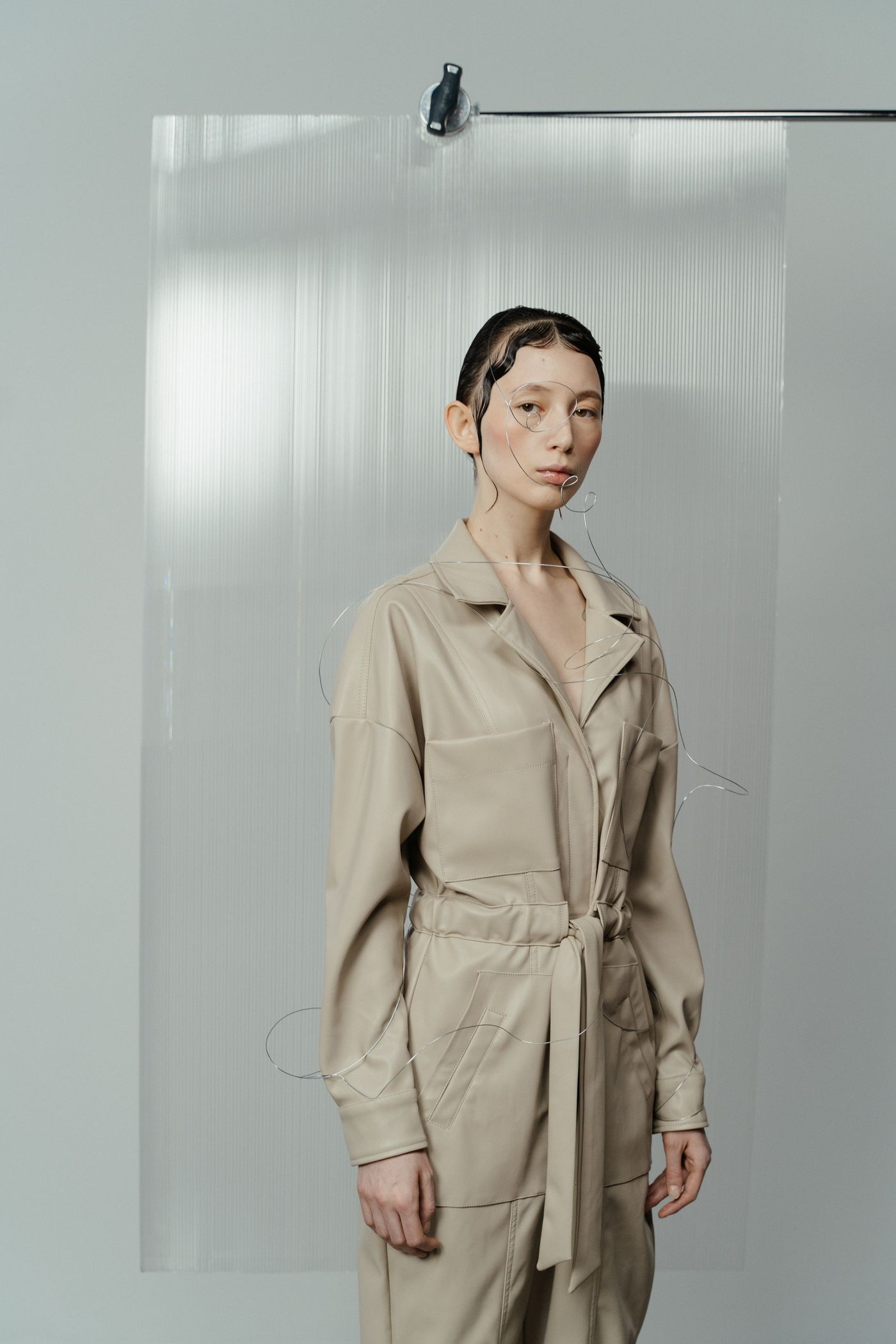
An all-neutral outfit can be varied even when it contains no strong colour. Cream, stone, grey, navy, brown and black create different relationships, and the materials carrying them matter too. Start with the garments you enjoy wearing rather than trying to fit every piece into one narrow palette.
Compare tones in daylight
Two similar pale shades may look coordinated indoors and quite different outside. Put them together in natural light and decide whether the contrast feels deliberate. If they are close but not convincing, introduce a clearer difference rather than searching endlessly for an exact match.
A cream knit with darker beige trousers can be easier to read than two almost-identical fabrics. Black and navy can also work together when their difference is visible. These combinations do not need a universal rule; they need to look intentional to you in the actual garments.
Let texture provide variation
Smooth trousers, a textured knit and a leather-like bag can create depth without adding another colour. Avoid assuming every outfit needs several textures, however. One contrast may be sufficient. Check comfort and care alongside appearance, especially where rough accessories touch delicate fabric.
Shape matters just as much. A loose top and wide trousers can create a relaxed silhouette, while a shorter top or more defined jacket changes it. If the outfit feels flat, adjust a hem or layer before adding jewellery merely to fill the perceived gap.
Choose a quiet focal point
A belt, shoe shape or neckline can provide focus without a bright accent. Let one element be more visible and keep the rest supportive. A neutral outfit does not need to be stripped of personality, nor does it require an obvious statement accessory to avoid being boring.
Inspect the outfit as a whole, including outerwear. A coat may introduce another neutral that changes the balance. Try the bag and shoes in the same view rather than deciding on each piece independently.
Work through a specific combination
Try stone trousers, a cream knit and brown shoes. If the two pale garments seem indistinct, add a darker outer layer or choose a more visible texture in one of them. You do not necessarily need a bright accessory. A change in tone or surface can clarify the separate pieces while keeping the outfit neutral.
For a darker example, pair navy trousers with a black top and compare it in daylight. If the difference looks accidental to you, make one piece clearly lighter or introduce a third neutral that connects them, such as a grey jacket. If you enjoy the subtle difference, leave it alone. The objective is not to comply with a rule about mixing black and navy, but to make an informed choice about the actual colours and proportions in front of you.
Record combinations that work in ordinary use. Similar colours alone do not guarantee that garments share compatible lengths, weights or occasions. A small set of tested outfits is more useful than a large collection purchased because everything was described as neutral.