Plan a small clothing capsule for a weekend away
Pack complete outfits for the itinerary, then remove duplicates that serve no separate purpose.
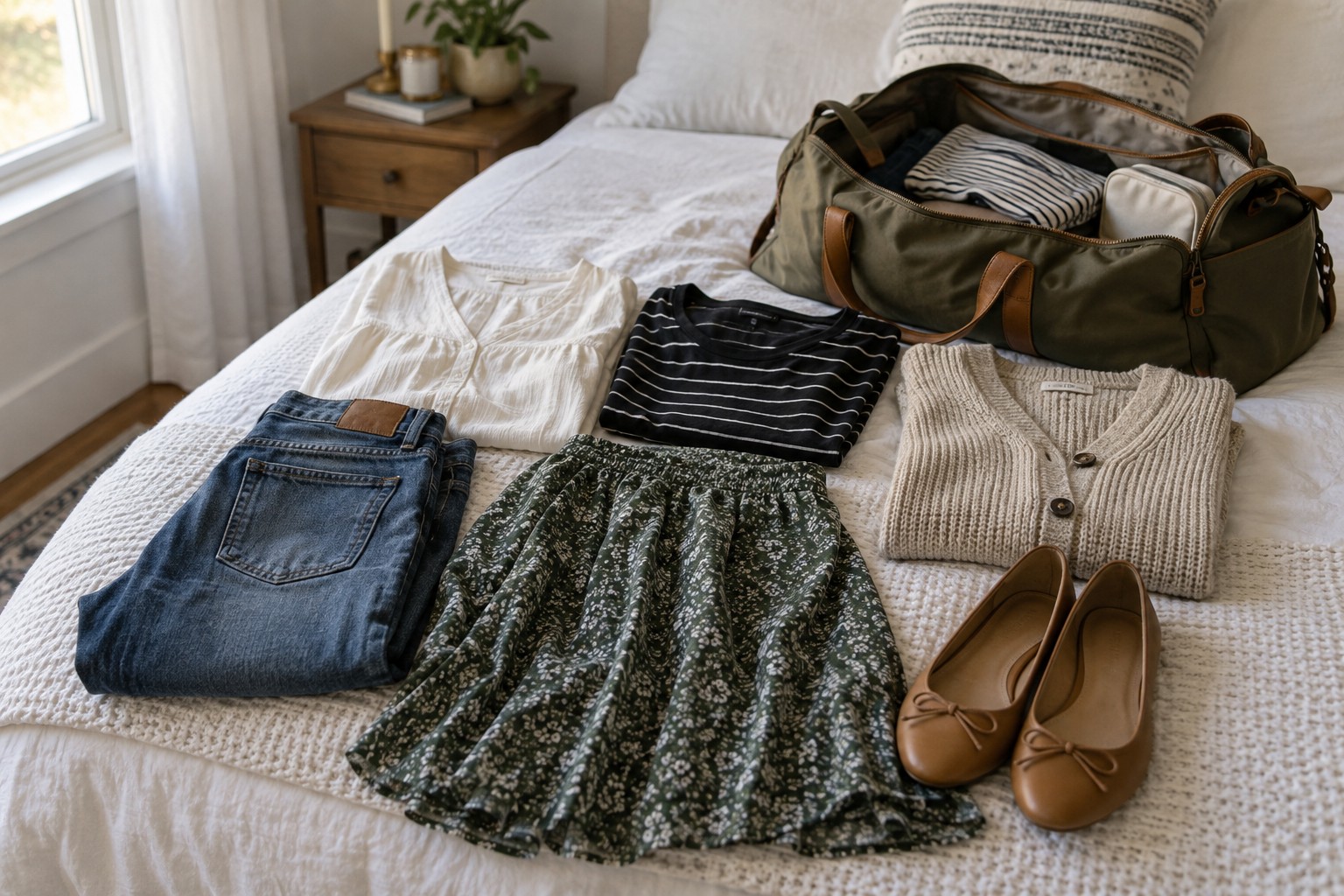
A weekend capsule is not a fixed number of pieces. It is a small selection that covers the actual trip without asking you to wear unsuitable clothing merely to keep the count low. Begin with the itinerary, weather and luggage limits, then build outfits that can share useful elements.
Write down the clothing moments
List the journey, daytime activities, evening plans and the return trip. Include specific requirements such as a long walk, a dinner with a dress expectation or access to a pool. These details matter more than the generic idea of a weekend away. Check current weather information close to departure and adjust the plan accordingly.
Choose the most demanding activity first. If one day involves extensive walking, select the shoes and clothing that suit it. Do not expect a decorative evening shoe to cover that need. Conversely, if a particular event requires different clothing, acknowledge it rather than trying to make every item perform every role.
Build around a few compatible pieces
Lay out complete outfits, including underwear, socks and any layers. A pair of trousers may work for both travel and a casual dinner with a change of top, while a dress may serve only one planned event. Reuse is useful where it feels natural, not where it creates discomfort or a mismatch with the setting.
Choose a small colour range if that makes pairing easier, but check shape and weight too. Two garments can share a palette and still be awkward together because their hems or volumes compete. Try the combinations on before packing. A photograph can help you remember them without bringing extra pieces just in case.
Limit shoes for a reason
Footwear often occupies a disproportionate amount of luggage space. Bring the pairs needed for distinct activities and resist adding several similar options. Wear the bulkier suitable pair for travel if convenient, but do not make the journey uncomfortable solely to save bag space.
Check that each trouser or long skirt works with its assigned shoe. A hem set for a heel may drag with a flat. This is one of the easiest problems to miss when packing garments separately rather than as outfits.
Give every extra a purpose
A spare top can be sensible, particularly when spills or weather changes are plausible. Several additional outfits chosen without a scenario may simply make the bag harder to manage. Describe the reason for each extra in plain terms. If it duplicates something already packed, reconsider it.
Include an appropriate outer layer and any necessary weather protection. A cardigan for indoor temperature changes is different from a rain layer. Read the actual performance information of garments rather than assuming a familiar coat style provides particular protection.
Pack for access, not just compactness
Keep items needed during the journey reachable. Separate shoes and any damp or dirty clothing appropriately so they do not affect clean garments. Use the luggage's organisation features where helpful, but avoid filling it with so many small bags that every change of clothes requires unpacking the whole case.
Consider garment care at the destination. Do not assume there will be an iron, a safe place to dry clothes or time to wash them. Choose clothes that suit the trip's realities, following their care labels. A garment that only looks right after substantial preparation may not be the most convenient choice for a short break.
Before closing the bag, compare it with the outfit plan. Remove orphan pieces that have no clear partner and check the essentials that are easy to overlook. After returning, note what was used and what remained untouched. That evidence gives the next weekend capsule a more personal and useful starting point than any universal packing formula.
For a two-night city break, a useful planning example might begin with comfortable trousers and walking shoes for travel, a second top for the following day and one outfit appropriate to the planned evening. An extra layer and necessary underclothes complete the starting list. This is not a prescribed packing list: a wet forecast, a formal event or different personal needs would change it. Its value is the method of assigning every item to a real part of the trip.
Correct the outfit that depends on one fragile plan
Check whether an important outfit only works if a particular garment stays spotless or a specific pair of shoes remains dry. A spare compatible top may cover that risk more efficiently than an entire additional outfit. Likewise, a base layer that works under both planned tops can add flexibility without much space. Avoid turning this check into a catalogue of unlikely disasters: focus on the ordinary disruptions associated with the actual trip, such as a spilled drink or changeable weather.
If the bag still feels excessive, remove duplicate roles before removing necessary coverage. Two similar evening tops may be less useful than one appropriate rain layer. The right reduction preserves the activities and comfort the trip requires.
Keep any item you cannot comfortably replace or do without in the luggage arrangement most appropriate to the journey. Check the transport provider's current baggage rules directly, especially when a small bag is expected to fit beneath a seat. A capsule that ignores those dimensions is only compact in theory.