Plan meals for overnight guests
A clear breakfast offer and one flexible meal can be more useful than a full schedule of cooking.
When someone stays overnight, food planning extends beyond dinner. Breakfast may happen at different times, plans can change during the day and the kitchen still needs to serve the household. Ask about dietary requirements and likely arrival and departure times before shopping. This prevents buying for meals your guests will not actually be there to eat.
Make breakfast understandable
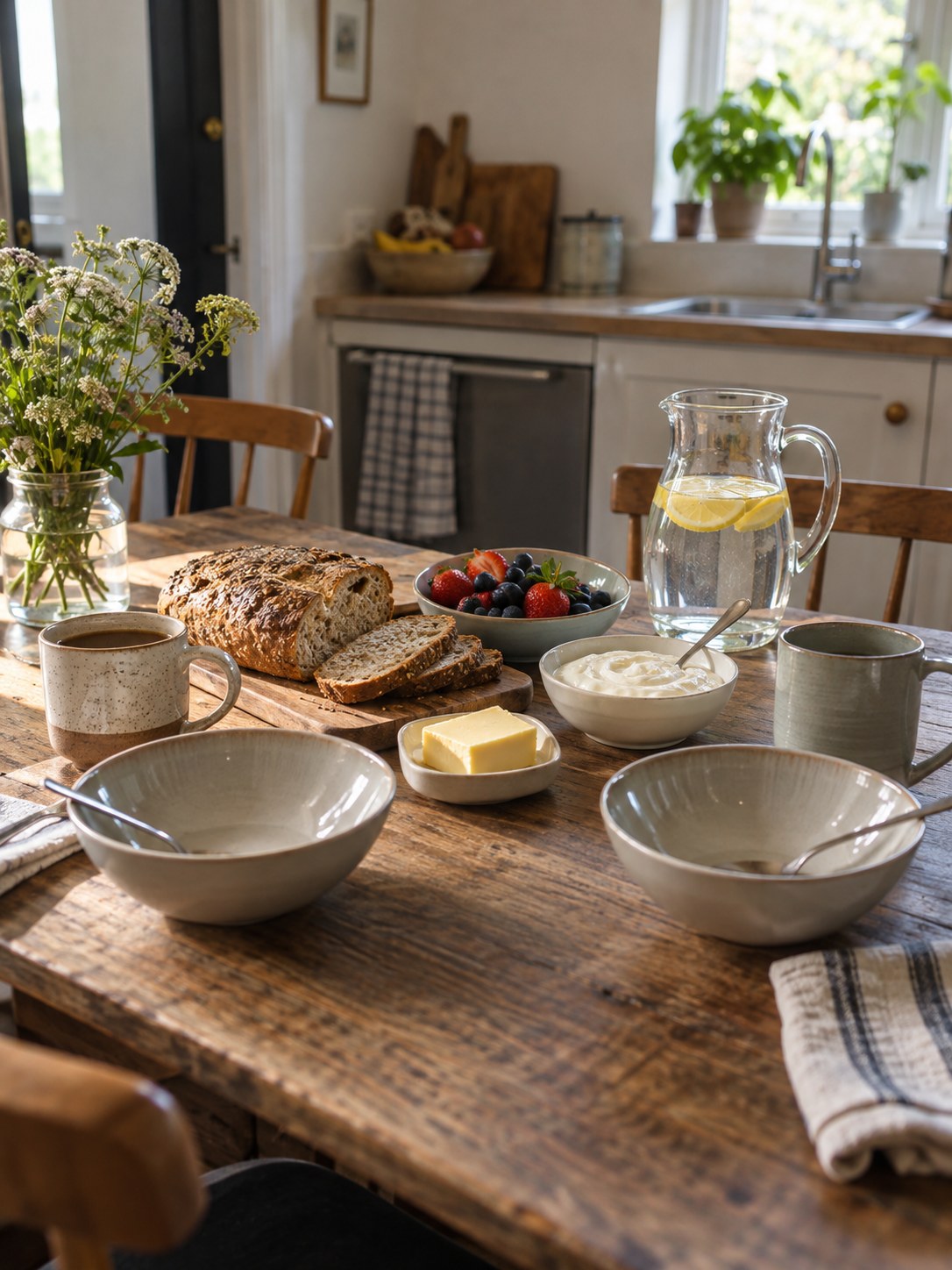
Show guests where cups, plates and everyday ingredients live. Let them know whether you are planning to eat together or whether they can help themselves. A simple breakfast shelf or tray can make an early riser comfortable without requiring the host to wake up first.
Choose options that fit the way your kitchen works. Bread, a suitable spread, fruit and a refrigerated option may be enough. If you plan a cooked breakfast, decide which part you will make fresh and keep the rest easy. Check appliance instructions before inviting a guest to use unfamiliar equipment.
Leave one meal flexible
A full itinerary of meals can become restrictive when people want to explore, rest or visit someone else. Keep one lunch or dinner adaptable: ingredients for a simple meal at home, with the option to use them another day if you go out. Avoid preparing several highly perishable dishes before the visit's plans are clear.
If guests offer to help, give them a task that fits the space. Setting the table or assembling a salad may be easier than having several people cook at the same hob. Share the plan so help does not accidentally duplicate something already done.
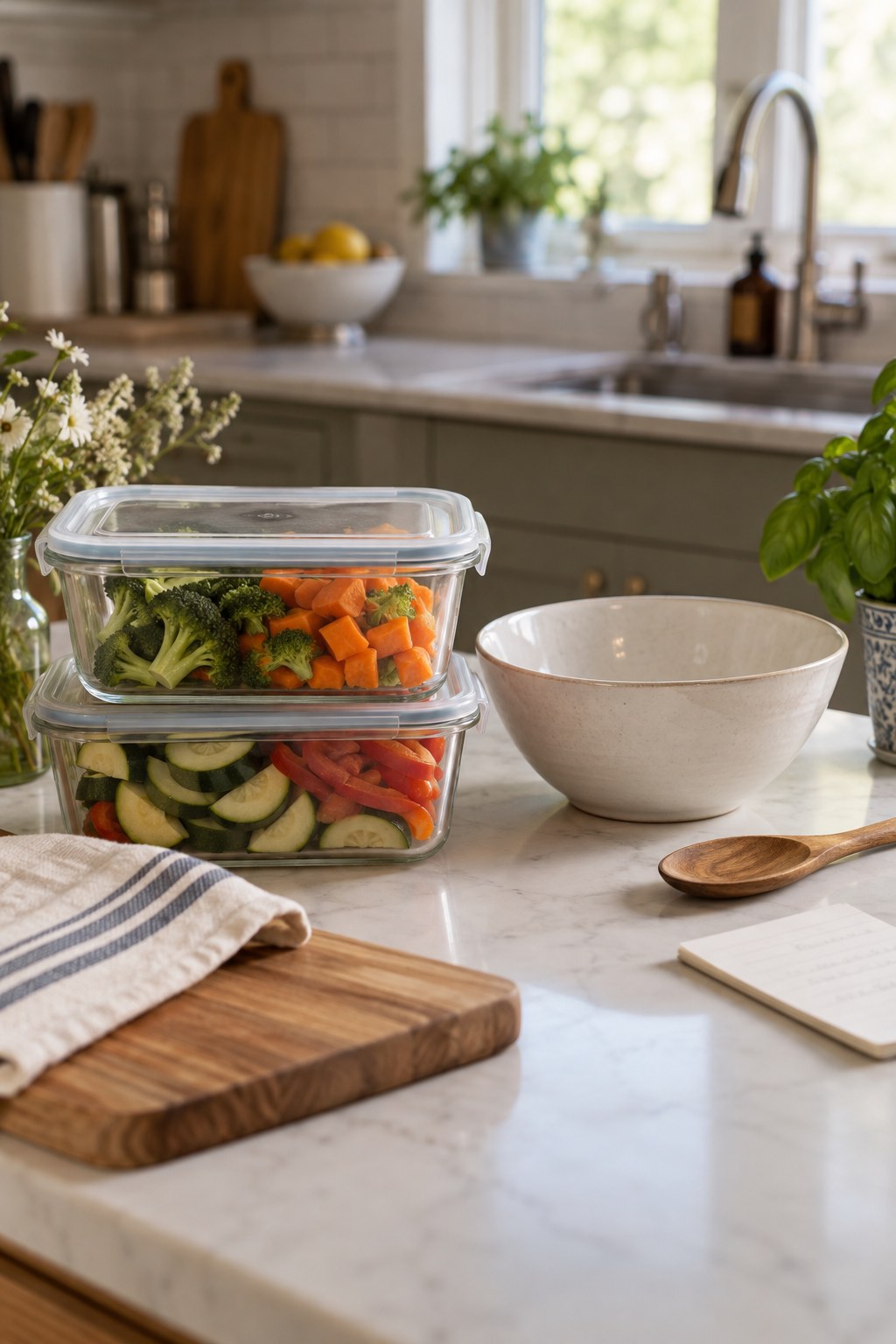
Keep enough clear fridge space for the food you are serving. A shelf packed with unrelated containers can make safe storage difficult and hide ingredients you meant to use. Label prepared items with their contents and date, and follow appropriate storage guidance rather than relying on a vague memory of when something was made.
Explain the household rhythm kindly
It is reasonable to say when the kitchen is busiest or when you need to leave for work. A guest can adapt more easily to a clear explanation than to an unspoken routine. Equally, ask whether they have a preferred breakfast time or a food they rely on, without assuming you need to reproduce every detail of their home.
After the visit, note what was useful and what remained untouched. This is not a scorecard for the guest; it is information for future shopping. Hospitality can be warm without becoming continuous food service. A few meals that leave room for conversation are often a better fit than a plan that keeps you in the kitchen throughout the stay.
Separate hospitality from a fixed schedule
Two guests may wake at different times, especially after travel. Tell them what is available for breakfast and where to find the basics, then agree when you plan to eat together. A person who wakes early can have a simple snack without feeling they must wait silently for a formal meal. Keep anything perishable in the refrigerator and show guests where it is rather than leaving it out overnight.
For a two-night visit, you might plan a shared dinner on arrival, an easy breakfast and one meal out the following day. This leaves space for the visit itself. Check whether a late arrival means the guest will already have eaten; preparing a large hot meal can become a burden when someone only wants tea and sleep. Offer a clear, low-pressure choice instead of asking a tired person to design the whole menu.
Explain any kitchen quirks that could genuinely confuse a visitor, such as which switch powers the kettle or where the drinking glasses live. You do not need a long instruction manual. A short introduction makes self-service possible and prevents repeated interruptions. Before departure, ask whether they want breakfast or a drink for the journey rather than packing food they cannot conveniently carry.