Decide what to prepare before dinner guests arrive
Separate tasks that genuinely improve with advance work from food that should wait.
Preparing ahead is not the same as making every part of dinner early. Some tasks become easier when done in advance; others lose texture or create awkward storage needs. Read through the whole menu and mark what must happen close to serving. The remaining work can then be arranged around the space and time you actually have.
Start with the tasks that do not involve food
Set the table, choose serving dishes and check that each dish has a utensil. Empty the dishwasher or clear a place for used plates. Put drinks where they can be served without crossing the cooking area. These jobs are easy to overlook because they are not part of a recipe, yet they can consume the same final minutes you need for cooking.
Write a short serving sequence rather than an elaborate schedule. Note the oven temperature changes, resting periods and any dish that uses the only large pan. If two jobs conflict, change the menu or the method before the day of the gathering. A timeline cannot make one oven behave like two.
Prepare components with a purpose
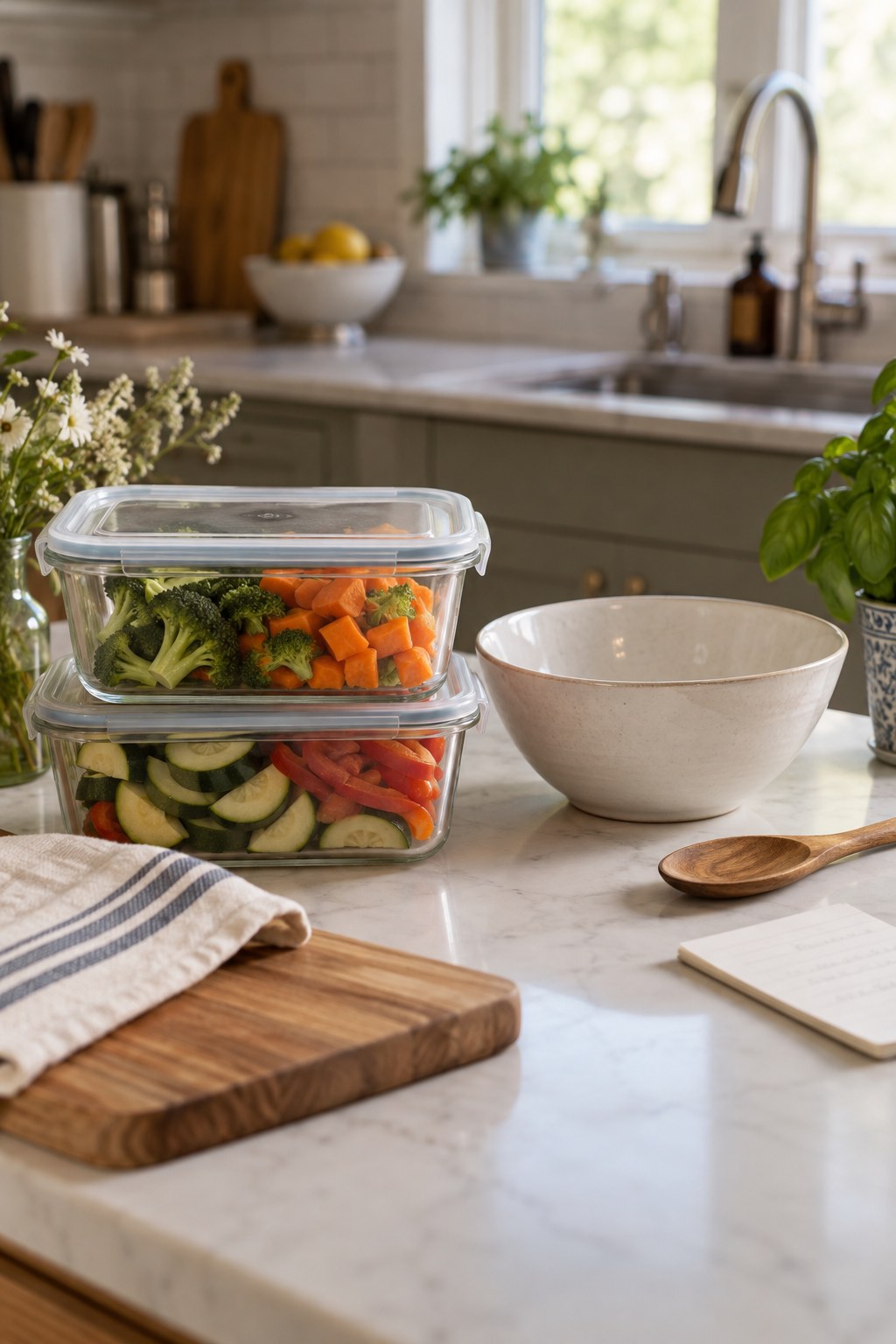
Wash and prepare vegetables according to their needs, measure ingredients and make sauces that suit advance preparation. Keep each component covered and stored safely. Label containers if several look similar. A small bowl of an unidentified mixture is not much help when you are trying to finish dinner.
Leave crisp elements and delicate assembly until they are needed. Dressing a leafy salad far ahead may change its texture, while topping toast early can make it wet. You can still prepare the separate parts and put the bowl or platter in place. Think of preparation as reducing decisions, not necessarily completing the dish.
Reserve a final working window
Give yourself time to heat, finish and check the food without also answering the door repeatedly. If possible, have drinks and a simple welcome ready so guests can settle while you complete the last task. Tell them what you are doing rather than disappearing into the kitchen without explanation.
Follow the recipe and official guidance for cooling, chilling and reheating anything made earlier. A dish that is convenient to prepare ahead still needs appropriate storage. Do not leave a large cooked dish on the counter for hours simply because dinner is later in the evening.
After serving, look at the jobs that caused the most interruption. Perhaps the menu was manageable but the serving spoons were missing, or the food was ready but the table still needed clearing. Those observations are more useful than a promise to be more organised next time. Change the specific friction point and keep the parts of the plan that worked.
Write a backwards plan from serving time
Imagine dinner is at seven. Work backwards from the component that needs the longest uninterrupted cooking time, then add resting, assembly and serving. Put cold tasks in the earlier part of the day and reserve the final half hour for actions that genuinely need to happen then. Include washing a pan you will use twice; otherwise the schedule quietly assumes you own more equipment than you do.
For example, a salad can be washed and dried ahead, with its dressing kept separately. Serving dishes can be set out before guests arrive. Bread may only need slicing at the last moment, while a hot main needs a defined oven slot. The exact menu is flexible, but the principle is to separate safe advance preparation from finishing that protects texture. Do not dress delicate leaves early simply because the bowl looks complete.
Build in a recovery option. If one dish runs late, decide whether another part of the meal can wait safely or whether you will serve a simpler first course. Avoid a plan in which every item has to be perfect at the same minute. Write the final few actions on a small card near the kitchen workspace so conversation does not make you forget a sauce or a plate of bread.