Make the return from a short trip easier
Plan a small landing routine so the trip does not spill across the next several days.
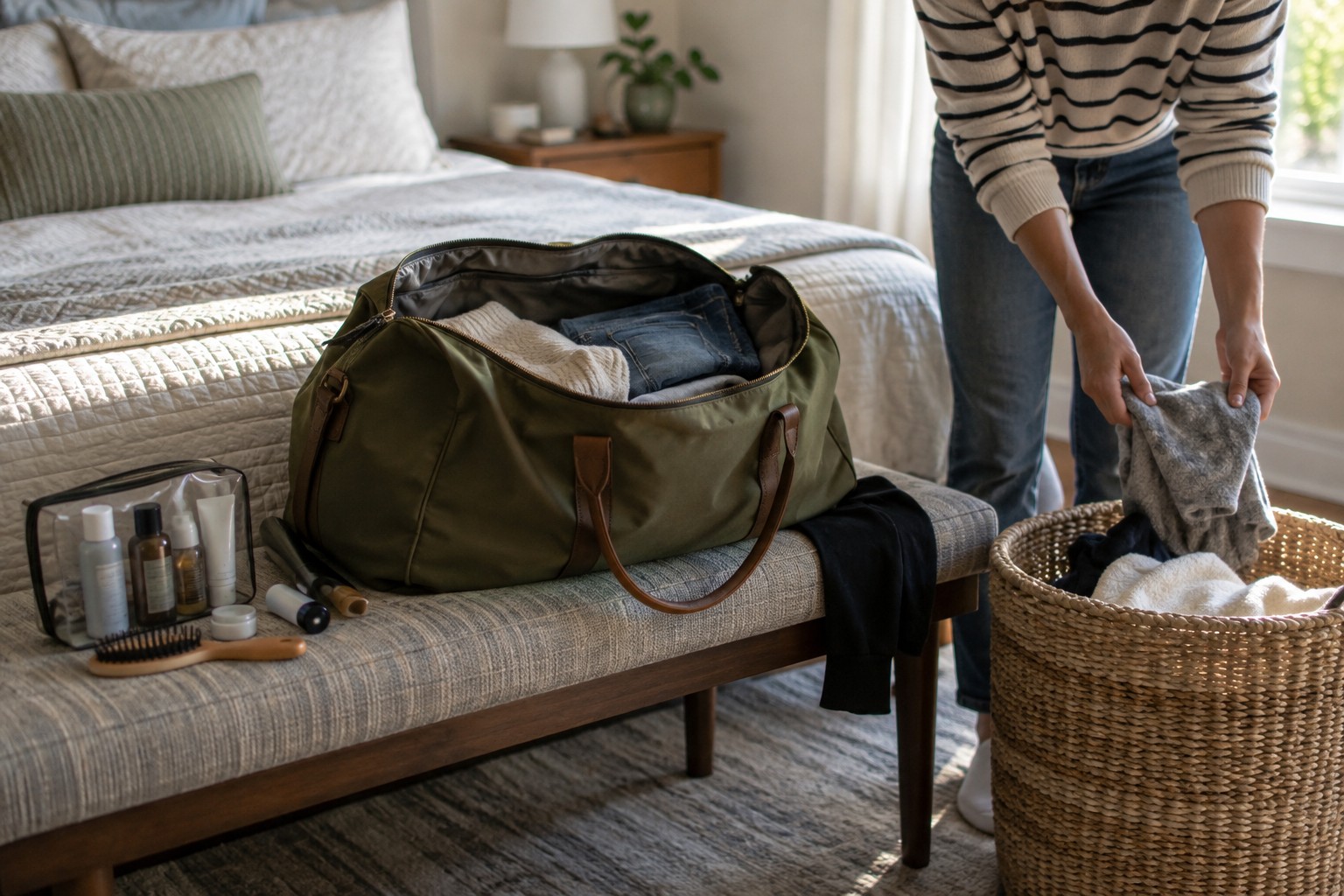
The return from a short trip is easier when home does not require a complete reset immediately. Before leaving, take care of appropriate food storage, remove rubbish that should not wait and leave the bed and essential surfaces usable. These are small preparations for arrival, not a requirement to clean the entire home before travelling.
Choose a simple first meal for the return and make sure it can be prepared safely from suitable ingredients. Do not rely on perishable food remaining usable simply because the trip is short. A familiar cupboard or freezer option may be more dependable, depending on your household and the food involved.
Unpack by urgency
On arrival, deal first with food, damp items and anything needing prompt care. Put medication or personal equipment back in its proper place. Then separate laundry from clothing that can return to storage. You do not have to reorganise every drawer as part of unpacking.
Keep travel documents or receipts that still have a purpose together, and dispose of the rest appropriately. Check bags and pockets before putting luggage away. A small item left in a rarely used compartment can appear lost for months.
Restore the reusable kit
Let toiletries and containers dry as needed, check charging equipment and note anything that ran out. Put travel items together once ready rather than leaving half the kit on the bathroom counter. This makes the next trip easier without requiring a fully packed suitcase to remain waiting.
If you arrive late, define a minimum finish: urgent items handled, bag out of the walkway and tomorrow's essentials located. Leave ordinary laundry and non-urgent sorting for a suitable time. Sleep and an orderly start may matter more than an empty suitcase at midnight.
Share the unpacking when several people travelled. Each person can return their own belongings, while shared equipment and costs need an agreed owner. One person should not automatically inherit the entire aftermath because they organised the trip.
Divide a late arrival into two finishes
The first finish is the one needed before sleep: appropriate handling of food, wet clothing and personal essentials, plus a clear route through the room. The second can happen the following day: returning dry clothing, checking receipts and cleaning luggage as its instructions allow. Write down that second session if otherwise the partly unpacked bag tends to remain for a week.
Use a small visible collection for items that must leave the house again, such as a borrowed guidebook or an object left in your luggage by a companion. Contact the owner and arrange the return rather than allowing it to merge with your own possessions.
For shared travel, identify who has the group items before everyone starts putting things away. A charger, picnic container or spare key may have travelled in somebody else's bag. A quick check now prevents later messages and searches after the luggage has been stored.
Keep one enjoyable reminder accessible, such as a chosen photograph or a book brought home. The return need not erase the experience under a pile of chores. A short note about what worked on the trip can help later, but it should not become another report to complete before ordinary life resumes.