Give yourself a clear place to land after work
Arrange the first few actions after work so that bags and unfinished tasks do not spread through the house.
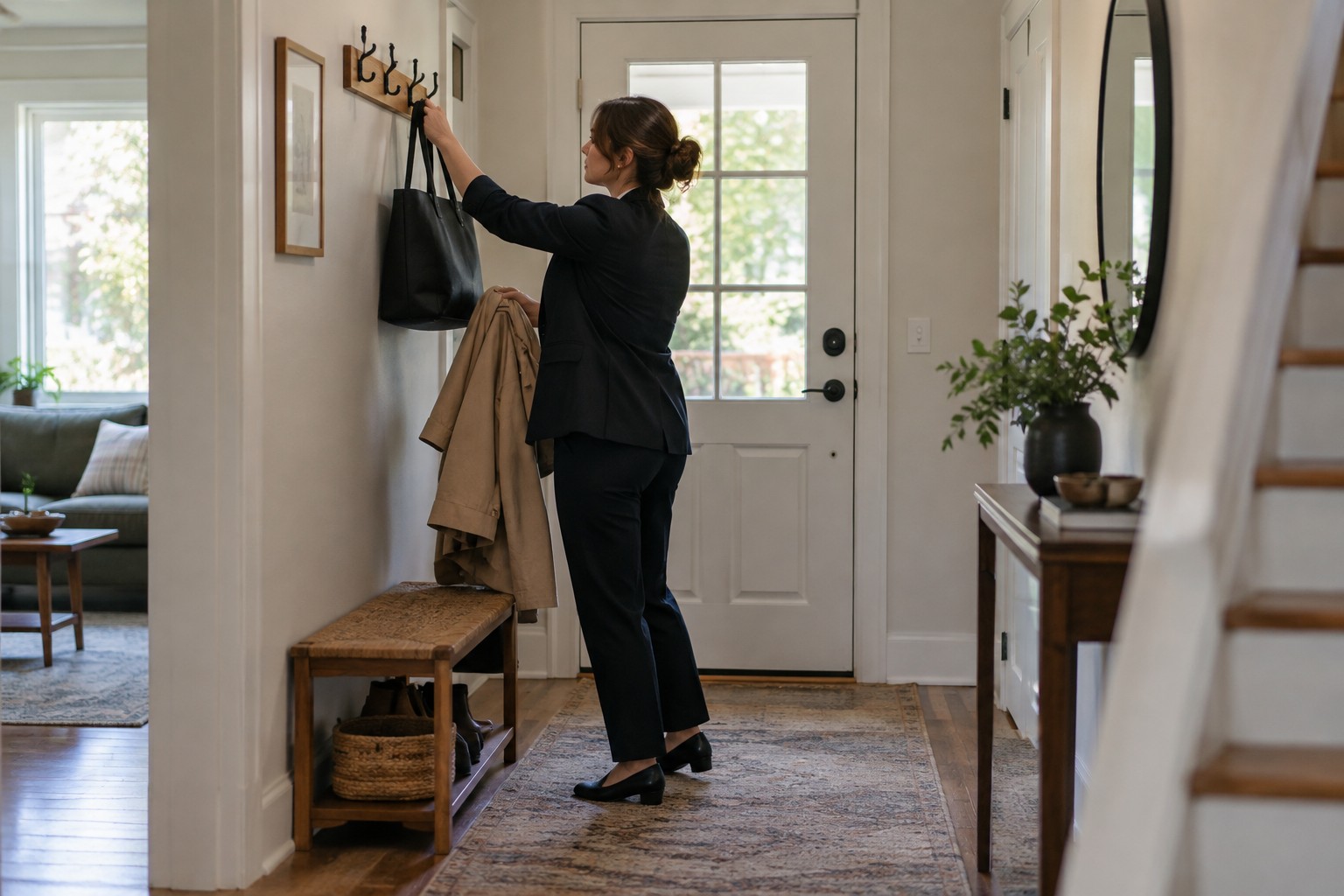
The route from the front door to the first place you sit often determines where the evening's clutter begins. Shoes stop in the hallway, a bag lands on a dining chair and unopened post travels into the living room. Rather than adding a long after-work routine, give those objects suitable destinations along the route you already follow.
Set down what is heavy before dealing with anything else. A stable surface or clear section of floor can hold shopping while you remove outerwear. It should not block the entrance. If the only available landing place is a chair needed for dinner, create a temporary handover rather than allowing the bag to remain there indefinitely.
Put food and other items needing prompt attention where they belong. Return work equipment to its designated place and separate it from personal belongings when possible. An unfinished workday can follow you into every room if the laptop, notes and chargers are scattered across them.
Create a transition you will actually use
Changing clothes, washing your hands, making a drink or sitting quietly for a few minutes can mark arrival. Choose one or two actions that suit your circumstances. There is no requirement for an elaborate ritual, and households with immediate caring responsibilities may need a very brief transition.
Tell others if you need a small amount of uninterrupted time, but make the request concrete. “I will put my things away and then we can talk” is easier to understand than disappearing without explanation. Equally, notice whether another person has been waiting to hand over a responsibility.
Keep tomorrow separate from tonight
Capture a work thought on a note if it prevents you from repeatedly trying to remember it. Put the note with tomorrow's work materials rather than reopening every task. If your job requires evening availability, define the arrangement according to the real requirements instead of pretending the workday has ended completely.
Prepare only the items that would be difficult to find later. Returning keys, placing a reusable lunch container in the kitchen and hanging a coat can be enough. Leave larger household projects for a chosen time.
A useful homecoming routine should leave you more available for the evening, not present another test to complete after work. If the sequence grows longer every week, remove the steps that do not solve an actual arrival problem.