Organise a knitting project between sessions
Protect the work in progress and record enough detail to resume without guesswork.
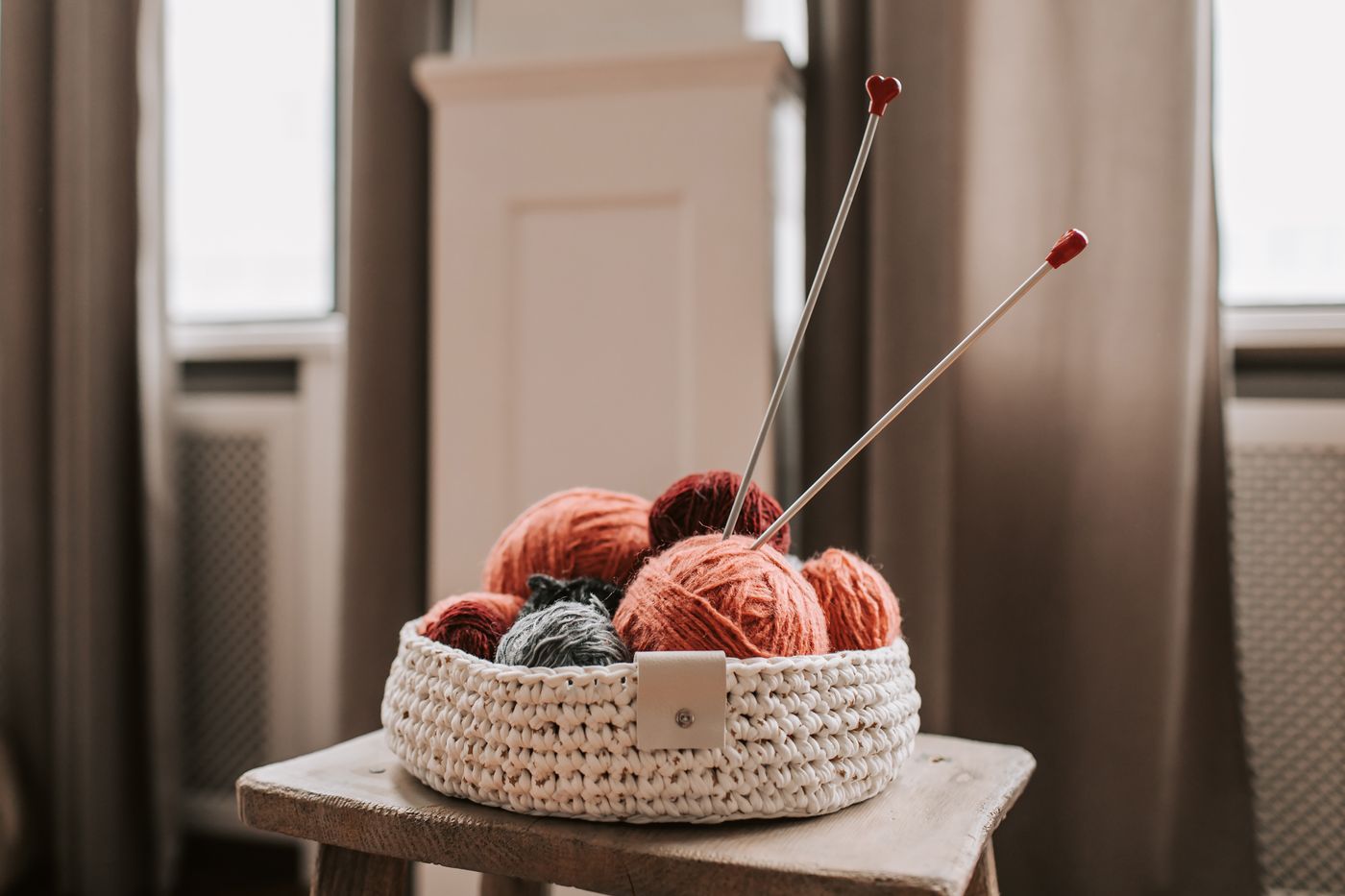
A knitting basket needs to hold more than yarn. It also holds a point in a pattern, a set of measurements and several small decisions about what happens next. Before putting the work away, make those details easy to recover. A short note can prevent an entire session being spent counting rows and trying to remember which instructions you last followed.
Keep the current project separate from unrelated yarn. A bag within the basket can stop loose fibres and accessories mixing with the work, especially if the basket's surface is rough. Make sure its capacity suits the growing piece. A sleeve that fits comfortably today may become a sweater that needs more room later.
Record the actual setup
Write down the needle size, yarn details and any changes you are making to the pattern. Keep the yarn band or a copy of its useful information. If you substitute materials, record that clearly rather than assuming you will remember the difference several weeks from now.
Mark your place using a method that does not obscure the instructions. A removable note, row counter or simple tally can work, provided you update it consistently. Note whether a row has been completed or is the next row to work; that small distinction prevents confusion on return.
Put stitch markers, a measuring tape and other necessary notions in a small closed pouch. Loose scissors and needles should not sit where someone can reach into them unknowingly. Store the basket appropriately around children and animals, and do not leave long loose strands trailing into a walking route.
End at a recoverable point
When possible, stop where the pattern or your own notes make the restart clear. If you must stop in the middle, mark the position rather than relying on recognition. Secure the work using accessories suitable for your needles and project, following their instructions.
Check the basket occasionally for items that no longer belong. A tool from another project, old wrappers and unused yarn ends can make the current materials difficult to see. Keep finishing supplies nearby when needed, but do not let the project basket become a permanent home for every knitting accessory.
Prepare for the next particular session
If the next stage involves joining pieces, put the relevant finished sections, matching yarn and instructions together. If it involves a repeated row sequence, make the start point unmistakable before putting the work down. The basket should reflect what the project needs next rather than holding the same generic assortment throughout its life.
For two similar pieces, such as sleeves, attach a temporary identifying note when a difference matters. Record the measurements or row details you actually used, including a deliberate adjustment. A pattern's original numbers will not explain a change made halfway through the first piece.
Before taking the basket to another room, check for tools resting beneath the work. Move the container by its base if the handle is not designed for the weight. A loose needle tucked under a cushion or a small pair of scissors left on the sofa defeats the point of keeping the project together.
If you take the project out, pack only what the planned session needs. Complicated shaping may be easier at home, while a familiar section may suit a journey. The basket's job is to preserve continuity, so returning from an outing should involve putting the work and notes together again rather than leaving half the setup in a travel bag.