Measure a room before ordering furniture
Record the room, the delivery route and the space a piece needs once it is being used.
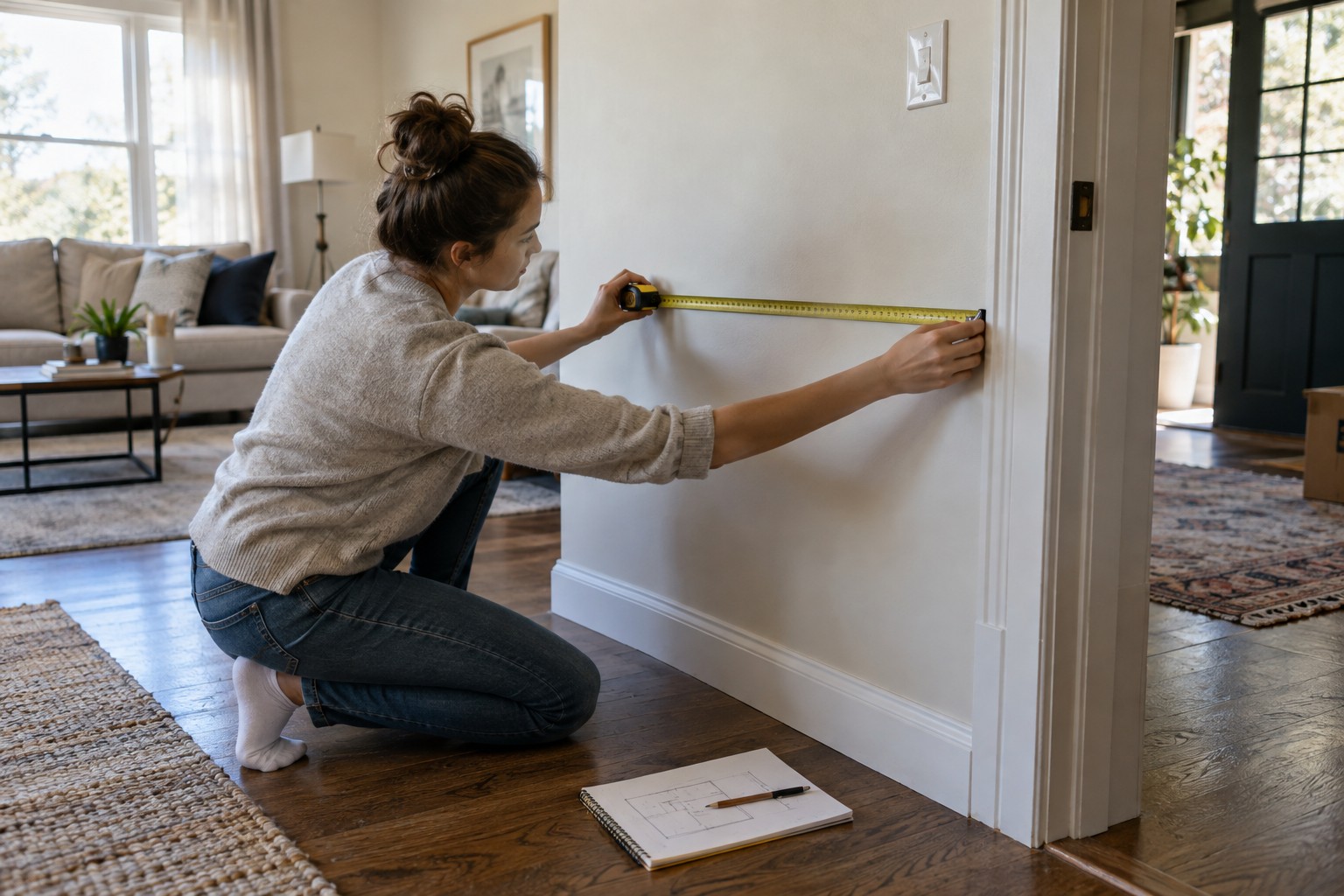
Furniture measurements do not end with the width of an empty wall. A piece must reach the room, fit its intended position and function there with doors, drawers and people moving around it. Taking these measurements before ordering helps distinguish a genuinely suitable piece from one that merely fits on paper.
Draw the fixed features
Make a simple plan of the room. It does not need professional drafting, but it should record wall lengths, door and window positions, radiators, built-in cupboards and other fixed obstacles. Note the direction doors open. Include skirting boards or projections that prevent furniture sitting flush against a wall.
Measure at the relevant heights where the room is irregular. A sloping ceiling or low window may affect a tall cabinet differently from a sideboard. Record socket positions when they matter to the intended arrangement, without assuming cables can conveniently cross any gap.
Measure the furniture in all its states
Use the full external dimensions, including handles, arms and projecting feet. For a recliner, sofa bed or extending table, obtain the dimensions when open as well as closed. For a cupboard, allow room for doors and drawers to operate. A cabinet that fits but cannot open fully is not a workable fit.
Mark the proposed footprint on the floor using a removable method suitable for the surface. Use boxes or another safe temporary reference to suggest height if that helps you judge its presence. Walk through the room and perform ordinary movements around the outline. Carry a laundry basket, pull out a dining chair and open nearby storage.
Do not rely solely on the impression of an empty floor plan. The space needed by a person sitting in a chair extends beyond the chair's stored position. Leave room for the actual users and any relevant mobility equipment, rather than applying a generic clearance figure without considering the household.
Check the journey indoors
Measure the entry doorway, internal doors, hallways, stair turns and lift where applicable. Pay attention to the narrowest point and overhead restrictions. The packaged dimensions may differ from the assembled furniture, so obtain both from the seller. Ask whether legs or other parts are removable for delivery and whether the delivery service will perform that work.
A diagonal measurement can be relevant, but it does not by itself guarantee that a large object will turn through a confined route. Share the route details with the supplier or delivery team when uncertain. Do not assume a piece can be dismantled unless the maker confirms it.
Keep one reliable record
Put the room drawing, measurements and furniture specification together, with units clearly marked. Note any estimates as estimates and remeasure critical dimensions. A phone photograph can help explain a doorway or obstruction, but it should supplement measurements rather than replace them.
Before ordering, check the seller's current delivery, assembly and return terms directly. These can affect the decision when access is uncertain. Keep the final dimensions with the order confirmation so you can compare the delivered item with what was specified.
The aim is not to fill every available centimetre. A slightly smaller piece may leave the room easier to use and provide more flexibility when the layout changes. Good measuring gives you that choice before a large object is standing in the hallway.
Allow for how the piece will be assembled
Some furniture arrives flat-packed but needs space to be assembled on the floor and then raised into position. Ask for the assembly instructions before ordering if the room is tight. A tall wardrobe may fit upright yet need additional clearance while being lifted. Decide whether assembly must happen in the final room and whether neighbouring furniture can safely be moved out temporarily.
Also check the relationship between separate pieces. Two bedside tables may each fit beside the bed, but together they can prevent a wardrobe door opening. Dining chairs may tuck under a table individually while their arms collide when arranged as a full set. Record these overlaps in the plan rather than treating each purchase as an isolated rectangle.